Member Newsletter/Pānui 30 January 2026

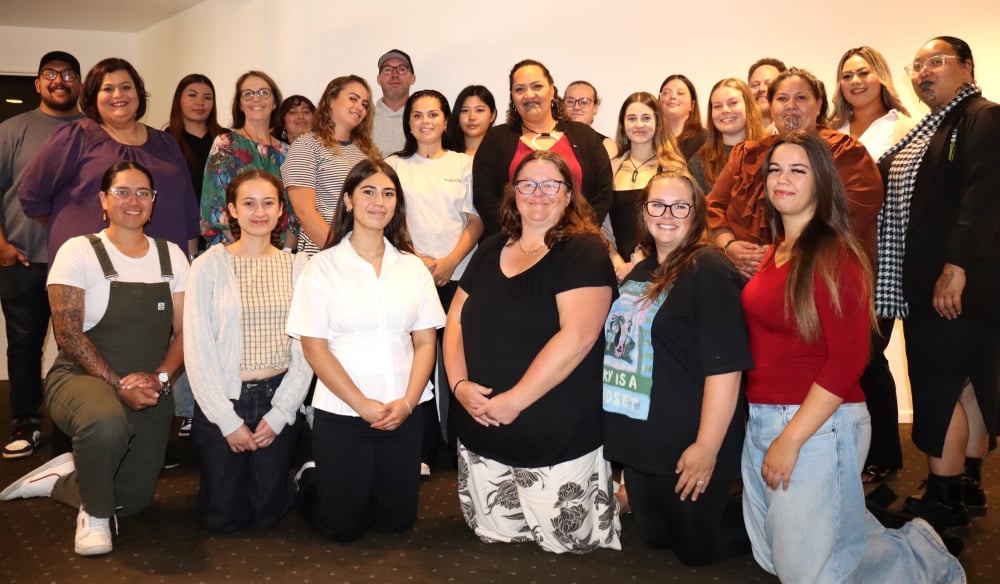
NZNO's National Student Unit met for the first time in Wellington last week to plan the year ahead for tauira.


Kia ora members, 


January is almost behind us and kids are back at school – 2026 is well and truly underway. 


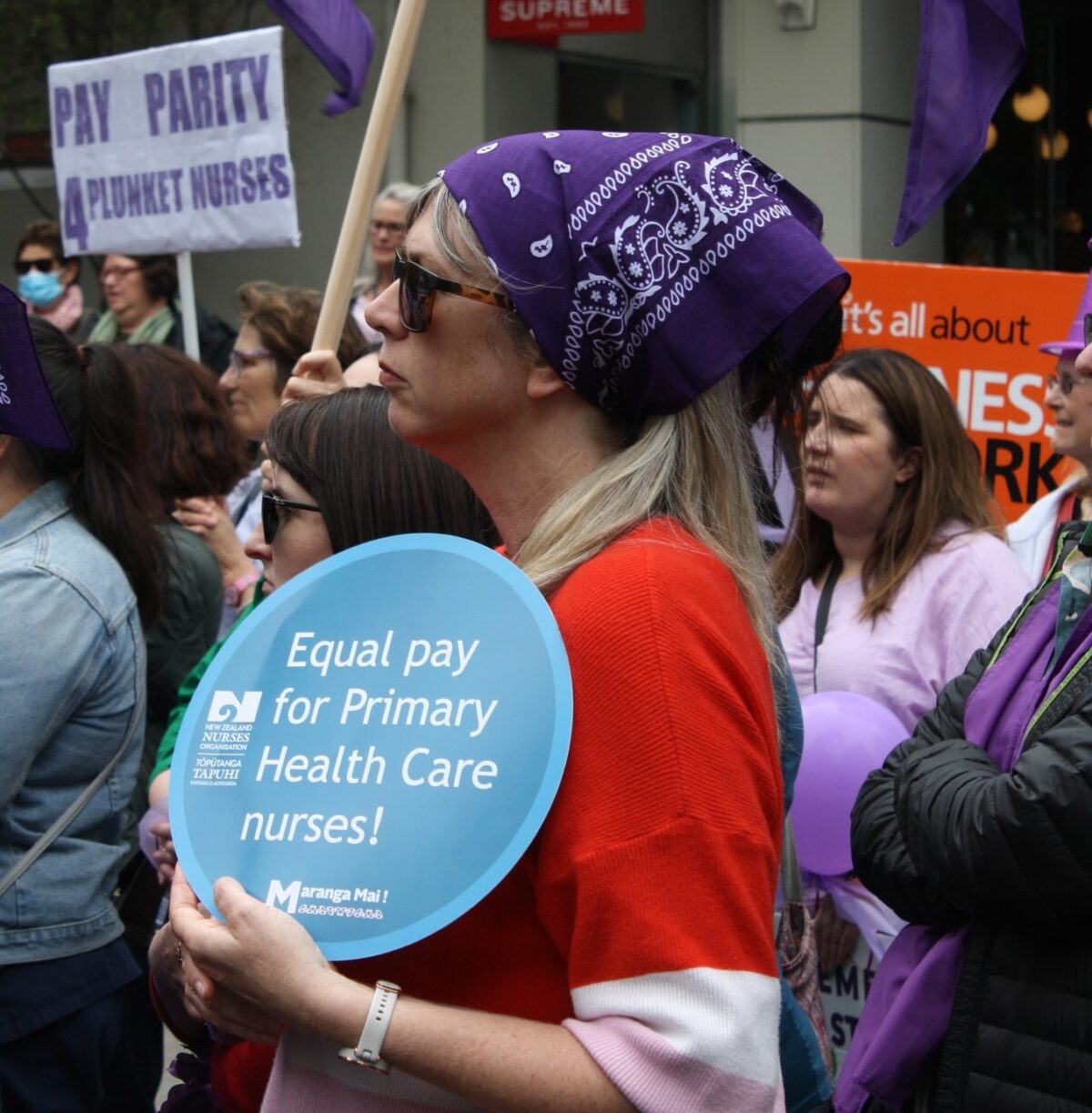
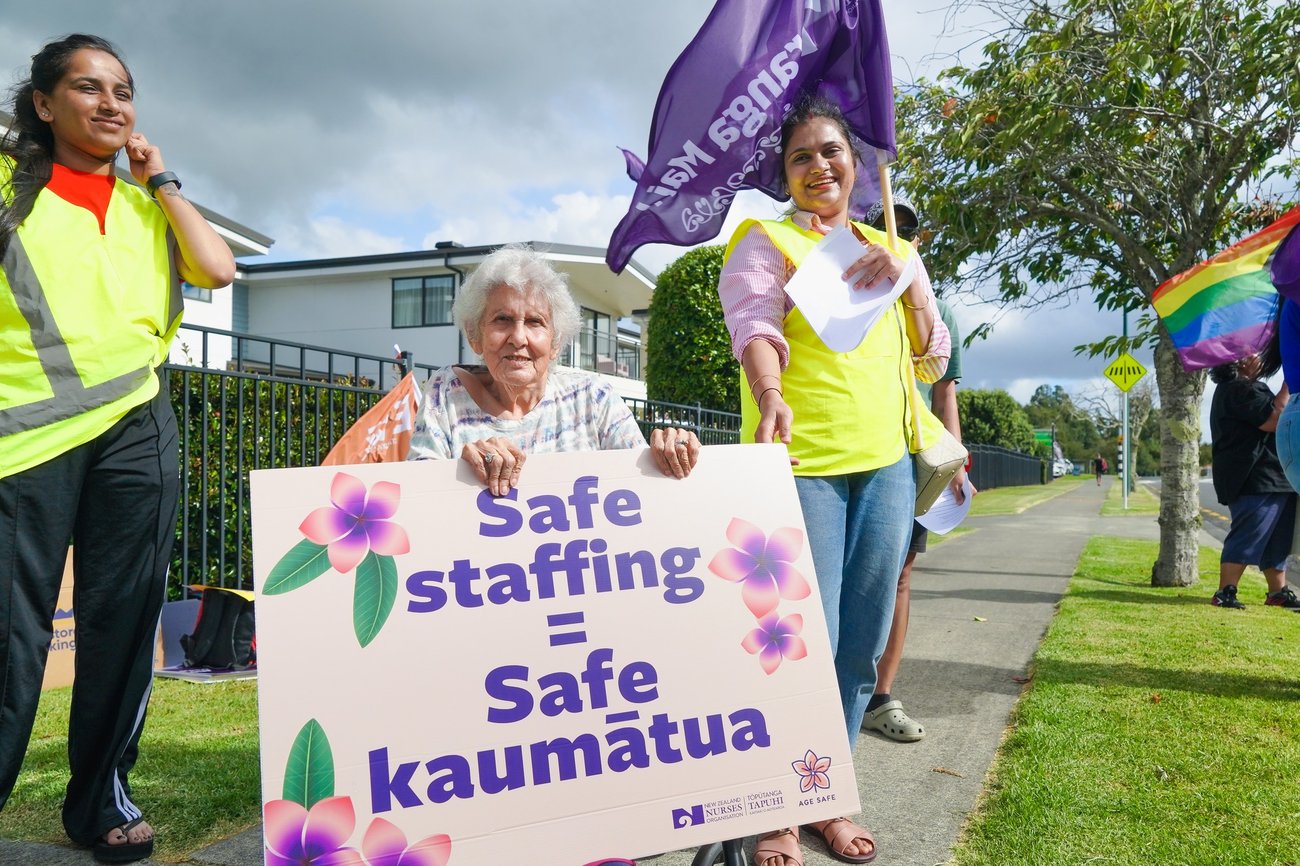
It promises to be a busy year with work on the Primary Health MECA already underway, Pay Equity claims for Plunket and Hospice in progress, our Age Safe campaign being 

rolled out and the Te Whatu Ora collective agreement yet to be settled. 


And who could forget it’s an election year with the Saturday 7 November polling date announced by Prime Minister Christopher Luxon last week. 


Few members would have expected us to still be in negotiations with Te Whatu Ora 16 

months after initiating bargaining in September 2024. 


No doubt the Government did not want or plan to be negotiating with nurses – or doctors, teachers and firefighters for that matter – during an election year. 


Next steps for bargaining 


The actions taken by our Te Whatu Ora nurses, midwives and health care assistants throughout 2025 were unprecedented. We know it was the most strikes by public hospital nurses in the history of Aotearoa New Zealand.  


Last week marked the 42nd day of talks since bargaining began. While some slow progress has been made, agreement has only been reached on 13 of 40 issues taken into bargaining by members. 


That includes clarifying the shift coordinator payment and an additional step in the Enrolled Nurses pay scale which reflects their expanded scope of practice. 

However, the Government continues to reject many of your claims including: 

  • No commitment to establishing enforceable and culturally appropriate safe staffing levels as determined by CCDM annual FTE calculations and based on patient need. 

  • No commitment to implementing an evidence-based and enforceable approach to staff-to-patient ratios.  

  • No commitment to the full employment of all nurse graduates.  

  • No offer of a wage rise that meets the rising cost of living. 

  • No commitment to recognising and valuing the work of Designated Senior Nurses. 

  • No reinstatement of Te Tiriti claims around the tikanga process. 

  • No reinstatement of the Kaupapa Māori dispute resolution process.   


Having your say 


Te Whatu Ora members may have seen the message from bargaining team chair Noreen McCallan I sent out earlier today. 


The team wants to report back to members on where negotiations are at and ask you what direction our next steps should take. To do this, they will be holding meetings in the week beginning Monday 9 February. So please keep an eye out for local information about meetings at your worksite.  


We will also be surveying members to ensure everyone has an opportunity to give their feedback and their view of how we move forward from here.  


The confidential and anonymous survey will be launched on Wednesday 11 February and close on Tuesday 17 February, ahead of the next scheduled bargaining dates.  


Please make sure you have your say and please encourage your colleagues to do the same. It is crucial that the bargaining team hears from everyone. 


Keeping safe staffing calls visible


Visibility strikes – also sometimes referred to as uniform strikes – continued over the Christmas and New Year break at Christchurch Hospital and Whangārei Hospital ED. 


They have been a fun way for members to prompt patients to ask about safe staffing and have including everything from wacky scrubs, posters and campaign t-shirts. 


They have also been an invaluable way to keep the pressure on Te Whatu Ora and raise wider public awareness of the dire need to properly fund the public health system. 

Next week Taupo district nurses and local delegates will begin a month-long visibility strike.  


If you and your colleagues are interested in doing your own local visibility strike, please get in touch with your local organiser.  


Primary Health Care MECA work underway 


Work began late last year on the Primary Health Care MECA which covers more than 3500 members and hundreds of employers of throughout Aotearoa New Zealand. 


As you can imagine, this makes for a complicated negotiations process. Employers will be represented by up to four teams of advocates and will also be about the represent themselves. 


Members covered by the MECA will be surveyed over the next couple of months so they can provide feedback on the claims they want to put forward. We will also be talking to delegates about forming a bargaining team. More on this below. 


Submission on the Arms Bill 


The National Executive and Te Poari agreed at their recent joint hui that NZNO will be making a submission on the new Arms Bill. 


The Bill was introduced to Parliament in December and aims to repeal and replace the existing 1983 Arms Act.  


According to Gun Control NZ, on average a New Zealander dies once a week from gunshots. This includes accidents, homicides and suicides. 


The gun lobby is pushing their supporters to call for the gun registry to be repealed and for semi-automatic firearms to be reintroduced. This will be abhorrent to many health workers. 


Gun Control NZ is encouraging people to sign their counter submission or to make their own submissions based on the guide they have provided.  


If you’re passionate about gun control, please either sign their counter petition or make your own submission to Parliament before the 16 February deadline.  


NZNO’s voices support and concern


On the subject of guns, NZNO voiced its concern about the tragic death of US nurse Alex Pretti in Minnesota at the hand of Immigration and Customs Enforcement (ICE) agents in a media release this week.  


We have also written in solidarity and support to the US nurses union National Nurses United.


The death of health workers anywhere is a sign of deteriorating social stability and cohesion, and it is appropriate as the voice for nurses that NZNO speaks out about this.  


Our concerns were well supported by members and by the public on our social media channels. More on this, and the media release, below.


Back home, Te Poari, Te Runanga and the executive of Tōpūtanga Tapuhi Kaitiaki o Aotearoa NZNO expressed its thoughts and sympathies with all our members, staff and residents affected by the recent widespread flooding, landslides and other devastation caused by heavy rains in the Bay of Plenty, Tairawhiti and Te Tai Tokerau.


Students come together in Wellington 


NZNO's National Student Unit met for the first time in Wellington last week to plan the year ahead (see photo above). 


I had the opportunity to talk with them. It was great to meet a group of such passionate and driven tauira. I look forward to working with our future nurses! 


I hope all get to enjoy a bit of sunshine this weekend. 


Ngā mihi,  


Paul Goulter, Chief Executive  
Tōpūtanga Tapuhi Kaitiaki o Aotearoa NZNO 


In this member newsletter

Primary Health Care

Since the break, we have hit the ground running.


Three straight days of negotiations have already taken place at Whakarongorau Aotearoa. This collective agreement is negotiated alongside our sister unions PSA and NZAA who cover allied workers, counsellors and paramedics at the telehealth provider. This year we had a very strong team of delegates, who contributed their experiences of doing the mahi every day and the obstacles and difficulties they face daily. The employer, we feel, was prepared to listen to the delegates this year and a lot of progress was made, resulting in an offer we will be taking to members as soon as we get the paperwork.


We’ve spent time reflecting on our meeting with delegates immediately before the break at Access Community Health.


We have already been in negotiations with Access for eight full days and the employer is refusing to move on many of our claims, or fully commit to timely introduction of a PDRP programme with suitable pay recognition for members. The Access delegate team said they preferred us to seek mediation assistance to try to break the deadlock before discussing potential industrial action by members. Mediation was applied for and will occur next week on Tuesday in-person in Auckland. Fingers crossed, the mediators will be able to get the employer to listen to our members’ claim not to be the worst paid nurses in New Zealand anymore, despite the employer stating that they are very happy to be the lowest paying employer in the sector while also claiming that they want their staff to feel valued.


The initiation letter for Sexual Wellbeing Aotearoa will be sent this week. This is the first step in the negotiation process for a new collective agreement. Over the next couple of weeks, we will be surveying members for claims and nominations for delegates to be on the bargaining team.


Work started before the break on the Primary Health MECA. This is a huge piece of work for us, having hundreds of employers and covering more than 3500 members nationwide in a variety of employers, large and small. The negotiations themselves are complicated as employers are represented by up to four teams of advocates and are able to self-represent at the table too, giving multiple priorities and points of view for us to navigate as we try to negotiate the best outcome for members. Over the next month or two we will be surveying members for claims and talking to delegates about forming a bargaining team in time for initiation at the beginning of the renegotiation process.

Aged Residential Care

Summerset


In our last round of bargaining in 2025 the company made an offer that fell below the expectations of our bargaining team:

  1. Cut weekend allowances
    Nurses: From time and 40% - down to time and 30%.
    HCAs and others: From time and 40% - down to time and 10%

  2. Offer wage increases far below the sector
    1.5% for Nurses
    2% for HCAs

We have bargaining coming up again on 4 February and while we don't expect a greatly improved offer, we will report back to you after that meeting and let you know what happens. 


It's a key time to join our union at Summerset. If you have colleagues who are not yet members, they too would be impacted by these cuts. If we join together and say no, we can protect your terms and conditions of employment. Speak to your colleagues about joining today.


Arvida


We have a number of change proposals at Arvida sites around the country. Members and organisers have been working together to understand the proposals and provide feedback. If you need to talk to your union about your change proposal. Please call us on 0800 28 38 48


Oceania


Following a change proposal at Elderslea in December of last year, we have change proposals now underway at Elmswood and Palmgrove. Please work directly with your site organisers to ensure that we know your shift preferences.


Pay equity in the non-Te Whatu Ora sector

A Defining Issue in an Election Year


Pay equity is shaping up to be a key issue in this election year. An in-depth piece in The Spinoff has outlined how changes to the pay equity system saw dozens of claims delayed or scrapped, with particular consequences for health and care services. The article highlights the risks for community, rural, Māori and Pacific services — where workforce pressures are already acute — and raises serious questions about how our healthcare workforce is being resourced and valued.


(Read the analysis in The Spinoff here.)


This underscores the importance of NZNO’s ongoing work, our claims have crucial role to play in testing how the new legislation will operate in practice. 


Since our last update, NZNO has been meeting with employers across the sectors covered by our pay equity claims. These early discussions are about testing how claims are being handled in practice and making sure nursing and care work is properly valued. 


We all know how important it is to advocate for Government funding, NZNO is part of the collective union action being led by the NZ Council of Trade Unions. Together with other unions, we are building pressure, coordinating action, and keeping pay equity firmly on the agenda as the election approaches.


We’ll continue to update members on how work progresses and opportunities for members to take action in election year. 

Nursing Council of New Zealand Code of Conduct review

The Code of Conduct sets expectations for professional behaviour and underpins public trust and confidence in the nursing profession. It provides guidance for nurses on ethical and professional conduct and supports safe, culturally responsive care for health consumers and whānau. The current Code was published in 2012. A review of the Code was initiated last year after the new Standards of Competence were implemented, recognising that these need to inform a review of the Code.


The link below is to the NCNZ consultation page which invites nurses to give feedback on the review – this can be done anonymously if you prefer. 


Consultation link here


You are also invited to email feedback to Sue Gasquoine, Nursing Policy Adviser and Researcher at sue.gasquoine@nzno.org.nz. She is coordinating NZNO's response to the review. Please send feedback by Monday 16 February.

Our leaders speak: President Anne Daniels Everything is political when turmoil abounds. Values matter

The year has just begun. Nationally and internationally, we see, hear and experience turmoil everywhere. How do our hearts not break for those families who have lost loved ones in the recent rains, floods and slips that have changed the lives of many in an instant? It could have been any one of us.


It was one of us in America where an ICU nurse named Alex Pretti was shot multiple times trying to help another. He is not alone. Between 80,000 to 180,000 nurses lost their lives during the Covid pandemic according to WHO. Countless thousands more have lost their lives delivering critical care under fire, stabilising the wounded, managing scarce resources, and sustaining essential services amid devastation. In Gaza, Ukraine, Sudan and many other crises affected countries, nurses are holding entire health systems together. We do so, during times of political turmoil, not just war. We do so when political promises are broken, when our patients and ourselves are put in harm’s way as a result of decisions made about us, without us. Buying into divisive politics is destructive.


Instead, our actions, as carers, are grounded in our values and that is why we should not become what we fear or criticise. We must constantly reflect on our cultural identity and recognise the impact it has on our professional practice and social responsibilities.  However, we cannot sit idly by and not be concerned about what happens to others as there by the grace of God, go we. Human progress never rolls on wheels of inevitability; it comes through the tireless efforts of people who join in the shared struggle against injustice that impacts on the health and wellbeing of our communities.


In the past year, we have gone on strike many times in many different ways. We have withdrawn our labour and marched in the streets. We have worn T-shirts with a clear message “Not enough Nurses”. We have declined to be used as pawns, being shifted here and there to cover up the multitude of roster gaps that are deliberately not being filled to save money regardless of the burnout, fatigue and moral distress it causes to all involved. We have ignored daily calls for overtime and extra shifts to make visible the expectation of employers and Government that we keep giving until we collapse. We have illuminated the injustice of the decisions made by others that are negatively impacting on our work environment, our patients and communities, and ourselves.


Injustice must be rooted out by strong, persistent and determined action. This requires resolving the issues that precipitate our protests and strikes such as the need for collective and agreed long term workforce planning and protection through legislated culturally safe nurse to patient ratios, and a safely resourced work environment with the funding to make it happen.


Martin Luther King Junior once stated that an injustice anywhere is a threat to justice everywhere. Whatever affects one directly, affects all indirectly. Therefore, we must ALL be part of the change we want to see. The “do-nothingism” of the complacent or those who leave it to “someone else” will not see justice done. Worse it will see a rise in racism and discrimination (already embedded in our health system infrastructure) that is escalating in America, empowered by the few who have never been willing to share their power and privilege. In turbulent times, a house divided against itself will not stand.


Every gain we make, for our members and those we care for, must be made through determined legal and collective non-violent pressure. Further, we must be mindful of the legislative and regulatory changes that are being made to curtail our right and responsibility to speak out and act for the greater good. Changes to the Pae Ora Act made by the current govt state that we must be politically neutral when health care inequity and inequality is inherently a result of political decisions and actions. Yet it is our regulatory obligation to advocate for our patients and our communities. Therefore, we must not be silent or still. We must ALL stand up together, as communities have done in recent days in Aotearoa and America, and work to protect and strengthen the country’s public health system that is patient, whanau, and community centred.


If we want a different kind of world and a different kind of politics that result in an affordable, accessible, culturally safe and appropriately resourced public health system, we have choices to make. Politicians only have the power we give them. We need to decide if those we vote into power hold the values WE hold dear.


Kia kaha!

Grow yourself professionally by joining NZNO's colleges and sections

Colleges and sections are central to NZNO’s success and influence and brings together groups of members who are focused on a specific nursing specialty.


So far only less than 20% of members have elected to join a college or section, and we'd like to see you grow that number. NZNO colleges and sections can help you advance your practice through policy and professional development opportunities, and membership at most colleges and sections is open and free to NZNO members.


There’s bound to be one for every member as there are 20 colleges and sections across a range of specialty areas and members can choose to belong to as many as three. Individual membership choices are usually related to clinical specialty and/or study and research interests.


Check out our colleges and sections here. Which one(s) will you join?

Colleges and Sections

College of Stomal Therapy Nurses Conference - upcoming conference: “Resilience”

Venue: Novotel Christchurch Airport

Date: Thursday 5 March – Friday 6 March 2026


This conference brings together nurses, specialists, educators, and industry partners who are passionate about improving the lives of people living with a stoma.

This year’s theme, Resilience, highlights the ability of both patients and clinicians to adapt, recover, and grow — strengthening stoma care for all. Resilience is found in the courage of our patients, the dedication of our teams, and the ongoing commitment to innovation and compassionate care.


During the two-day event, you’ll be able to explore innovations, enhance skills, connect with colleagues and experts in stoma care, and celebrate our collective progress. Together, let's advance patient wellbeing and support excellence and compassion in Ostomy Management. Together, we can make a real difference by delivering equitable and holistic care across Aotearoa.


Link to the conference page, which includes the programme and registration: Home - NZNO College of Stomal Therapy Nursing Conference 2026


Registration is at the reasonable cost of $200 for the two-day event, or $120 for a single day, and includes the conference dinner.


Open to all – there is no requirement to be a member of the College of Stomal Therapy Nurses to attend.


Don’t miss this opportunity to be a part of something truly special — register today and join us at NZNO CSTN Conference 2026!


Find the programme here


Event flyer

NNCA symposium

NZNO disgusted by nurse’s killing in the US

Tōpūtanga Tapuhi Kaitiaki o Aotearoa NZNO has expressed disgust at the shooting and killing of nurse Alex Pretti on a Minneapolis, US street on Saturday morning by federal officers.


Kaiwhakahaere Kerri Nuku says the organisation is increasingly concerned at the callous and aggressive attacks on its own people by Immigration and Customs Enforcement (ICE) in the US.


"It seems that nobody is safe, and when health workers are losing their lives on the street it is gravely concerning," Kerri Nuku says.


NZNO extends solidarity with health workers everywhere and the organisation stands with all peoples aspiring for freedom from an oppressive system and unprovoked attacks, she said.


Alex Pretti was an ICU nurse working for the Veterans Health Administration in Minneapolis.


"Nurses are always at the forefront of ensuring the safety and well-being of their communities. We are appalled that health workers and communities in general in the US live in constant fear of being indiscriminately harassed, assaulted and even killed.


"Nurses in particular are carers and protectors. Alex was an ICU nurse so cared for patients when they were at their most vulnerable."


She said the thoughts and sympathy of NZNO lay with Alex Pretti’s family.


"We are calling for an immediate stop to ICE’s aggressive and murderous tactics in the US."

Maranga Mai! funding

The next NZNO Maranga Mai! funding round opened on 31 December 2025 closing end of March 2026.


This grant is available to all NZNO financial members and is awarded annually.


The purpose of this fund is to provide members with assistance for professional development activities to enhance health care outcomes/provision in Aotearoa /New Zealand.


The fund is available for a variety of activities such as short courses, conferences, seminars, postgraduate and undergraduate study, workshops, books and travel. Other course related costs may be considered.


The fund is not available for any mandatory training required by an employer which is the employer’s responsibility to provide or fund.


The amount of any grant is determined by the Committee and will be decided based on total fund amount available once all applications are assessed.


You can apply through the Maranga Mai! online form on the NZNO Scholarships and Grants webpage.


Library temporarily closed

NZNO Library services are not available until further notice due to our previous librarian's retirement at the end of last year. Services will be reinstated once a recruitment process has been completed and a new librarian has been employed.

Cost of living rises faster than workers’ wages

Cost of living data released by Stats NZ today shows that working people are being left behind, said NZCTU Te Kauae Kaimahi President Sandra Grey.


“Data released by Stats NZ today showed that the cost of living rose at its fastest rate for 18 months. 68% of workers across the economy are currently facing another year of real terms pay cuts under this government”


“80% of items measured in the CPI basket saw prices rise. Food prices rose 4.3%, electricity prices rose 12.2%, and gas prices rose 16.2%. Working people are struggling to afford the basics.”


“Minimum wage workers are now facing a third straight year of real terms cuts to their income. The lowest-paid workers in the country are paying the price for this Government’s economic mismanagement.


“National keeps promising opportunities for New Zealanders but they’re only delivering for the wealthy. When last measured, annual household inflation was running 2.7 times faster for the lowest income New Zealanders than for the highest income earners.”


“Working people need wage increases, not tax cuts. The Government may be celebrating the economy improving, but working people aren’t feeling any relief. Its time the Government stopped leaving workers behind,” said Grey. 


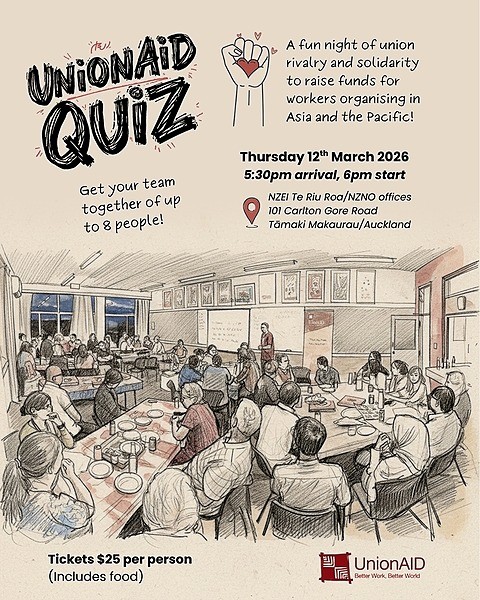
Auckland UnionAID Quiz Fundraiser 2026

ICN expresses solidarity with Venezuelan nurses and calls for protection of rights in crises  

The International Council of Nurses (ICN) has been in direct contact with the Venezuelan Nursing Association (Federación de Colegios de Profesionales de Enfermería de la República Bolivariana de Venezuela/Federation of Nursing Professionals of the Bolivarian Republic of Venezuela) in response to recent political developments and the ongoing crisis affecting the country. 


ICN has reached out to express solidarity and to reaffirm that the global nursing community supports Venezuelan nurses during this challenging time. For nurses, the pressures of emergencies are often intensified by already difficult working conditions, resource shortages and high demands for care. Even so, nurses in Venezuela and around the world continue to fulfil their professional and ethical responsibilities to patients and communities, often while facing heightened personal and professional vulnerability.


More broadly, ICN recognises that times of political, social and institutional crisis place individual and collective rights at particular risk. It is critical that International Humanitarian Law, protecting the safety of health care workers and facilities, is respected in all places. States of emergency and crisis can also involve strong risks to civil liberties, including the right to speak and organise freely and to come together collectively to promote and defend work interests, as enshrined by the International Labour Organization.


Read more

Non-NZNO surveys/events

Survey on the use of Artificial Intelligence (AI) in lung cancer screening


We are looking for nurses working in primary health care, respiratory, or oncology in Aotearoa New Zealand to take part in a short (15 min) survey of their views on the use of AI in lung cancer screening.


AI will inevitably be part of a national lung cancer screening programme, however for implementation to be successful, its use has to be acceptable to both recipients and those delivering the screening.


Please visit https://redcap.otago.ac.nz/surveys/?s=TDCLMDACMEC7H9KH to give your views and help us plan for lung cancer screening in Aotearoa New Zealand.


This research is funded by the Health Research Council of New Zealand (HRC), with research team members based at the University of Otago/Ōtakou Whakaihu Waka and Health NZ/Te Whatu Ora.


This study has been approved by the University of Otago Human Ethics Committee (Health) - Te Pae Matatika Tangata (Hauora), Otakou Whakaihu Waka (Ref H25/0473).

International News


Email Marketing by ActiveCampaign