|
|
|
Member Newsletter/Pānui 16 January 2026 |
|
|
|
|
|
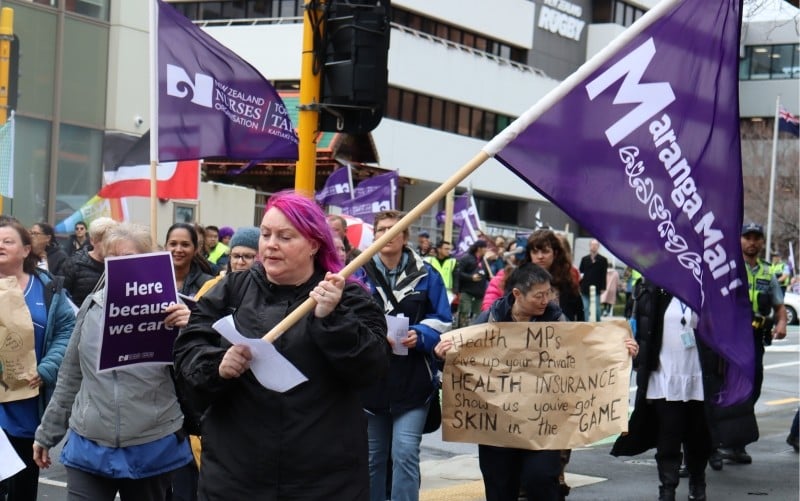
NZNO members took to the streets several times in 2025 to bring attention to unsafe staffing among other issues. We look forward to the same in 2026.
Kia ora Member,
Happy New Year – ngā mihi o te tau hou!
Welcome to 2026 and this summer edition of our member newsletter. I hope you had a wonderful break with whānau and friends, if you managed to get some time off.
2026 promises to be an interesting year. The date of the general election later in the year will be announced shortly by Prime Minister Christopher Luxon. There’s lots of predictions around, mainly for an end of October, early November polling day.
Health will be a significant issue on the campaign trail this year. Opinion polls last year continually put health as the second most important issue affecting voters. The Coalition Government’s cost-cutting drive and ongoing refusal to properly fund essential services seems set to ensure health continues to be forefront in voters' minds.
Labour Leader Chris Hipkins’ promise in December that Labour will reinstate the former Pay Equity claims process guarantees the fight to eliminate gender-based pay inequities will continue this year. That’ll be welcome news to all our members who had their claims scrapped last year. We hope to progress our Plunket and Hospice claims and file new claims for other sectors.
The weakening of workers’ rights will also be something to watch this year with Workplace Relations Minister Brooke van Velden’s law changes to personal grievance protections, contractor’s legal status and automatic collective agreement cover for the first 30 days of employment.
And of course, the battle to settle collective agreement negotiations with Te Whatu Ora continues. Since bargaining was initiated in September 2024, the bargaining team has held more 40 days of talks and members have staged arguably the most strikes by nurses in New Zealand history.
We are back in negotiations next Tuesday and Wednesday.
My thoughts looking back at 2025 and about what’s to come were outlined in this Newsroom article.
Te Whatu Ora staffing levels
Safe staffing at our hospitals remains in the headlines and in the spotlight as the year begins.
Visibility strikes – also referred to as uniform strikes – have become a fun and effective way to get out the safe staffing message. Last year several such actions were held around the country at North Shore, Waikato, Nelson and Christchurch.
A three-month visibility strike at Waitaha in Christchurch was so successful members have decided to continue it. They are swapping their uniform for t-shirts reading “Need more nurses/healthcare assistants” and “Will strike for patient safety”.
At Whangārei Hospital they are swapping their scrubs for fun non-uniform scrubs including some featuring fish, frogs and bees.
These uniform changes prompt patients and their whanau to ask what is happening and enable conversations about the importance of safe staffing levels. We continue to encourage all our Te Whatu Ora members to consider such localised action.
Assaults on health workers never acceptable
They don’t call it the “silly season” for nothing, and no one understands the darker side of the festive season like ED nurses. While most New Zealanders are out partying, hard-working ED nurses are helping pick up the pieces by putting those who partied too hard back together.
Immediately after the Christmas and New Year break, NZNO surveyed our ED members about any unacceptable behaviour they had been subjected to over the festive season.
Your responses were frankly shocking.
Of more than 100 members that responded to the survey, 84% of survey respondents reported dealing with unacceptable behaviour. Shouting and swearing were the most common (94%), followed by physical aggression (39%) and threats (35%).
Unsurprisingly, about 55% said their ED was understaffed at the time of the incident.
Health care workers are five times more likely to be assaulted on the job than other workers. However, abuse at work is never acceptable. That’s why NZNO is raising public awareness about this.
Under-staffing has to be addressed. a continued focus on de-escalation must continue. Te Whatu Ora must meet their health and safety obligations and that means a safe level of staffing.
We will be doing more to raise awareness of the treatment other members face. If you are a member working in mental health, please look out for a similar survey coming to your inbox soon.
Nurse practitioners doing it for themselves
The development and growth of the nurse practitioners’ workforce is good news for nursing and the ever-evolving primary health sector.
In Rotorua, two nurse practitioners have taken the next step and launched their own low-fees practice. Tau Oranga Health Care is a nurse practitioner-led kaupapa Māori clinic which opens next week.
Owners Jayme Kitiona and Jacinda Childs hope to eventually bring in a general practice doctor as part of a multi-disciplinary team.
A law change last year means Nurse Practitioners can finally prescribe the same medications as doctors and is another feather in the bows of this important workforce.
NZNO hopes to see more nurse practitioner-led clinics opening around the country.
Our normal full member newsletter will return next fortnight. Have a lovely weekend everyone and enjoy the extra day off if you’re in Wellington.
Ngā mihi,
Paul Goulter, Chief Executive
Tōpūtanga Tapuhi Kaitiaki o Aotearoa NZNO
|
|
|
|
|
|
In this member newsletter |
|
|
|
|
|
|
|
|
Our leaders speak: Kaiwhakahaere Kerri Nuku – More security in ED: Tread with caution |
|
|
|
When I hear of pushes to up security in hospital emergency departments, I must admit there’s a part of me that is hesitant.
Of course, I want all health care workers to be safe on duty including ED nurses.
But I also know many Māori already feel discriminated in ED and other hospital and clinical spaces. And the research proves it.
Yes, it’s a fact that health care workers are five times more likely to be assaulted on the job.
And my sincere thoughts go to the majority of ED nurses who told us in the recent NZNO survey that they had to deal with shouting and swearing, physical aggression and threats over the festive season.
The last kaupapa Māori-lensed study in 2021, by Dr Elana Curtis, on ED and Māori found that there was “increasing evidence that EDs may not operate equitably for all patients, with indigenous and minoritised ethnicity patients experiencing longer wait times for assessment, differential pain management and less evaluation and treatment of acute conditions.”
I know too from talking with many whānau Māori and Māori survivors of abuse in State care, that they don’t feel these spaces are culturally safe. They feel judged when they walk into them because they are Māori.
Having more security guards, more big brother cameras, more surveillance is unlikely to make them enter these spaces and instead stay at home and get sicker – making worse Māori health inequities.
In the coming weeks, NZNO will formally apologise to thousands of adults, who as children were taken from their whanau and put into institutions run by the State or Government, where they were abused.
More than 80% of them were Māori. That abuse broke generations of Māori, led many into gangs and prison.
Sadly, nurses were among those professions who did the abuse or turned a blind eye to it.
I’ve had the privilege of talking with many of those survivors who tell me they still don’t trust nurses today or any institutional spaces run by the Government which includes public hospitals.
When they get sick or have a medical emergency, they don’t go to ED.
Systemic and institutionalised racism has already burnt them once, they won’t let it happen again – even if it costs them their life.
Society often judges individuals based on visible markers such as gang affiliation. These judgements can influence how staff respond to patients, sometimes leading to disproportionate security measures or exclusion. It is vital to recognise that safety concerns arise across all populations and must be addressed with empathy and fairness.
So how do we keep these spaces safe for nurses and patients who understandably are becoming hoha or fed up with unacceptable waiting times; who after waiting too long become frustrated, infuriated only to lose the plot on the first workers they see – nurses?
It isn’t a quick fix, but one that will take years to achieve – building up the Māori health workforce and creating a systems mind-shift within Government and hospital hierarchy.
In a recent conversation with a member of Te Poari, it was highlighted that some hospitals hold regular meetings to address these safety concerns. Their research has demonstrated that simply increasing security measures is not an effective solution, and as a result, they do not advocate for heightened security. Instead, they emphasise that de-escalation strategies are key to resolving these issues including staffing.
Alarmingly, there has been a rise in assaults on nurses, particularly in aged care facilities, where patients suffering from dementia have, on occasion, seriously harmed staff. These incidents have led to many nurses being placed on ACC for extended periods, with some unable to return to work.
We must approach the discussion of these issues carefully. It is essential that all nurses feel safe at work, and the responsibility for ensuring this safety lays squarely with their employer.
Employers must provide safe environments for all nurses and healthcare workers. This includes not only delivering de-escalation training, but also establishing robust internal reporting systems that record, process, monitor and actively manage incidents.
Furthermore, embedding trauma-informed and culturally safe practices within both nursing education and ongoing professional development is an important aspect of kawa whakaruruhau and cultural safety. Let’s not substitute the problem, the root cause is inadequate staffing – address the issue.
|
|
|
|
|
Why we need a rainbow group at NZNO and how you can help it grow |
|
|
|
|
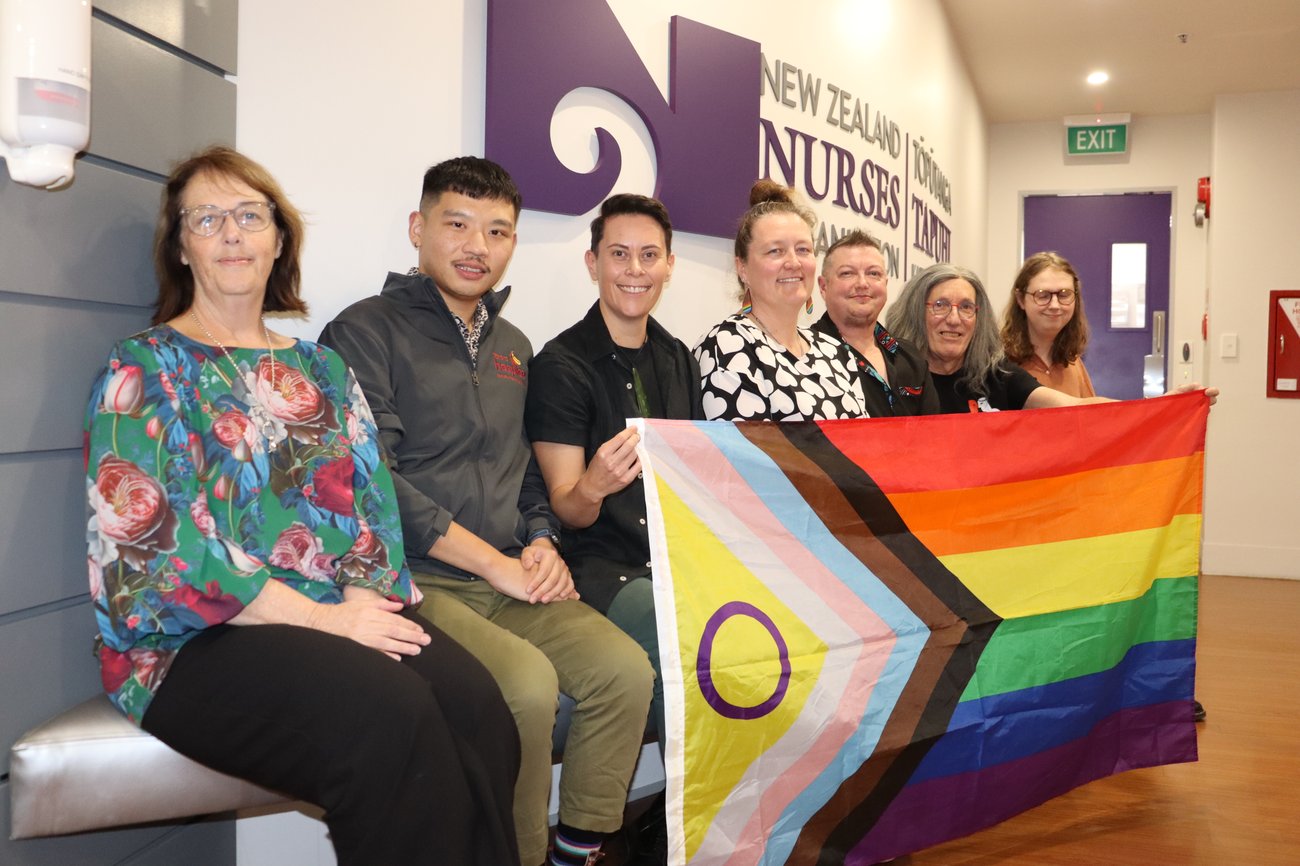
From left: NZNO professional nursing advisor Sandie Bayliss with the rainbow special interest group interim committee, Richard Jin, Patumahoe Leaf-Wright, Tara Birch, Mel Meates, Bernie, and Juno Hunt.
By Juno Hunt
It was the work that preceded this, when members past and present advocated to New Zealand Nursing Organisation Tōpūtanga Tapuhi Kaitiaki o Aotearoa (NZNO), that helped lead us to this point.
Mel Meates, a current member of the rainbow group, and their persistent efforts were the catalyst for this group.
In December 2023, Meates approached NZNO, and in 2024 followed up with advocacy emails which resulted in chief executive Paul Goulter acknowledging in a reply, “you are correct to identify that NZNO can do a whole lot better for our rainbow members”, and, “I don’t want another year where we are conspicuous by our lack of progress for our rainbow members”.
NZNO then committed to the formation of this group, with help of some of Meates’ contacts (to put the word out to the rainbow nursing community) and from Sandie Bayliss, an ally and NZNO professional nursing adviser.
Read more in Kaitiaki |
|
|
|
|
Nursing Council of New Zealand Code of Conduct review |
|
|
|
|
The Code of Conduct sets expectations for professional behaviour and underpins public trust and confidence in the nursing profession. It provides guidance for nurses on ethical and professional conduct and supports safe, culturally responsive care for health consumers and whānau. The current Code was published in 2012. A review of the Code was initiated last year after the new Standards of Competence were implemented, recognising that these need to inform a review of the Code.
The link below is to the NCNZ consultation page which invites nurses to give feedback on the review – this can be done anonymously if you prefer.
https://nursingcouncil.org.nz/NCNZ/Hidden-from-search/Consultation_Revisions-Code-of-Conduct_Jan-2026.aspx
You are also invited to email feedback to Sue Gasquoine, Nursing Policy Adviser and Researcher at sue.gasquoine@nzno.org.nz. She is coordinating NZNO's response to the review. Please send feedback by Monday 16 February. |
|
|
|
|
Nursing Education and Research Foundation |
|
|
|
|
The Nursing Education and Research Foundation (NERF) Board of Trustees (BoT) will meet on Wednesday 21 January to consider a proposal to transition to a new operating model.
The service level agreement with Tōpūtanga Tapuhi Kaitiaki o Aotearoa NZNO which has supported NERF with administrative, financial and professional and research advice will expire on 1 March as it can no longer support NERF's aspirations to be a leading source of support for education and research in nursing and midwifery in Aotearoa. The Trustees are NZNO members with the responsibility to ensure the charities fund is used appropriately and they are working to "lift and shift" operations to ensure NZNO members continue to benefit from the considerable funds available.
NERF's finances remain strong but the administration of NERF needs to transition to a model that can ensure compliance with updated Charities Act requirements, benefit from technology solutions available now and deliver higher value scholarships and grants.
The BoT expects to be in a position to open the next grant round offering a variety of scholarships, later this year. |
|
|
|
|
|
|
Grow yourself professionally by joining NZNO's colleges and sections |
|
|
|
Colleges and sections are central to NZNO’s success and influence and brings together groups of members who are focused on a specific nursing specialty.
So far only less than 20% of members have elected to join a college or section, and we'd like to see you grow that number. NZNO colleges and sections can help you advance your practice through policy and professional development opportunities, and membership at most colleges and sections is open and free to NZNO members.
There’s bound to be one for every member as there are 20 colleges and sections across a range of specialty areas and members can choose to belong to as many as three. Individual membership choices are usually related to clinical specialty and/or study and research interests.
Check out our colleges and sections here. Which one(s) will you join? |
|
|
|
|
College of Stomal Therapy Nurses Conference - upcoming conference: “Resilience” |
|
|
|
|
Venue: Novotel Christchurch Airport
Date: Thursday 5 March – Friday 6 March 2026
This conference brings together nurses, specialists, educators, and industry partners who are passionate about improving the lives of people living with a stoma.
This year’s theme, Resilience, highlights the ability of both patients and clinicians to adapt, recover, and grow — strengthening stoma care for all. Resilience is found in the courage of our patients, the dedication of our teams, and the ongoing commitment to innovation and compassionate care.
During the two-day event, you’ll be able to explore innovations, enhance skills, connect with colleagues and experts in stoma care, and celebrate our collective progress. Together, let's advance patient wellbeing and support excellence and compassion in Ostomy Management. Together, we can make a real difference by delivering equitable and holistic care across Aotearoa.
Link to the conference page, which includes the programme and registration: Home - NZNO College of Stomal Therapy Nursing Conference 2026
Registration is at the reasonable cost of $200 for the two-day event, or $120 for a single day, and includes the conference dinner.
Open to all – there is no requirement to be a member of the College of Stomal Therapy Nurses to attend.
Don’t miss this opportunity to be a part of something truly special — register today and join us at NZNO CSTN Conference 2026!
Find the programme here
Event flyer |
|
|
|
|
Save the Date! COASTN Conference 30 years celebration |
|
|
|
|
Flight Nurses Association NZ was founded in 1996 and later became COASTN, carrying forward the same passion, purpose and commitment to excellence in aeromedical and road transport nursing. For 30 years, COASTN nurses have helped shape the development of patient transport, a field defined by skill, resilience and innovation.
Hamilton, centrally located in the North Island, offers an ideal setting for our 30-year celebration, bringing us together to reflect on our past and look toward the future of patient transport. |
|
|
|
NZNO pays tribute to Dame Poutasi |
|
|
|
|
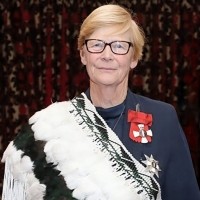
The passing of Dame Karen Poutasi has seen Aotearoa lose one of its foremost health leaders and a woman of high integrity, Tōpūtanga Tapuhi Kaitiaki o Aotearoa NZNO Kaiwhakahaere Kerri Nuku says.
“Dame Karen was an extraordinary woman who led from the front. She was principled, devoted and deeply committed to the health and welfare of people and communities,” Ms Nuku says.
“Her decades-long devotion in trying to reduce the significant health inequalities gap that exists among different groups of New Zealanders, especially Māori and Pacific peoples, will always be acknowledged.
"It was her selflessness and deep care for others, no matter who they were, that made her such an amazing leader and person.
“During Dame Poutasi’s brief tenure as Te Whatu Ora Health New Zealand chair from 2023 to 2024 at a difficult time, we found her to be very engaging and willing to listen to the nursing profession to make delivery of health services better,” Ms Nuku says.
Her mahi during the implementation of New Zealand’s early response to HIV/Aids and the governance of the Covid-19 vaccination programme will never be forgotten, Ms Nuku says. |
|
|
|
|
The next NZNO Maranga Mai! funding round opened on 31 December 2025 closing end of March 2026.
This grant is available to all NZNO financial members and is awarded annually.
The purpose of this fund is to provide members with assistance for professional development activities to enhance health care outcomes/provision in Aotearoa /New Zealand.
The fund is available for a variety of activities such as short courses, conferences, seminars, postgraduate and undergraduate study, workshops, books and travel. Other course related costs may be considered.
The fund is not available for any mandatory training required by an employer which is the employer’s responsibility to provide or fund.
The amount of any grant is determined by the Committee and will be decided based on total fund amount available once all applications are assessed.
You can apply through the Maranga Mai! online form on the NZNO Scholarships and Grants webpage.
|
|
|
|
|
|
|
Unions push for ‘Right to Switch-Off’ law |
|
|
|
|
NZCTU Te Kauae Kaimahi President Sandra Grey is calling on political parties to pass a Right to Disconnect law to ensure working people have the right to not be unreasonably contacted outside of work hours.
“Technology and remote work have erased the line between work and home. Workers shouldn’t have to go to a staff meeting on their day off, take their laptop to the beach in the weekend, or take a call from their boss at 10pm if they aren’t on call,” said Grey.
“Many New Zealand workers are constantly on the job. Long hours and overtime are common – we work some of the longest hours in the OECD – and burnout, anxiety, and stress are on the rise.
“Our laws haven’t kept up with modern ways of working. Current rules don’t protect workers’ time or wellbeing. They allow employers to exploit power imbalances in their relationships with workers.
“France, Ireland, Germany and Australia have all introduced ‘right to disconnect’ laws. The new law in Australia meant that unpaid overtime hours were fewer in 2024 than in previous years.
“With the Prime Minister suggesting workers have too much time off, and businesses cutting back on flexible work arrangements, we must ensure that workers are paid for all the work they do.
“This is not a blanket ban on contacting employees outside their scheduled work hours, rather it empowers workers to decide whether to respond to out-of-hours contact, based on the reason for the contact.
“We are calling on political parties to do the right thing – pass a Right to Disconnect law as soon as possible and give workers the right to knock off after work,” said Grey.
Read more |
|
|
|
|
|
|
ICN's latest Nurses for peace update 2025-2026 |
|
|
|
|
Since issuing our end-of-year #NursesforPeace update, global crises affecting nurses and health systems have continued to escalate.
Over recent weeks, ICN has been actively supporting nursing associations and partners responding to significant humanitarian developments, including a life-saving medical supply delivery operation in Ethiopia as well as expressing solidarity and responding to recent crises in Iran, Venezuela, Switzerland, and Australia. To see these new developments, click here
“When the International Council of Nurses (ICN) launched #NursesforPeace in 2022 as a response to the start of the Ukraine conflict, it was born of urgency and conscience. ICN’s 140+ national nurses associations and the world’s 30 million nurses, asked how they could stand together—for peace, for humanity, and for those caring on the frontlines of crisis.
Since then, through ICN’s Humanitarian Fund, the continued growth of #NursesforPeace, and our growing strategic partnership with Direct Relief, that collective resolve has been transformed into ongoing action. Nurses have been supported, voices amplified, and hope sustained in more than ten countries, including Afghanistan, Ethiopia, Israel, Jordan, Lebanon, Mauritania, Myanmar, Palestine, Somaliland, South Sudan, Sudan, and Ukraine, affected by conflict and humanitarian emergency. This work has never been symbolic; it has been practical, principled, and often carried out under the most sobering conditions imaginable.
Read more
|
|
|
|
Reflect Conference 2026 and call for abstracts are now LIVE
Theme: JUST Health — “Kia tika, kia pono, kia taurite.” Let there be justice, integrity, and equity. Auckland 16 May 2026/Christchurch 23 May 2026
Join us as we gather to pursue a bold, faith-filled vision of JUST Health. A health that is holistic, equitable, and deeply relational.
Hosted by Nurses Christian Fellowship NZ & Christian Medical Fellowship NZ, we are looking for abstracts from nurses, midwives and colleagues on the Subtheme Justice in Action: Voices of JUST Health.
Abstract submission closes 9 February 2026. News - The Christian Medical Fellowship of New Zealand
Register Now |
|
|
|
|