|
|
|
Member Newsletter/Pānui 27 February 2026 |
|
|
|
|
|
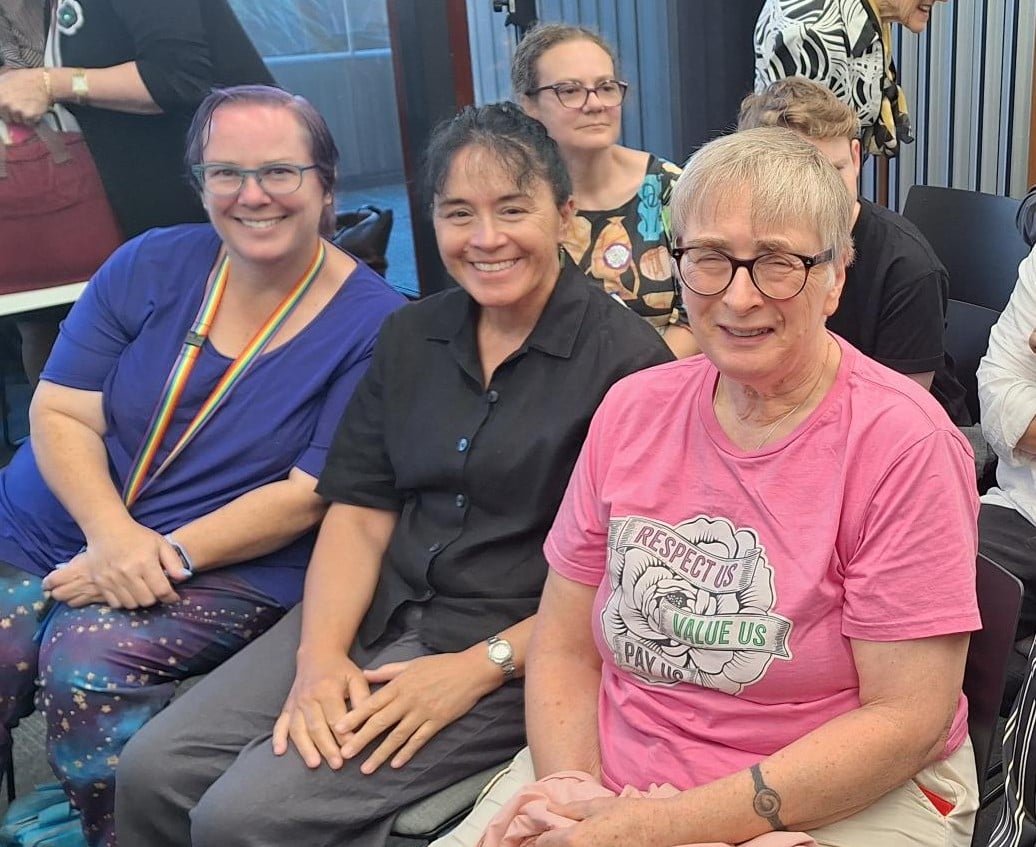
NZNO Pay Equity spokespeople and champions at this week's People's Select Committee report launch. From left: Anna Garton from Te Omanga Hospice, Lisa Marriner from Summerset on the Landing and Fiona McDougal from Mary Potter Hospice.
Kia ora Member,
“Repeal the Pay Equity Amendment Act!” was the resounding call from the People’s Select Committee into Pay Equity when they released their report this week. The 10 former female MPs from across the political spectrum announced their findings to a packed room at the National Library in Wellington.
The overnight law change last May which scuppered 33 Pay Equity claims – including 12 involving NZNO members – and gutted the world-leading scheme was described as a “flagrant and significant abuse of power”.
NZNO was well represented at the event by some of our Pay Equity champions (see photo above) including two members from Hospice, one from primary care and another from aged residential care.
Just over the road at Parliament, Workplace Relations and Safety Minister Brooke van Velden dismissed the select committee’s report and eight recommendations as “their own opinions”.
But there is no doubt Pay Equity is shaping up to be an election issue this year. Select committee chair Dame Marilyn Waring told women workers not to be defeated because it’s what the Coalition Government wants. Her call was heartening for our champions. I hope provides inspiration to you all to keep fighting to have gender-based wage discrimination relegated to the dustbin of history where it belongs.
Working Women’s Week
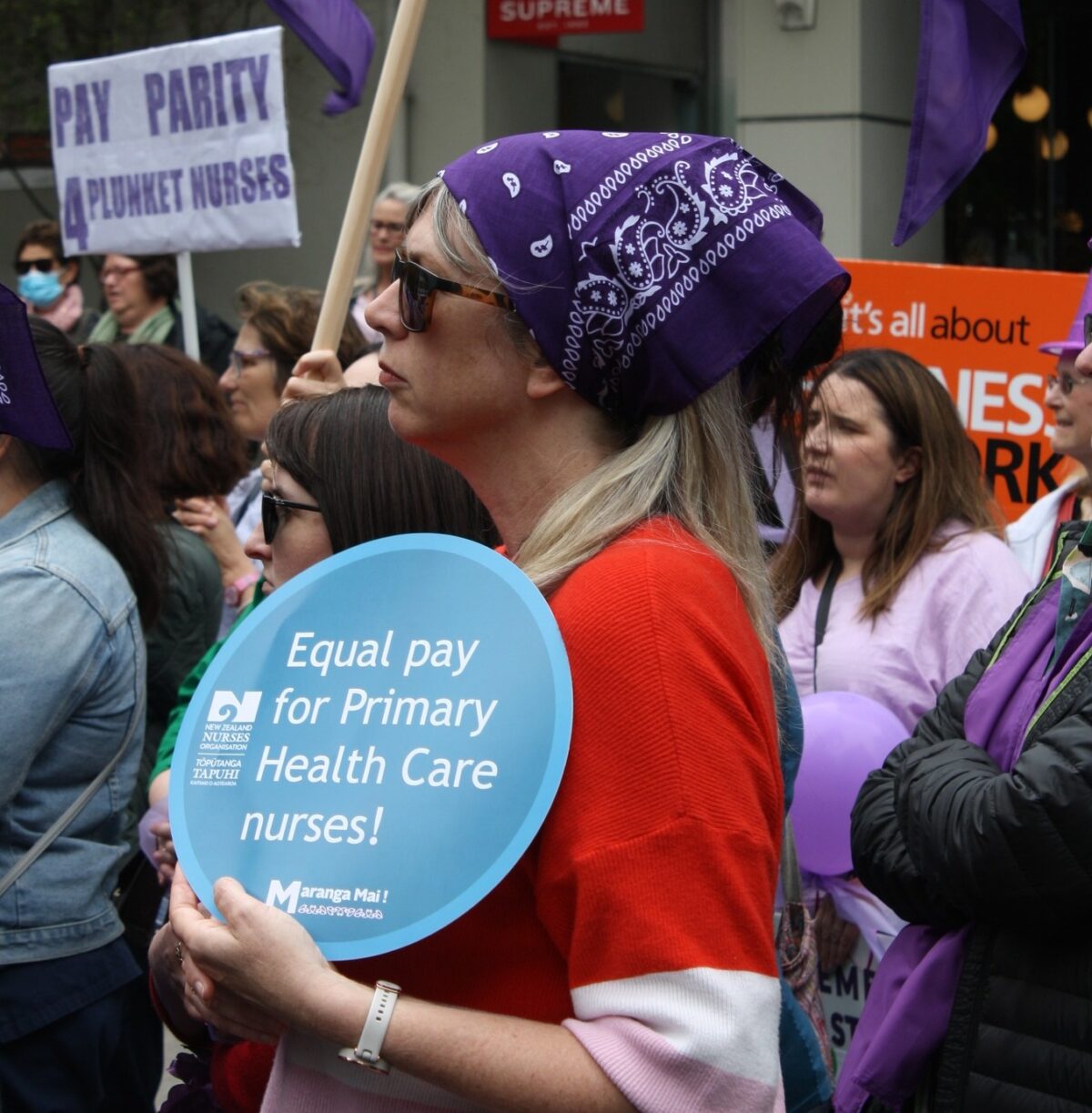
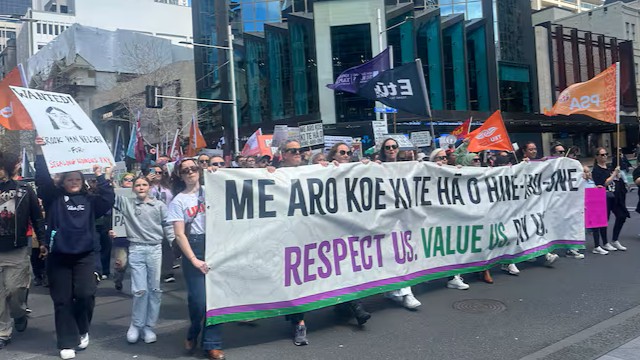
Winning back Pay Equity is the theme for this year’s Working Women’s Week which begins on Monday. The big event for NZNO is "Go Purple Day” on Friday 6 March so please wear something purple for Pay Equity to work. Organisers will have some stickers for the day – look out for these. Most big employers have been notified.
Working Women’s Week kicks off at 7.30am on Monday morning in Wellington with Council of Trade Unions Te Kauae Kaimahi and Victoria University of Wellington Students' Association - Te Aka Tauira “Vote Pay Equity” breakfast at Rutherford House near the Railway Station at 7.30am.
At lunchtime, NZNO and the PSA are co-hosting a rally at Parliament. If you’re in Wellington and available, please come to either or both events and bring your colleagues and whānau.
There are other union events in main centres – and Thames – throughout Aotearoa New Zealand throughout the week and further information is available on the CTU’s webpage.
Te Whatu Ora bargaining next week
Following the latest disappointment for our bargaining team, when no new offer was presented despite suggestions one was coming, they head back to the table for another two days of negotiations next week (more below).
This coincides with a round of consultation with delegates about the next wave of action following our feedback survey.
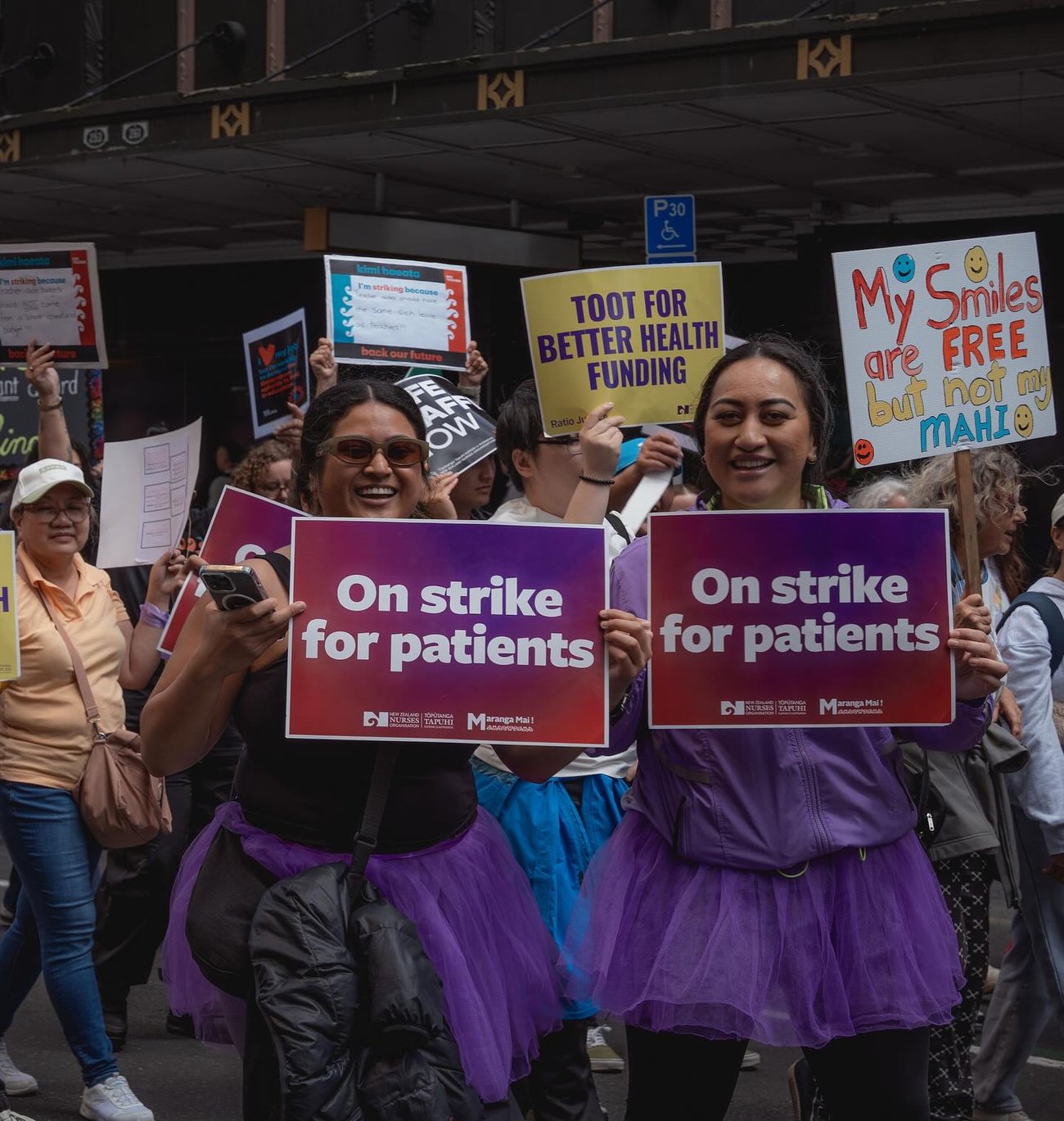
Te Whatu Ora members have charted their own course through the past 18 months of bargaining, with innovative actions such as redeployment and visibility strikes. The visibility strikes, also called uniform strikes, have been hugely successful.
This afternoon Whangārei Emergency Department voted to extend their visibility strike and will be joined this round by members from Neonatal, Radiology, District Nursing, ICU, Ward 14, Dargaville and Kaitāia. This action starts tomorrow and runs until the end of April.
Further local visibility strikes are being planned. They are a great way to keep the issue of short staffing in the spotlight. Itef you’re interested in holding one at your worksite, please reach out to your local organiser.
More IT headaches
There were IT outages at Te Whatu Ora facilities throughout the country earlier in the year which affected payroll, patient record and security systems. This has been an ongoing headache for Te Whatu Ora who has attempted to convince the public it has nothing to do with redundancies in its Data and Digital team.
This week it was the turn of the aged care sector and pharmacies after the medicine management system MediMap was hacked. New Zealanders hadn’t heard of the system until nurses and pharmacist weren’t able to use it. It doubled workloads for some of our members, sending them back to using pen and paper and creating massive risks for patient safety.
This hack, following on from the Manage My Health cyberattack, shows that the international cybercriminals are clearing seeing New Zealand’s health system IT as a weak and exploitable link.
The wisdom of health workers
The NZNO National Executive and Te Poari met with former health boss and health commentator Rob Campbell this week. He later wrote a fascinating reflection of his time with us, saying it was a “far more stimulating and incisive discussion” about the issues facing the health sector than any he had with officials, managers, politicians or consultants while involved with Te Whatu Ora.
He noted that the NZNO leadership included informed, experienced and engaged people from a wide range of the nursing workforce. And importantly, that they knew far more, and in a more caring and nuanced way, than highly schooled and KPI-driven managers chasing Government health targets or their own career aspirations.
Rob Campbell went on to say that our insights, which challenged some of his own thinking, should be heard. He also had a warning for the Government that avoiding real engagement with health sector unions “was wrong-headed and counter-productive".
A happy note to take into your weekend that people are listening, and deeply value, your wisdom as health professionals.
Ngā mihi,
Paul Goulter, Chief Executive
Tōpūtanga Tapuhi Kaitiaki o Aotearoa NZNO
|
|
|
|
|
|
In this member newsletter |
|
|
|
|
|
|
|
|
Te Whatu Ora bargaining
We enter bargaining again on Thursday and Friday next week progressing members claims and focusing on our core issues of safe staffing and a cost of living increase.
Having been led to believe that there was a new and improved offer in our previous bargaining which failed to eventuate, we have continued planning on the next wave of industrial action.
Over the course of this campaign members have decided on our next steps and this principle guides our planning. We know that what works in one area does not necessarily work in another and the next wave will give members voice in the action that works in your area.
Holidays Act Remediation Programme
In March members working in MidCentral and Waikato are expected to receive their remediation for Te Whatu Ora’s non compliance with the Holidays Act, leaving Lakes and Whanganui expected in May.
Importantly, members who are classed as former employees are not yet remediated. We met with Te Whatu Ora earlier this week to discuss how members who hold multiple roles will receive leave entitlements.
Last year the Employment Relations Authority decided a claim essentially stating that a person with multiple roles still had a single employment relationship with Te Whatu Ora. While Te Whatu have applied to the Employment Court to hear the case afresh, they have agreed in principle to work with us on how to deal with the many issues faced by members with multiple roles. We will keep you updated on progress.
|
|
|
|
|
|
|
Access
We have asked for a second day of mediation after they responded to our proposal at the first mediation. Our proposal included decent pay increases and PDRP being introduced for nurses. However, after discussion with the CEO, Access were unable to make a formal offer. Following the second mediation, we will be meeting with members regardless of the outcome to discuss how we proceed.
Whakarongorau
Ratification is underway this week, and we should know the outcome early next week. Their offer includes a 3.25% pay increase this year, 3% next year, a new allowance for preceptors, increased sick leave accrual and a lump sum payment for union members only. The bargaining team have been back and forth with the employers over exact wording for the various changes, but the effective date of the proposed CA is locked in as 9 February.
Corrections
We have been working hard to sort out delegates to support the various working groups that came out of bargaining last year. We have an almost complete list now which we shared with the employers when we met on Thursday, with work due to commence soon.
Sexual Wellbeing Aotearoa
The bargaining team met for the first time on Monday to go through the member feedback for claims. As expected, pay is a huge issue for members, especially after the Coalition Government cancelled the SWA Pay Equity claim last year and changed the settings, so it is extremely difficult to make a successful PE claim now. Members are expecting bargaining to decrease the 10% gap with their peers working for other employers this year.
Primary Health Care MECA
Planning is under way for NZNO’s second largest collective agreement, the PHC MECA. Our aim this year is to streamline the MECA negotiations process to reduce the delays and difficulties that caused frustration for members at the last bargaining. We believe that if we can have a more streamlined and simplified MECA process, this will result in tangible benefits for members in the outcome.
National Delegate Committee
The National Delegate Committee (NDC) met for the first time. We had a good afternoon together on Teams, electing Laurie Stuart of Plunket as Convenor and Tracey Morgan as Te Rūnanga Co-convenor. We discussed the sector strategic priorities for the year, what bargaining and campaign activity is due to take place that might require NDC support, budgets, and set the dates for our next meetings. If you want to be part of this group, delegates are welcome to apply via the nomination form available from nurses@nzno.org.nz. We have one vacancy in Auckland, one for Midlands, one for Central and one for South Island.
|
|
|
|
|
National Delegates Council
Our aged care National Delegates council met on Monday for our first meeting of 2026. At the meeting we discussed our Pay Equity strategy for aged care nurses. We talked about what we hope to achieve this year, which is a lift in the delegate numbers and delegate training in the sector. We have a strong focus on lobbying for mandatory minimum staffing levels in our sector ahead of the election.
We formed a subcommittee which will focus on violence and aggression in the workplace. This committee will consist of Melissa Peat, Lindsay Warren and Bridget Richards. The subcommittee will work on how we can address the violence and aggression at work as a sector.
Summerset
Our Summerset bargaining team returned to negotiations on 4 February. Although small improvements were discussed, the offer is still below standard. The bargaining team is meeting again on 26 February to discuss our next steps and we will be in touch after that.
We are also working through gathering and presenting feedback about the change proposals that have been presented by Summerset at 17 of their sites, all of which further reduce hours off of the roster.
Arvida
Organisers and delegates have been responding to change proposals at 11 Arvida sites around the country. We have sent the company national feedback and organisers are adding to this with feedback from their individual sites.
Oceania
While we are undergoing consultation on change proposals at Lady Allum, and Palm Grove and Elmwood, members at Elderslea are revieiwing the changes at their sites.
We have also received notification that Oceania has divested four of their sites, and we are awaiting further information about these sales. Organisers are working to ensure that members are well represented through these changes. The affected sites are Elmswood, Ohinemuri, Whitianga and Te Mana.
Age Safe training
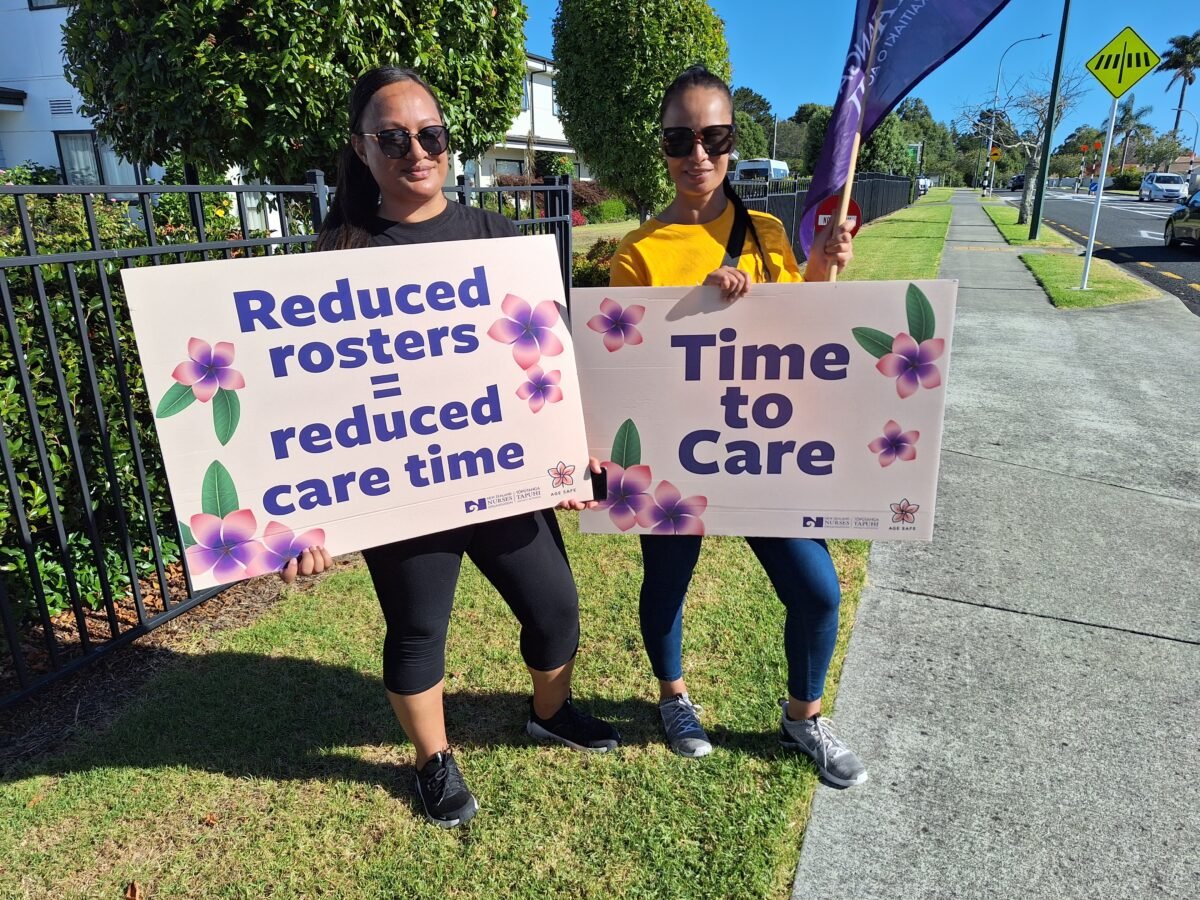
The endless reduction of rostered hours in aged care won’t stop on its own. It’s built into the way the sector is funded. If we want secure hours and safe care, we need two clear changes:
-
A funding model that reflects the real cost of quality and culturally safe care.
-
Mandatory minimum staffing levels in legislation, so employers can’t keep cutting to the bone.
Without those protections, working hours will continue to shrink and residents will continue to feel the impact. This training will help aged care delegates to:
-
Understand the Manaaki i te raru | Care in Crisis report and what it means in practice.
-
Explain its findings and solutions clearly to your workmates.
-
Organise coworkers and communities to push for the changes we need.
We will be holding Age Safe training on the following dates for aged care delegates:
-
18 March in Hamilton
-
19 March in Christchurch
-
24 March in Wellington.
-
26 March in Auckland
Please contact Tessa.Lampitt@nzno.org.nz if you are keen to participate.
|
|
|
|
|
Private hospitals and hospice sector |
|
|
|
|
Sector-wide
National Delegates Committee (NDC)
We are establishing a new National Delegates Committee (NDC) for our sector. The NDC’s responsibilities include setting and supporting the national strategy for our sector. Read more.
Congratulations to the six provisionally appointed national delegates:
Northern:
• Olivia Vodanovich (Allevia Hospital)
• Recel Malvar (Totara Hospice)
Midland – Te Manawa Taki:
• Diane Harper (Grace Hospital)
• Lauren Te Whaiti (Waipuna Hospice)
South Island – Te Waipounamu:
• Donna Burnett (Nelson Tasman Hospice)
• Rachel Russell (St Georges Hospital)
Central – Te Ikaroa:
A ballot opened on Wednesday, 25 February and closes on Wednesday, 25 March for delegates in the Central Te Ikaroa region to vote on seven candidates for the two positions:
• Amber Frith (Crest Private Hospital) – Te Rūnanga Representative
• Simon Auty (Evolution Private Hospital) – Delegate
• Joanne Drylie (Cranford Hospice) – Delegate
• Susan White (Crest Private Hospital) – Delegate
• Rachel Clarke (Arohanui Hospice) – Delegate
• Angela Brown (Mary Potter Hospice) – Delegate
• Anna Garton (Te Omanga Hospice) – Delegate
You can read candidate profiles here.
The Northern, Midland and South Island positions are provisionally appointed as the NDC can only be constituted if a Te Rūnanga Representative is elected. Amber Frith is currently the only Te Rūnanga Representative candidate.
Delegates should check for a voting email. If you have not received one, contact amanda.newson@nzno.org.nz. Members can speak with their delegates about their preferred candidates.
Private & NGO hospitals
ABI & Evolve Rehab
The parties will return to negotiations on 16–17 March.
Allevia Kensington
Negotiations were held on 17–20 February. We have the outline of an offer and will continue negotiations until we have a formal offer to bring to members for a vote.
Braemar
Voting on the company’s offer is open until 5pm on 12 March. Check your email for a link to the ballot. If you do not have email access, contact Amanda.newson@nzno.org.nz.
This offer is complex. We recommend reading the background material carefully to understand how the deal affects you and your colleagues now and into the future.
Evolution
We are meeting with the company soon to restart our stalled senior nurse and ratios working groups.
Grace
We have worked with the company to resolve the major outstanding issues. The parties are finalising the draft collective agreement and the union aims circulate an electronic ballot in the first week of March. Backpay remains on the table.
Mercy (Dunedin)
Negotiations will commence shortly.
Hospice
Cranford Hospice
We are working through pay issues for senior staff arising from our recent settlement.
Hospice Southland
We are waiting on a formal written offer from the employer.
Hospice MECA (Rotorua, Taupō, Eastern Bay of Plenty, Marlborough)
Negotiations will be held on 24–25 March.
Four Hospice MECA (Waikato, Waipuna, Mary Potter, Harbour Hospice)
Negotiations were held on 26 February. We plan to run member meetings in the next two weeks to discuss progress before returning to negotiations later this month.
Hospice Whanganui, North Haven Hospice, Mercy Hospice
Planning continues to enter negotiations.
Private Health
New Zealand Clinical Research (NZCR)
We attended mediation on Thursday, 27 February and will report back on progress shortly.
|
|
|
|
|
Working Women’s Week: Vote Pay Equity
Working Women’s Week (2–8 March) is a nationwide call to vote Pay Equity – making women’s work visible, valued, and politically unavoidable in an election year. Across unions and communities, it’s about showing that the work women do every day is essential, skilled, and long overdue for fair recognition.
This year, the focus is sharper. The People’s Select Committee on Pay Equity has now reported back, confirming that the 2025 amendments have raised thresholds, narrowed comparators, and significantly restricted access to claims for women-dominated workforces. Media coverage following the report has reinforced what members already know: when pay equity is made harder to win, it is feminised workforces who feel the impact first.
As part of Working Women’s Week, on Friday 6 March NZNO will be joining a Purple Day of Action. Wear purple and stand in solidarity with other affected workers. Show that Pay Equity is an issue we’ll fight and vote for in 2026.
Working Women’s Week turns shared experiences into collective pressure. See what’s happening nationally and how to get involved:
👉 https://www.together.org.nz/working_women_s_week_2026
NZNO Pay Equity Update: Strategic Action under Maranga Mai Rise Up!
NZNO’s Pay Equity work is our contribution to this national movement. It sits within Maranga Mai – Every Nurse, Everywhere! using Pay Equity deliberately to challenge systemic undervaluation and shift funding, political, and workforce settings.
Under the amended law, previously progressed claims were forced back to the beginning. That reset has shaped our approach. Every claim is deliberate. Every case is a test.
Our current claims at Plunket and Hospice are progressing intentionally through the early stages of the new framework. They are helping us test the higher merit threshold, understand what comparators are realistically accessible, and identify where alignment with employers supports progress — and where the law itself begins to limit outcomes.
This learning strengthens future claims and builds the political case for reform. When organised nurses use their trusted place at the centre of the health system, Pay Equity becomes a political problem the Government must solve.
Karanga atu, Maranga Mai. Rise up — every nurse, everywhere!
|
|
|
|
|
|
|
Our leaders speak: President Anne Daniels - Advocacy and action beyond false economies |
|
|
|
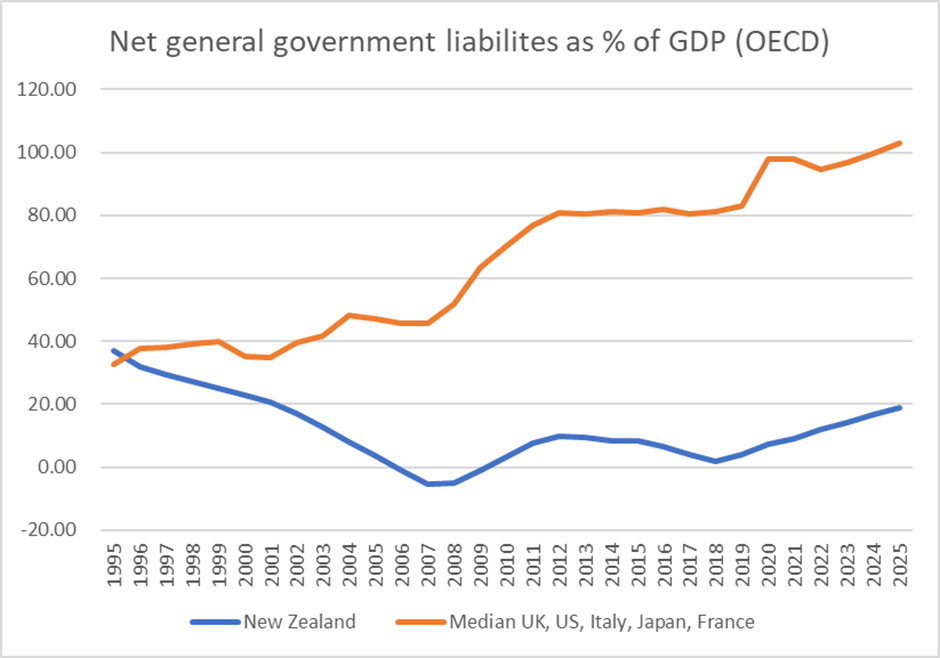
The Treasury last week told the Government there was room to borrow more for essential infrastructure such as health and education. The fact is that Aotearoa/New Zealand GDP to debt ratio is the lowest in comparative countries. |
 |
|
In response, Deputy Prime Minister David Seymour stated there was too much debt and debt reduction would continue. False economic decisions are being made by government resulting in the chaos and crisis that the many rather than the few are experiencing. Further, government spending choices are being proudly displayed on large billboards around the country by National stating “building roads, schools, hospitals (and the military ‘toys’).
What’s missing? The people, the people, the people. Or in other words social infrastructure We know we do not have enough people with the right qualifications, experience, expertise to provide health care where and when it’s needed, particularly to focus on health and wellbeing rather than cure. Why? Over $500 million was ‘saved’ out of Te Whatu Ora in 2025, and the same is expected from the government in 2026.
What does that look like in health? Technicians are being supported to replace registered nurses and doctors – because they are cheaper. Health care assistants/kaiawhina are being asked to do more of the nurses’ roles that put them in unsafe places that can impact on the patients – because they are cheaper.
IT local workers are being replaced with a call centre – because in the short term, its cheaper. Logging the IT issue e.g. access to clinical platforms does not mean that the issues are being ‘fixed’ because IT people have been reduced by half and now thousands of issues are outstanding, increasing the likelihood of a major catastrophe soon. We are already seeing escalating IT outages limiting clinical staff to access to clinical records, labs, x-rays etc.
The freeze on recruitment of new graduates and experienced nurses is being seen in the fact that ‘shifts below target’ or not enough nurses on shift, in Te Whatu Ora found in 2025 was an average of 56% and up to 90% of every shift over the last year in mental health and pediatrics’. And it goes on.
All of which result in lack of safety for our patients, families and communities in a context where presentations to hospitals for health care has seen Code Red reports become nearly daily for some. And lack of safety for health care providers. Human and financial costs of avoidable harm is increasing in response to these government and employer decisions, and it costs a hell of lot more than investing in primary health care and the nurses/midwives/health care assistants we need to prevent the unsustainable, unsafe workloads and avoidable harm that is occurring.
Waiting for care is a systemic issue due to the lack of investment, when there IS room to move to turn this around as the GDP/debt ratio attests. Further, the focus on curing rather funding the work needed to improve equitable social determinants of health such as healthy homes that contribute to 80% of preventable health issues (e.g. asthma, rheumatic fever, heart disease) results in an unhealthy population rather than a healthy one. Other countries of similar size and GDP can do it, so we can.
An unintended consequence of these decisions made by others, about us, without us, is the escalation of violence and abuse against health workers, nurses, doctors, midwives, allied and support staff. Recent NZNO surveys have strengthened previous New Zealand research that found that between 76 to 90% of nurses experience violence and abuse. They rarely report it as nothing changes or they fear victimisation and blame. Worse, it has become an expectation by employers, that we pick ourselves up and get on with the job. It’s been normalised.
More security staff will not fix the above underlying contributing factors to the rise in violence and abuse. Some countries have made it a crime to abuse a health workers with fines and jail time. but punishment rather than fixing the contributing factors will not create the change we need to see.
The International Labour Organisation Convention 190 states clearly that every worker has the right to work in a workplace free from violence and abuse, yet successive New Zealand governments have not seen fit to formally sign up to do the work needed to make this happen. That isn’t just about having legislation and zero tolerance policies in the workplace, it means that the government must understand all aspects of the factors contributing to violence and abuse in the workplace, rather than blame the perpetrator, and fix them.
We can advocate and act to encourage government to do right by us all. It is also up to all of us to be part of the ‘fix’ by reporting and making visible the actual prevalence of violence and abuse. Then collectively, use our professional, industrial and political power of our members to force the change we need to see. We are a membership led organization, lets lead the way to advocate and activate the change we need to see. Its election year and 64,000 of us acting collectively can make change happen. Let’s do it!
|
|
|
|
|
|
|
Grow yourself professionally by joining NZNO's colleges and sections |
|
|
|
Colleges and sections are central to NZNO’s success and influence and brings together groups of members who are focused on a specific nursing specialty.
So far only less than 20% of members have elected to join a college or section, and we'd like to see you grow that number. NZNO colleges and sections can help you advance your practice through policy and professional development opportunities, and membership at most colleges and sections is open and free to NZNO members.
There’s bound to be one for every member as there are 20 colleges and sections across a range of specialty areas and members can choose to belong to as many as three. Individual membership choices are usually related to clinical specialty and/or study and research interests.
Check out our colleges and sections here. Which one(s) will you join? |
|
|
|
|
Join the future of Mental Health nursing
Are you ready to shape the future of mental health nursing in Aotearoa New Zealand? The Mental Health Nurses Section is calling for Expressions of Interest from MHNS members to join our National Committee (NZNO members can join the MHNS via the MHNS webpage).
This role is offered as a secondment through to the 2026 BGM, with the option to continue beyond this term through formal nomination and election at the BGM.
You’ll enjoy this role if you:
-
Are able to commit to 2 meetings of 1.5–2 days annually, face to face.
-
Are able to commit to 2-3 online Teams/Zoom meetings of 2-4 hours around 3 times annually.
-
Are keen to influence national direction and advocate for mental health nursing, and
-
Can contribute around 2 hours per month between meetings to support ongoing committee work.
How to Apply
Download Expression of Interest form here
Send completed EOI form to the admin for the MHNS Committee by midday on Monday 2 March 2026.
For more information email elisabeth.auchinvole@nzno.org.nz
Be part of leading the next chapter in mental health nursing — your voice counts!
|
|
|
|
|
|
 |
|
2026 College of Respiratory Nurses Symposium
Registrations are now open for the NZNO College of Respiratory Nurses 2026 Symposium - New New New – What’s New in Respiratory
When - Friday 1st May 2026
Where – The Oaks Wellington, 89 Courtney Place, Wellington
We have an exciting range of expert speakers providing insight on the latest research and management.
Download the CRN Symposium Programme here
To register, just click on the link to go to the registration page
2026 College of Respiratory Nurses Symposium - "New, New, New"
- Choose New Registration
|
|
|
|
|
|
|
Neonatal Nurses College Aotearoa Symposium 2026
Dates: 7 - 8 May 2026
Venue: Copthorne, Waitangi
The Journey | Te Haerenga
Join us as we explore the journey in neonatal care; celebrating the paths of pēpi, whānau, nurses and neonatology.
- Abstract submission closes at 5pm on Friday 13 March 2026
- Registration closes on Sunday 19 April 2026
More information is available on the website. |
|
|
|
|
College of Stomal Therapy Nurses Conference 'Resilience'
Venue: Novotel Christchurch Airport
Date: Thursday 5 March – Friday 6 March 2026
This conference brings together nurses, specialists, educators, and industry partners who are passionate about improving the lives of people living with a stoma.
This year’s theme, Resilience, highlights the ability of both patients and clinicians to adapt, recover, and grow — strengthening stoma care for all. Resilience is found in the courage of our patients, the dedication of our teams, and the ongoing commitment to innovation and compassionate care.
Link to the conference page, which includes the programme and registration: Home - NZNO College of Stomal Therapy Nursing Conference 2026
Registration is at the reasonable cost of $200 for the two-day event, or $120 for a single day, and includes the conference dinner.
Find the programme here
Event flyer |
|
|
|
|
NZCTU: Employment Relations Amendment Bill passing a dark day for working New Zealanders |
|
|
|
|
The passing of the Employment Relations Amendment Bill last week was a dark day for working New Zealanders, says New Zealand Council of Trade Unions Te Kauae Kaimahi President Sandra Grey.
“This law strips working Kiwis of long-held and fundamental rights.
“Employers will now be empowered to misclassify employees as contractors, stripping from them key entitlements including the minimum wage, sick pay, and KiwiSaver. This threatens entire workforces, particularly in industries where work is already low-paid and precarious.
“With this change, National, ACT, and New Zealand First are once again prioritising profit over people. The National-led Government is shamelessly giving in to Uber and other multinational companies whose business models rely on insecure work.
“The legislation also makes a mockery of the personal grievance system. Workers now face the absurd situation where they could prove in court they were unjustifiably dismissed but not be eligible for remedies for this injustice.
“This Bill was strongly opposed during the select committee process. The Government was warned by employment experts and working Kiwis that it will dramatically undermine job security. It has refused to listen.
“Everyone deserves good work – work that is well-paid, secure, and provides employees with minimum rights and conditions. This Bill does the opposite, eroding fair pay, job security, and basic protections.
“National have let Uber and the ACT Party set the agenda for employment law in this country. They need to grow a backbone and stand up for the interests of New Zealand workers,” said Grey.
|
|
|
|
|
|
|
NZNO Vacancies - come work with us! |
|
|
|
|
Director of Organising
National Office, Wellington – 1.0 FTE
NZNO is seeking applications for the role of Director of Organising for 40 hours per week (full time), based in the Wellington National Office of NZNO.
Applications should be addressed in confidence to Heather Sander and close at 5pm Tuesday 10 March 2026. They must include both a cover letter and a current curriculum vitae. Please submit your application by email to: heather.sander@nzno.org.nz.
Please find the advert and job description.
Organiser
Palmerston North – 1.0 FTE
NZNO is seeking applications for the role of Organiser for 40 hours per week (full time), based in the Palmerston North Office of NZNO.
Applications should be addressed in confidence to Donna-Marie Simpson and close at 5pm on Sunday 15 March 2026. They must include both a cover letter and a current curriculum vitae. Please submit your application by email to: donna.simpson@nzno.org.nz.
Please find the advert and job description.
|
|
|
|
|
|
|
|
|
|
|
If you haven’t done so already, please update your details via our Survey Monkey form so you can tell us how your work circumstances have changed since you joined NZNO.
We often need to contact certain groups of nurses within our membership, but we know that over time roles change, people are promoted, or people move into other areas of work or locations around Aotearoa New Zealand.
We need to know if your circumstances have changed. An up-to-date database will ensure we contact you about the right things and that you are included when we are working with membership groups that should include you.
Complete the survey here.
You will not need to log in to complete this survey, but you will need your membership number which is included in the original email we sent you about this. Please make sure to include your membership number in the survey. This will save time when we are updating your details in the NZNO database.
The survey should take you less than five minutes. |
|
|
|
|
|
|