|
|
|
Member Newsletter/Pānui 22 May 2026 |
|
|
|
|
|
Members keep rising up in the midst of many challenges presented to health workers.
Kia ora member
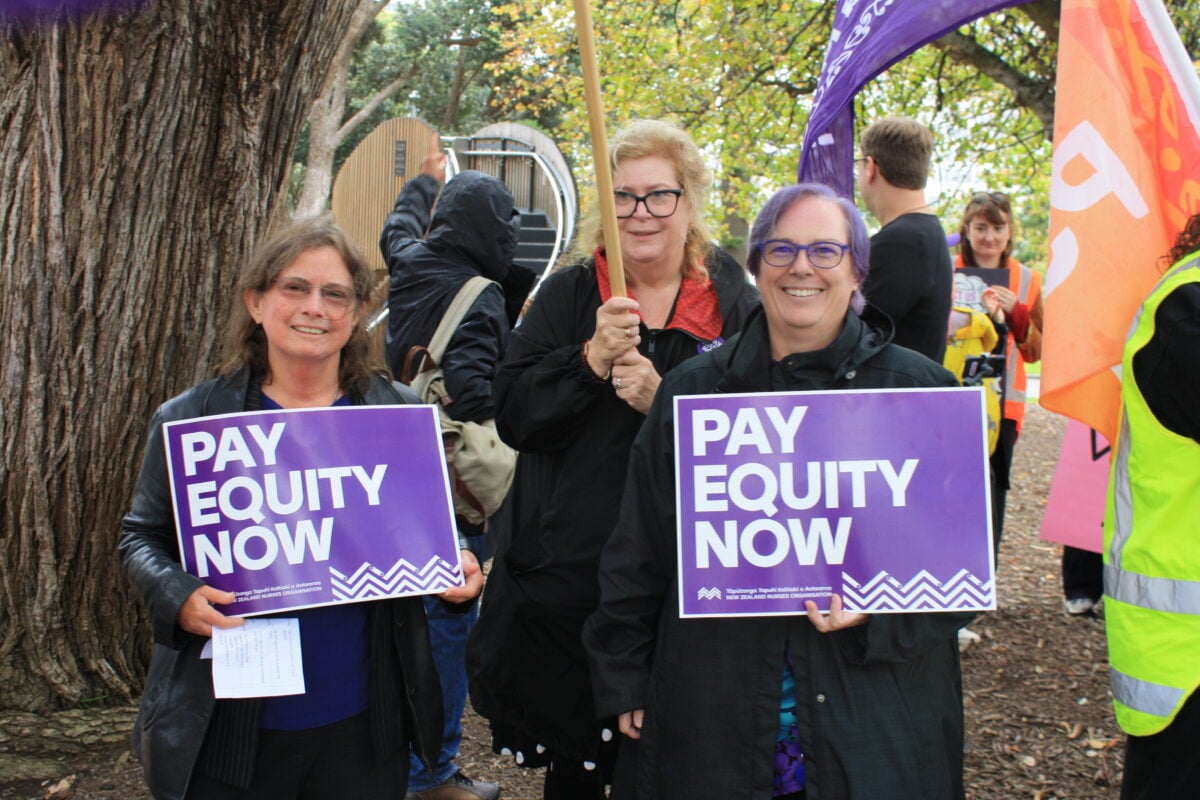
NZNO’s third pay equity claim – for Bupa aged care nurses – was lodged this week. It covers more than 380 registered nurse members working at Bupa’s 40 aged residential care homes across the country.
This follows our claims for Hospice and Plunket nurses lodged last September.
NZNO is the only union to have taken claims under the gutted new scheme. I make no apologies for NZNO pushing hard to do all it can to end historical and systematic gender-based wage discrimination against our members.
That’s why NZNO is at the forefront of the fight for pay equity. And so we should be. We were the union that had the most claims scrapped.
Implementing the Te Whatu Ora collective
After a final check, NZNO has signed the new collective agreement which is now back with Te Whatu Ora for their signing. Te Whatu Ora has also shared their implementation plan which we are reviewing. This document is important to make sure there is uniform implementation of our agreement across Te Whatu Ora districts, facilities and services.
There are also a number of different workstreams beginning which are a result of the bargaining. See more on this below.
The battle for Te Whatu Ora to provide safe staffing levels, hire graduates and recognise the contribution of senior nurses continues despite the agreement being settled.
Our eyes are now focused on next week’s Budget and then to the fast-approaching general election campaign. Te Whatu Ora nurses, midwives, health care assistants and kaimahi hauora will campaign alongside their colleagues from other sectors throughout the health sector. Our newly formed Local Organising Group structures will play a key role in informing members and the public about different health policies and ideas to turn around the crisis in the health sector.
Health has long featured in opinion polls as the second most important issues to voters, but a new poll from Horizon Research last week put it as the number one issue with 62% of respondents wanting the Coalition Government to “improve the health system” this year.
How much health funding does Aotearoa need?
We all know the health sector is in dire need of more funding, but how much more investment does it need?
New analysis on health funding ahead of next week’s Budget was released this week by the health advocacy group Kaitiaki Hauora. It highlights the Coalition Government’s funding approach to only meet cost pressures is managing the decline of a health sector “under severe stress”.
Expectations for new health spending in this year’s Budget are low after the Government allocated $1.37 billion in 2024 for cost pressures in the 2026 Budget. Any new health services announced on Thursday will need new funding attached to them, otherwise existing services will be cut to pay for them.
Experts have estimated we have an annual health funding gap of at least $6.8 billion that needs to be closed, starting at Budget 2026. That is based on data available and only covers six areas of the health sector: primary care, Hauora Māori, hospital workforce, electives and planned services, population health and dental health. It doesn’t cover pay parity, pay equity or workforce shortages outside Te Whatu Ora.
NZNO will be closely watching and analysing both pre-Budget health announcements and Thursday’s Budget.
New global health rules
The Coalition Government’s rejection of new international health regulations in March without Cabinet approval may have caused a collective sign throughout the health sector but was perhaps unsurprising after NZ First campaigned on it ahead of the last election.
The World Health Organization regulations are a legally binding framework between 196 countries. They aim to strengthen the response, coordination, detection and reporting of pandemics and international health emergencies.
Newsroom this week revealed that Health Minister Simeon Brown and Foreign Affairs Minister Winston Peters rejected advice from health officials to adopt the new rules
just two weeks before the outbreak of the hantavirus. The eastern Democratic Republic of the Congo is now in the grips of a deadly Ebola outbreak.
While there are differing explanations given by Simeon Brown and Winston Peters for rejecting the regulations, one thing is clear, with almost every other country in the world adopting them, New Zealand has been left an international pariah by their decision.
Standing up against public sector cuts
Public service workers throughout Aotearoa New Zealand were left stunned this week after the Finance Minister Nicola Willis announced the public service would be slashed by 14% – or 8700 jobs – by mid-2029.
The Coalition Government claims it will save $2.4 billion but the effect on social and health services will be brutal. While Nicola Willis ruled out nurses and doctors being affected, the so-called “back office” is what enables “frontline workers” to be able to do their jobs.
There is no doubt this is bad news for Wellington, where around 42% of the public service is based. It’s been estimated that means 3700 job cuts for the capital.
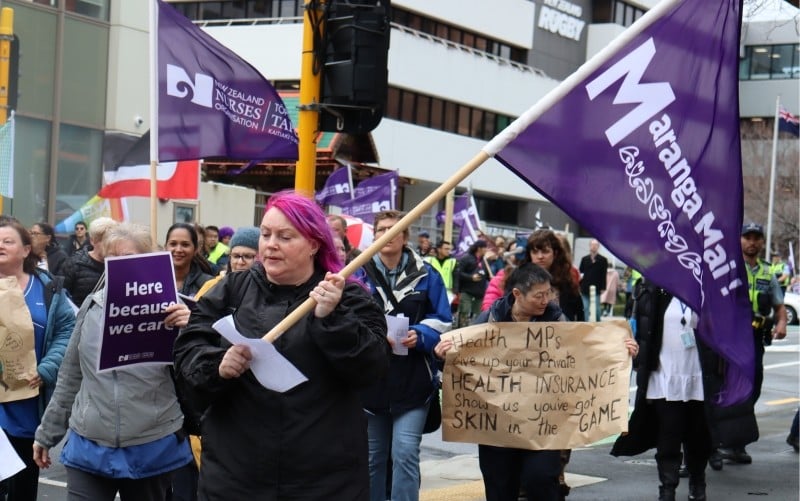
The announcement has sparked a wave of action in Wellington which begins tomorrow with a rally starting at Civic Square at 1pm and marching to Parliament organised by Wellingtonian Steven Buck.
On Sunday, the Council of Trade Unions Te Kauae Kaimahi and the PSA are holding a rally outside Te Papa from 12pm-12.30 and on Tuesday night the Greens are holding a public meeting at Mount Cook School at 6pm.
If you’re a Wellington member and available, please come along and bring your friends and whānau.
Ngā mihi,
Paul Goulter, Chief Executive
Tōpūtanga Tapuhi Kaitiaki o Aotearoa NZNO
|
|
|
|
|
|
In this member newsletter |
|
|
|
|
|
|
This week our organising teams have taken time to acknowledge the absolute determination, solidarity and persistence of Te Whatu Ora members, delegates and the bargaining team to settle the collective agreement. Our work continues as we look to organise around the various work groups arising out of the settlement including researching nurse-to-patient ratios and applying a cultural lens supporting out Te Tiriti commitments.
Some highlights from other areas:
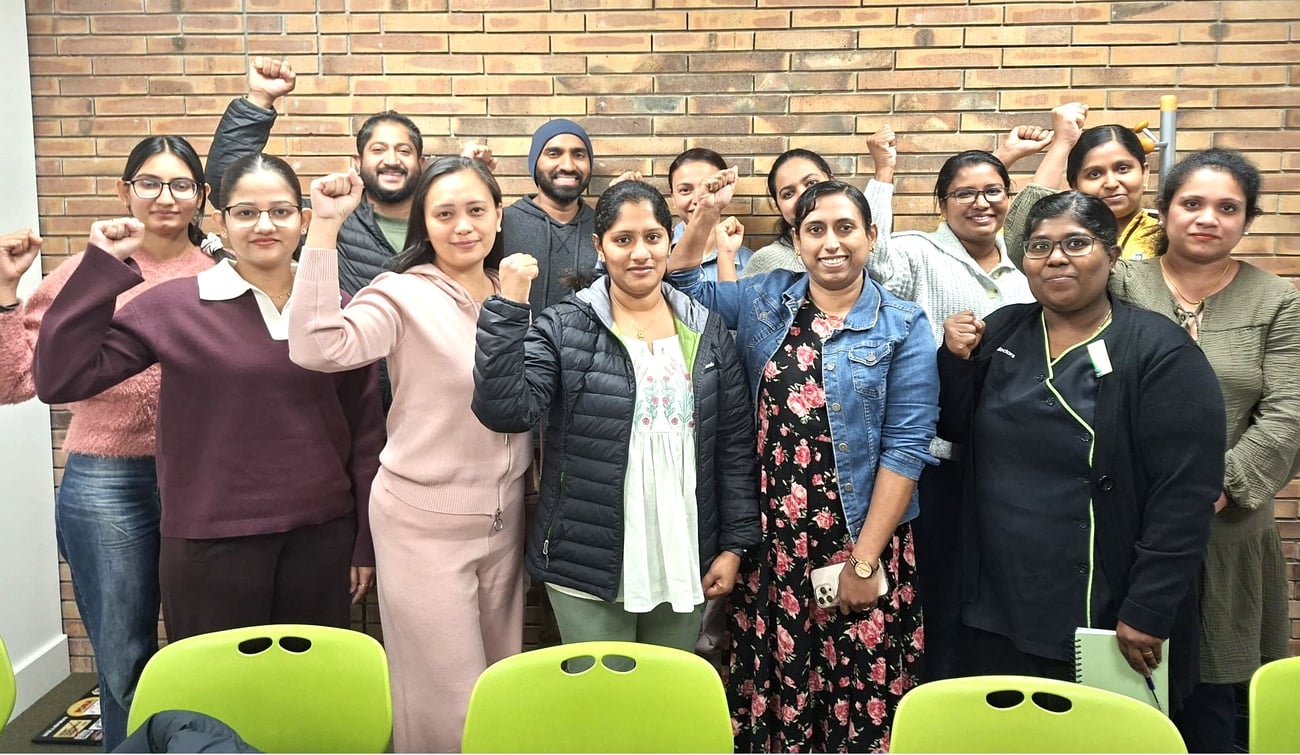
First Tairāwhiti Migrants Network Hui
Migrant members in Tairāwhiti (see above photo) decided to carve out a space for migrant workers in the health union landscape. Fourteen workers turned up on the night – from Aged Care, Primary Health Care, Māori/Iwi and the Hospital. Led by Sony, one of our delegates from Gisborne Hospital, they discussed the value of being union, the challenges faced as migrant workers in healthcare, and what it would take to win.
Three leaders were elected on the night, and they’ll meet again in a month’s time to dive into the specific goals of the group.
Health & Safety
NZNO members are organising around their health and safety concerns at Crest Hospital following the increasing pressure of more surgeries, workload, staff retention and the cleaning standards in theatres. NZNO has formally raised concerns from alongside the Professional Team regarding the cleaning standards in theatre to Crest and Southern Cross, and delegates are planning the next steps.
Hospice Taranaki
Hospice delegates have established a monthly NZNO Delegate Union/Hospice Taranaki Management meeting. Delegates presented a draft Terms of Reference outlining their purpose and direction and are looking forward to having a dedicated forum to raising members’ issues as they arise and work on solutions. |
|
|
|
|
Te Whatu Ora bargaining
In a close ratification ballot members chose to accept Te Whatu Ora’s offer. This week we have begun working towards Te Whatu Ora implementing that agreement as quickly as possible.
|
|
|
|
|
Having completed a final check NZNO has signed the collective agreement, which is now with Te Whatu Ora for signing. We also provided the necessary information for Te Whatu Ora to run their part of the bargaining fee ballot. The bargaining fee is paid by people who benefit from our agreement, but who are not members of the union.
Te Whatu Ora have shared their implementation document with us, which is currently being reviewed. This document sets out who Te Whatu Ora will implement the ratified changes and is useful in ensuring uniform implementation of our agreement across Te Whatu Ora.
We also started work on the research into culturally appropriate ratios, meeting with international researchers to discuss the kind of evidence base necessary to supp ort the implementation of staffing ratios. There are also a number of workstreams starting as a result of the bargaining. We are currently creating workplans for each of those pieces of work and are meeting with Te Whatu Ora on 25 May to set dates to discuss each of them.
Te Whatu Ora bargaining for members in very senior roles
This week we took the next steps in establishing a new collective agreement, covering members in very senior roles who are currently excluded from our main collective agreement. Members in those roles are now considering which members they want in their bargaining team and the claims they will take into that bargaining.
Designated Senior pay scale review
The Designated Senior pay scale review continues, with work towards starting the pilot programme nearly complete. The programme involves implementing a gender neutral, culturally appropriate job evaluation methodology and ongoing process to replace our current Job Evaluation Review Committee. The second strand to this work involves reviewing the existing designated senior pay scales, with Te Whatu Ora accepting that there will be a cost associated with this and budgeting accordingly. A more fulsome update was sent to members working in designated senior roles on Friday. |
|
|
|
|
Recently, we asked members to identify the claims they would like raised in this year’s MECA negotiations and to nominate representatives for the bargaining team.
If you missed the comms, we’ve now checked nominations and have a team of four who have responded to and accepted their nomination.
There was no need for an election based on this response, so the team is: |
|
|
|
-
Tracey Morgan (Registered Nurse, Te Rūnanga Representative)
-
Nerissa Cameron (Senior Nurse)
-
Priscilla Wiki (Enrolled Nurse)
-
Kylie Goddard (Registered Nurse)
To avoid the delays and frustrations experienced during the previous round of bargaining, NZNO and the employers have agreed to a more streamlined bargaining process. This includes:
-
removing disadvantages and obstacles to delegates attending bargaining
-
only one offer to cover all parties (remember the 1.5% from one group and 3% from the others last time)
-
a faster ratification process whereby we ratify simultaneously and within an agreed timeframe.
This year, NZNO is also proposing a significant update of the MECA to make it clearer, more logical, easier to read, and fully aligned with current legislation. The proposed document incorporates the claims raised by members through the recent claims survey.
As part of this work, outdated clauses, historical references, and provisions such as 90-day trial clauses have been removed. NZNO has rewritten the MECA and will table the revised document as a single claim during bargaining. This captures more than 25 proposed changes to the current MECA, including a simplified structure and improved pay rates for NZNO members.
Once bargaining has concluded, NZNO members will vote on the full proposed MECA document. Until then, all aspects remain open to negotiation through the bargaining process.
The next step is for members to endorse:
- The bargaining team, and
- The proposed bargaining approach
|
|
|
|
|
|
|
Pay equity in the non-Te Whatu Ora sector |
|
|
|
|
Pay Equity Update: Budget Week — We Are Still Fighting
Next week's Budget arrives in a health system where hospices are turning away dying patients, aged care is chronically understaffed and pay equity claims are being fought against a law designed to make them harder to win. |
|
|
|
|
The health system is in visible decline, and NZNO members are the ones keeping it standing.
This Government has already shown its hand.
Before Budget Day had even arrived, nearly 9000 public sector jobs were announced for the chopping block, with the Government targeting $2.4 billion in savings through agency mergers and cuts. Ministers call it trimming bureaucracy, what it represents is a consistent approach: reduce public investment, constrain services, and present the savings as responsible management in an election year. https://www.rnz.co.nz/news/political/595836/public-sector-cuts-ignite-election-fight
A new claim, a direct challenge.
NZNO nurses at Bupa have formally raised a pay equity claim following workplace meetings and a member ballot. Aged care nursing is highly skilled and clinically complex work, often done under considerable pressure, with a single registered nurse responsible for clinical oversight of an entire facility for a whole shift. That work has been historically undervalued because it is predominantly done by women. The Bupa claim is a direct challenge to that, and it builds the case for the wider aged care sector. Read more here .
Hospice Awareness Week: the cost of underfunding is now visible.
Hospices across the country are being forced to turn people away, struggling with rising costs and insufficient government funding, with the sector saying it needs an additional $80 to $100 million a year just to remain financially sustainable. NZNO members working in hospice are holding that pressure in every shift, delivering end-of-life care in services that are dipping into reserves to stay open. Pay equity claims need adequate funding to support a settlement. https://www.1news.co.nz/2026/05/16/hospices-turning-away-dying-patients-as-funding-shortfall-bites/
A Budget that will not fund meaningful pay equity settlements, close the hospice funding gap, or relieve staffing pressure in aged care will confirm a direction that has been clear for some time: investment in the workforce that sustains the health system is not this Government's priority. That makes the work we are doing more important, not less. The Bupa claim is raised, the Plunket and Hospice pay equity claims are active. The UN complaint about the law changes is on the record. Each is a deliberate act of pressure on a system that is counting on workers to stay quiet.
The election is five months away, and the argument about what kind of health system Aotearoa invests in is one that can be won between now and then. Talk to your colleagues. Make what you are seeing visible in your communities. The Budget will pass this week. What happens after depends on how organised we are when it does. |
|
|
|
|
Summerset
After around eight months of difficult negotiations with Summerset over the renewal of the Collective Agreement, your bargaining team now has an offer to bring to members.
|
|
|
|
|
We will be holding member meetings soon where you will be able to hear the details of the proposed settlement, ask questions, and have your say. We strongly encourage all members to attend.
The proposed term of settlement is for one year only. That means if members accept the offer, we will be back in bargaining again in around three months’ time as preparation for the next round begins.
Thank you to our combined union bargaining team for the hard work, commitment, and time you have all put into this bargaining process. These negotiations have been challenging, and your efforts representing members throughout have been appreciated.
Please keep an eye out for meeting dates and times.
Bupa
The Bupa collective agreement is now ready for renegotiation. We have initiated bargaining and expect to begin negotiations in early July. Our claims period for Bupa is from now until 12 June. Claims meetings are where members can talk about what they want to see improved at work. Please come to your sites claims meeting and have your say.
Yesterday we raised a claim for pay equity on behalf of our Bupa aged care nurses. Thanks for all work in educating and gaining endorsement from our Bupa nurses for this.
Aged Safe lobbying visits
We are planning for aged care delegates who attended training to visit their electorate politicians in the constituency's about funding staffing in the sector.
Oceania
Oceania have undergone change proposals at a number of sites this year; Elderslea, Elmswood, Lady Allum, Parklands, Bellevue and Duart. We are woriking with the company to develop a review process.
Each site will then undergo a three-month review of the new rosters.
We have given feedback to the company about their proposed new rostering app ‘human force’ to ensure it is compliant with our collective agreement and are now awaiting their response. |
|
|
|
Our leaders speak: President Anne Daniels – Ordinary people doing the extraordinary |
|
|
|
The close ratification of hard-fought Te Whatu Ora negotiations, is naturally a time of reflection and analysis. Will the acceptance of this offer stem the tide of nurses leaving our shores to work in Australia for better pay, nurse to patient ratios, equitable work conditions or more career opportunities?
Just as nurses are leaving our shores, so are our police. They too are in negotiations. |
|
|
|
|
One day after the Te Whatu Ora ratification I took the time to read the Sunday Star Times. One article caught my attention. The police told “tales of blood and trauma in (a) push for better pay.” For the first time in 90 years, the Police Association has launched a pay bargaining campaign, a push for a 5% bump for its members, in line with the increased cost of living. What they have been offered is 0.6%. Their campaign hammers home the impact of ‘ordinary people doing the extraordinary’ in circumstances that most people never experience.
The parallels between nurses and police are a matter of record, after all they are our equity pay process comparators. The impact of the work we do, resonates in the stories told, burnout, moral distress, giving your all at work and walking through your front door, on empty. We all have experiences that do not leave us. We know what we signed up for, but as one police officer said…
“No-one signs up to slowly lose pieces of themselves, while being told they should simply be grateful to have (a) job.’
We attempted to tell the Government and our employers through our recent negotiations, we should be valued fairly for the work we do, the trauma we carry, and the sacrifices our families make alongside us. To no avail. We certainly have not won parity with Queensland, let alone New South Wales. Read my previous blog here. Why not?
Research has repeatedly shown us that gender discrimination in pay and work conditions remains prevalent. However, the current Coalition Government has added an extra layer of oppression to this state of affairs. We now see police and firefighters, jobs that are still largely thought of as male dominated, being treated in the same way as nurses. Elongated negotiations, lack of funding to recruit to need rather than budget or resourcing the equipment and support staff required to do the job safely.
We see the same platitudes rolled out by government and sector bosses. Police Minister Mark Mitchell said that he had a “deep respect for all our Police staff. Their safety is constantly on my mind and motivates me to do as much as I can to support them…” which doesn’t seem much from where the police on the ground are standing.
Nor does it for nurses. Our bargaining team stood on the kaupapa of safe staffing to provide safe care in a context where, we now know, Te Whatu Ora bosses deliberately withheld the information on ‘shifts below target’ for nearly a year and only provided the data when the Ombudsman got involved. Trying to pin down any politician, leading into the coming general election, to make a solid promise to turn this around with our NZNO member led call for legislated culturally safe nurse to patient ratios underpinned by fit for purpose Care Capacity Demand Management in all sectors of the health system, is like trying to hold a slippery eel in your hands.
Reflecting on our collective agreement, it is important to remember we use democratic processes in our organisation. The majority have spoken. We no longer allow NZNO to ‘recommend’ an offer. We are member led, so it is on us to decide. But we must also think of the context we are making these decisions in. When all those who work in jobs that people rely on for help when they need it are being told through contract negotiations and changes in legislation and regulation that we are not valued, that we need to be just ‘grateful’ for a job, that our struggles to put food on the table, and keep a roof over our heads are of no consequence to those who are ‘rich and sorted’, what do we do next? These positions are straight out of The Far-Right Playbook.
The ‘Far Right’ reframes exclusion as protection, hierarchy as common sense, and the erosion of rights as democratic renewal. Division, shattered social cohesion and confusion reigns. But democracies rarely collapse overnight. They are hollowed or through language, lowered expectations, and the quiet normalisation of ideas once considered unacceptable.
So, we need to remind ourselves that we are ordinary people doing the extraordinary, every day. That without us, society would collapse. That the power is with the people and we still have the right to exercise that power through the coming elections. In the run up to the elections we need to remind those who wish to ‘govern’, that they are governing for us, with us, not without us. We need their policies to reflect the will of the people. And the people have been clear in the last 20 months. We will not tolerate the decimation of te Tiriti o Waitangi and its place in government. We will not accept the shift of public health to privatisation and it goes on.
We do want those who provide care and support to be paid fairly and treated with respect. We all want healthy homes, a fully funded public system, and jobs that allow us to go home with enough left in the tank to be with our families as we choose. Finally, we want a government that is fair, democratic, and of the people, for the people, a government that honours its te Tiriti foundations, and is not bound by those few that have too much and want more. It will be the people that decide. The ordinary people, who do the extraordinary, every day. |
|
|
|
|
|
|
NZNO Medico-legal forums registration opens |
|
|
|
|
|
Registrations are now open for the NZNO Medico-Legal Forums in July under the theme Navigating risk and complexity in contemporary nursing practice.
The forums will be held in Christchurch and Auckland with a third option to attend online for those who are unable to attend in person.
Venues & dates:
Christchurch: Tuesday 21 July 2026
Links Function and Events Centre, Christchurch Golf Club, 45 Horseshoe Lake Road, Shirley, Christchurch
Auckland: Wednesday 29 July 2026
Sorrento in the Park, 679 Manukau Road, Royal Oak (Located in Cornwall Park).
Streaming option: Wednesday 29 July 2026
Registrations will initially be for NZNO members only, costing $160 for in-person attendance and $120 for online option.
This is a great opportunity to hear from expert speakers, including NZNO Medico-legal lawyers, the Health and Disability Commissioner, Nursing Council of New Zealand and others.
See the programme here
Link to registrations |
|
|
|
NZNO in the news |
|
|
|
|
New Māori nurses coming through a changing health sector
Te Ao Maori News, 22 May 2026
Nurses Accept New Te Whatu Ora Deal After Two-Year Pay Battle
Waatea News, 19 May 2026
Practice nurse pay talks get underway as pay parity gap set to exceed $13K
NZ Doctor, 19 May 2026
Nurses union votes to accept Te Whatu Ora offer after nearly two years of bargaining
RNZ, 15 May 2026
Kiwis turning to Afterpay for fuel and basics
RNZ, 15 May 2026
Waitakere Hospital stroke patients left in wet beds amid staffing crisis
NZ Herald, 15 May 2026
‘I have to Afterpay petrol’: Mum of four says fuel costs are pushing trainee nurses into debt
Stuff Digital, 15 May 2026
Health NZ Holidays Act payments: Rotorua Hospital nurse calls for urgent action
NZ Herald, 14 May 2026
Health NZ Holidays Act payments: Staff ‘disillusioned’ after decade-long wait
Whanganui Chronicle, 14 May 2026
Nursing Students Sound Alarm Over Fees-Free Cuts
Waatea News, 13 May 2026
Government’s decision to scrap fees free scheme will lead to further student exodus
NZNO, 11 May 2026
'The job eats away at you': Hillmorton Hospital staff facing burnout, anxiety over working conditions
RNZ/ODT, 11 May 2026
Culture of fear at understaffed, unsafe and rat-infested Hillmorton Hospital
The Press, 11 May 2026
Violence against health workers highlighted
ODT, 9 May 2026
Read more here |
|
|
|
|
|
|
NERF opens new scholarships and grants round |
|
|
|
|
The Nursing Education and Research Foundation (NERF) is opening a new round of scholarships and grants as part of its transition to an operationally independent organisational model.
Previously, NERF operated with administrative and operational support from Tōpūtanga Tapuhi Kaitiaki o Aotearoa (NZNO). While the organisational structure is evolving, Co-Chairs Anne Daniels and Kerri Nuku say NERF’s mission remains unchanged - supporting nurses, midwives, caregivers and students across Aotearoa New Zealand through scholarships, grants and research funding.
Applications for the latest funding round open on Tuesday 26 May and close Friday 10 July at 5pm.
Funding opportunities available in this round are:
- Undergraduate Study Scholarship
- Postgraduate Study Scholarship
- Dr Jane Nugent Scholarship
Further information on how to apply will be available on the NERF scholarships and grants webpage from Tuesday 26 May: https://www.nzno.org.nz/support/scholarships_and_grants.
Read more in Kaitiaki |
|
|
|
|
|
|
Grow yourself professionally by joining NZNO's colleges and sections |
|
|
|
Colleges and sections are central to NZNO’s success and influence and brings together groups of members who are focused on a specific nursing specialty.
So far only less than 20% of members have elected to join a college or section, and we'd like to see you grow that number. NZNO colleges and sections can help you advance your practice through policy and professional development opportunities, and membership at most colleges and sections is open and free to NZNO members.
There’s bound to be one for every member as there are 19 colleges and sections across a range of specialty areas and members can choose to belong to as many as three. Individual membership choices are usually related to clinical specialty and/or study and research interests.
Check out our colleges and sections here. Which one(s) will you join? |
|
|
|
|
|
|
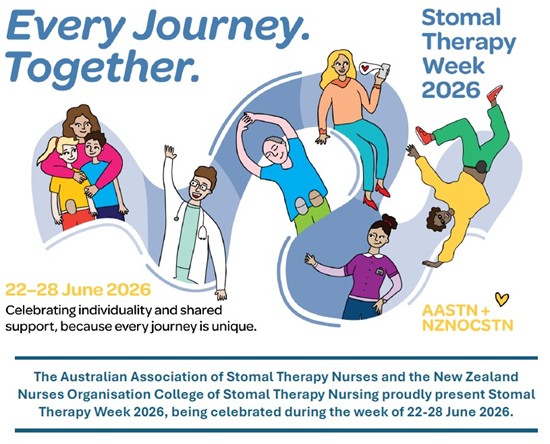
College of Stomal Therapy Nursing |
|
|
|
|
|
|
Government blindly cuts to save skin – Willis’s plan clearly hasn’t worked |
|
|
|
|
New Zealand Council of Trade Unions Te Kauae Kaimahi President Sandra Grey has today blasted Nicola Willis’s pre-Budget announcement on public sector job cuts. “After years of failing to make her economic plans work, |
|
|
|
|
failing to get the economy back on track, and failing to get the cost of living under control, the Minister of Finance is looking for someone else to blame. This is just a cynical ploy designed to prop up the Coalition’s Budget, rather than a coherent plan designed to tackle New Zealand’s public service needs,” she says.
“The Minister outlined cuts of 12% over three years to affected departments. With inflation on top, that’s around a 20% real-terms cut in funding to departments that look after biosecurity, customs, online exploitation, and public health – with staff to be replaced by AI robots and contractors who don’t count as permanent staff. 8,700 fewer staff delivering essential services, but bonus times for international consultancy firms. This is the opposite of what value for money means,” Grey says.
“New Zealand needs skilled and talented people to deliver the public services we all rely upon. The Minister has just guaranteed a minimum three years of disruption, change, and employment insecurity. Rather than making our public services better, the Minister has just provided another reason for people to leave both the public service and the country. Some of the functions likely to be cut by departments will end up back in government agencies to save money. That simply makes it a cut to frontline public services in disguise,” Grey says.
“Kiwis deserve better than this frankly desperate gamble from the government. Arbitrary cuts to public services. Vague hopes that technology will save billions with no plan. No real understanding of the huge and often unmet public service needs of New Zealanders. Ministers aren’t even being required to do the work of making decisions – they are passing that down to departments. This is simply the government confirming how out of touch they are,” Grey says. |
|
|
|
|
|
|
ICN: Student and early career nurses unite to shape the future of nursing |
|
|
|
|
The ICN Alliance of Student and Early Career Nurses (ICN SECN Alliance) held its first webinar ahead of International Nurses Day 2026, bringing together emerging nursing leaders from around the world under the theme: Our Nurses. Our Future. Empowered nurses save lives.
Opening the session, Erica Burton, ICN Senior Policy Adviser, welcomed participants and highlighted the significance of the ICN SECN Alliance as a global platform for student and early career nurses. She emphasized that young nurses are not only the future of the profession, but are already shaping nursing policy, practice and advocacy today.
David Stewart, ICN Director of Nursing Policy and Practice, introduced the forthcoming International Nurses Day 2026 report, Empowered Nurses Save Lives, outlining the seven “powers of nursing” and the evidence behind, investing in nurses. He stressed that empowering nurses means addressing workforce shortages, improving retention, enabling nurses to work to their full scope, and recognising nursing as a major driver of health, social and economic progress.
Read more here |
|
|
|
|
Petition for a public enquiry into FENZ
The NZPFU is calling for an independent inquiry into FENZ to examine why FENZ has failed to manage funding to ensure that it has the capacity and capability for reliable emergency response to the New Zealand public.
|
|
|
|
|
Please sign this petition to support the call for a public inquiry into whether FENZ has been properly using its funding to ensure that it has the staffing and resources necessary to keep the New Zealand public safe.
Sign the petition here |
|
|
|
|
Director of Nursing and Professional Services – 1.0 FTE
NZNO is seeking applications for a Director of Nursing and Professional Services. This positionis based in Wellington. This is a senior role responsible for leading nursing and professional services within the organisation.
This a full-time position is based in the Wellington National Office of NZNO.
If you want to be our Director of Nursing and Professional Services, and believe you have the requisite organising leadership skills and knowledge then please email your application and curriculum vitae to Heather Sander (EA to the Director of Nursing and Professional Services) at heather.sander@nzno.org.nz by 5pm on Thursday 28 May 2026.
Please find the advert and job description.
Management Accountant – 1.0 FTE
NZNO is seeking applications for a Management Accountant. This position is based in Wellington. This role responsible for providing financial administration and accounting services to NZNO and related entities. This position is integral to supporting the mahi and structures of NZNO and related entities. It also includes liaison with auditors, investment advisors and other parties we work with.
If you want to be our Management Accountant and believe you have the requisite skills and experience then please email your cover letter and curriculum vitae to Heather Sander at heather.sander@nzno.org.nz by 5pm, Tuesday 26 May 2026.
Please find the advert and job description.
Information Services Manager – 1.0 FTE
NZNO is seeking a Information Services Manager, to work within the Library/Records Team. Roles like this do not come up often, so if you take pride in producing high quality work in information services and are interested in helping NZNO deliver a customer-focused records services to our members and staff we would like to hear from you.
Applications close at 5pm, Monday 1 June 2026 and should include a covering letter and a curriculum vitae.
Please address all applications or queries to: heather.sander@nzno.org.nz
Please find the advert and job description. |
|
|
|
|
|
|
|
|
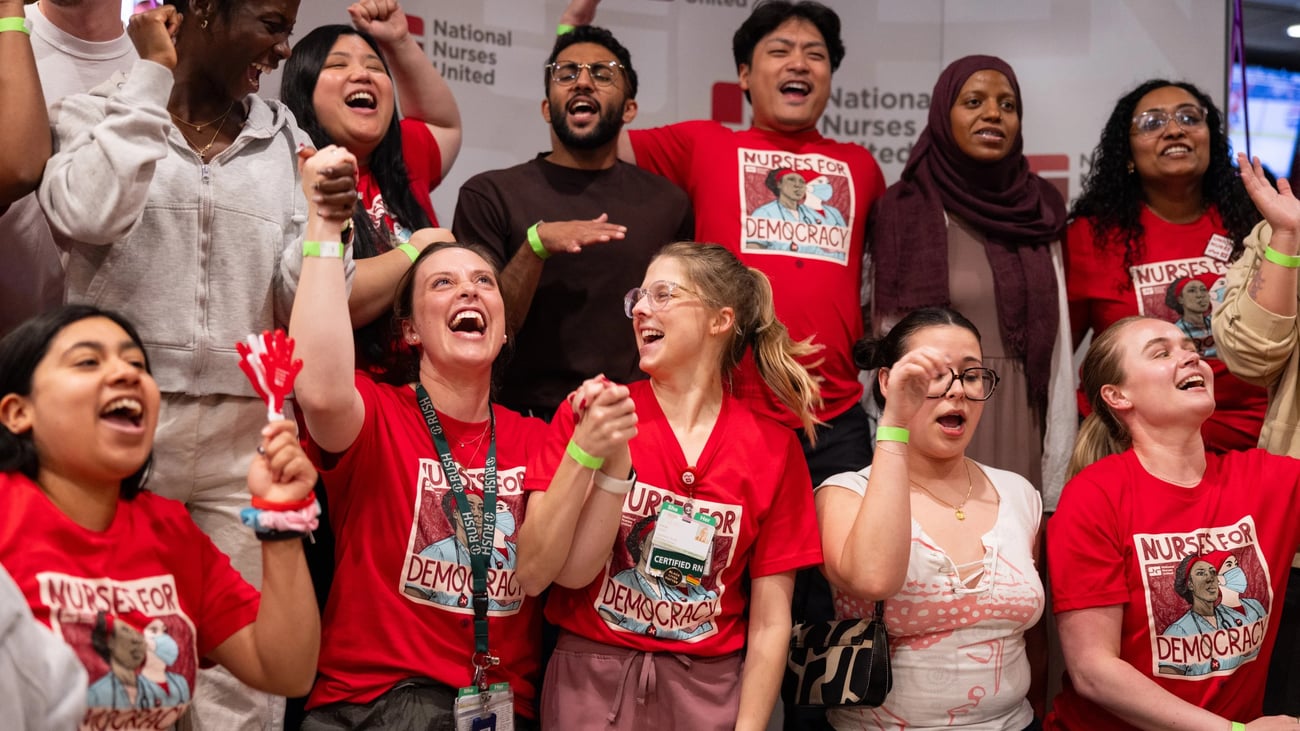
Rush University nurses celebrate a successful vote. See link to story below. |
|
|
|
|
|
|
|
|