Member Newsletter/Pānui 25 September 2026 |
|
|
 |
|
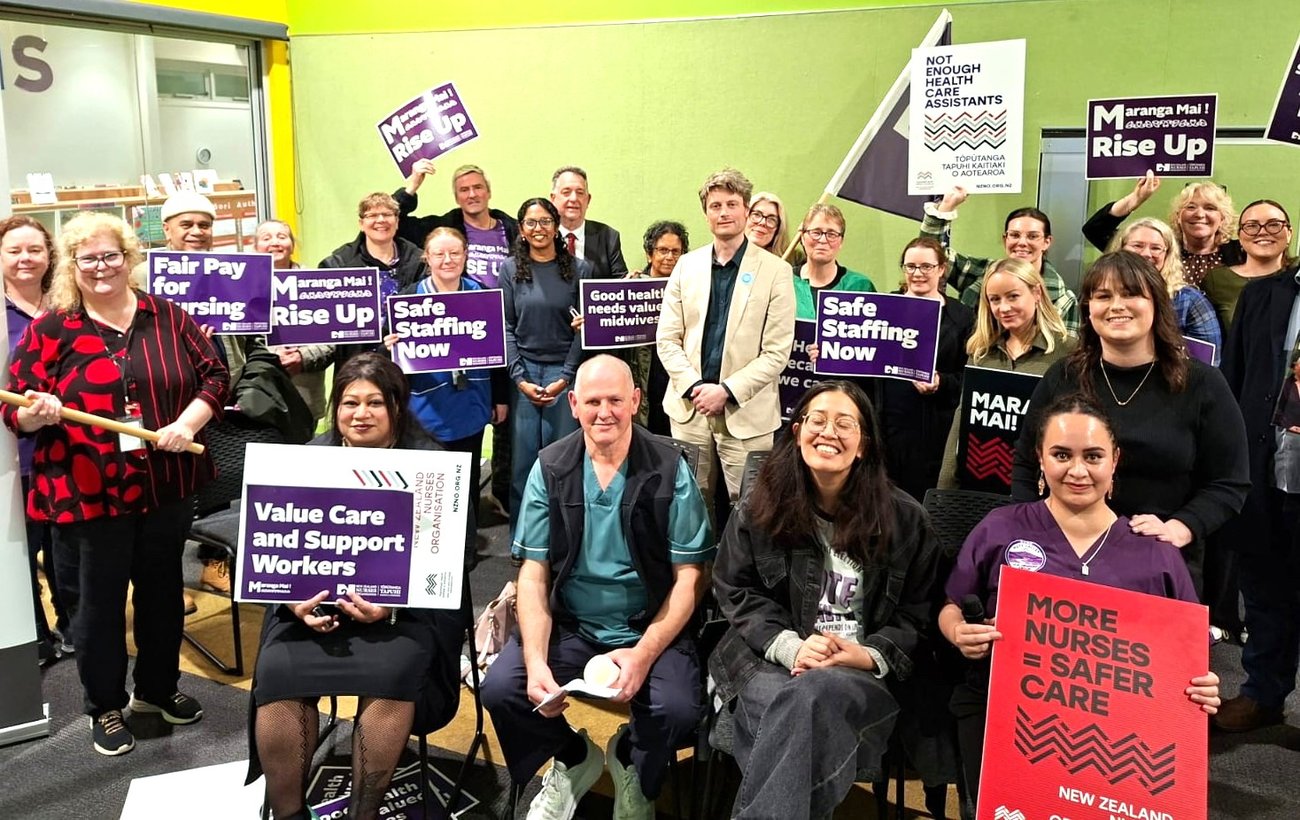
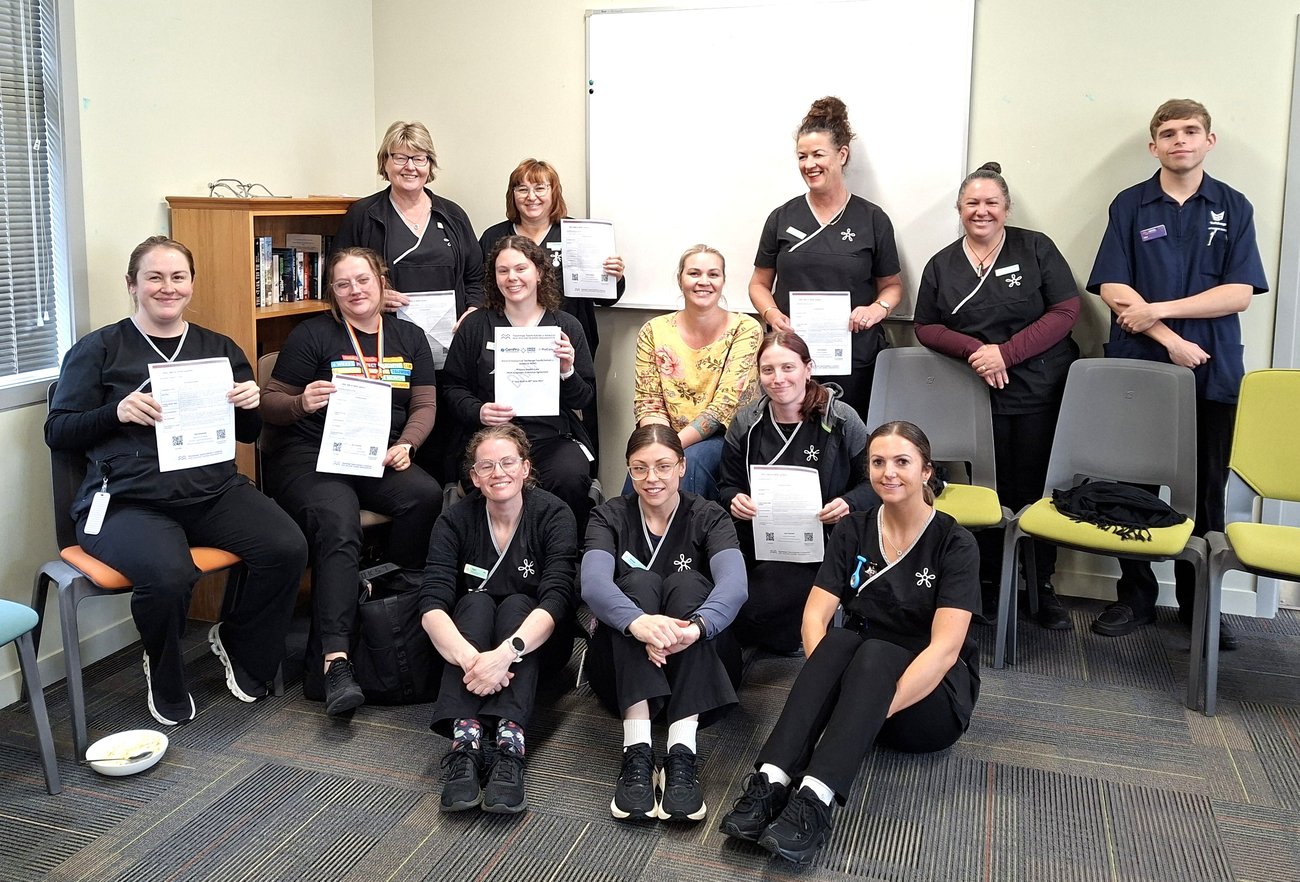
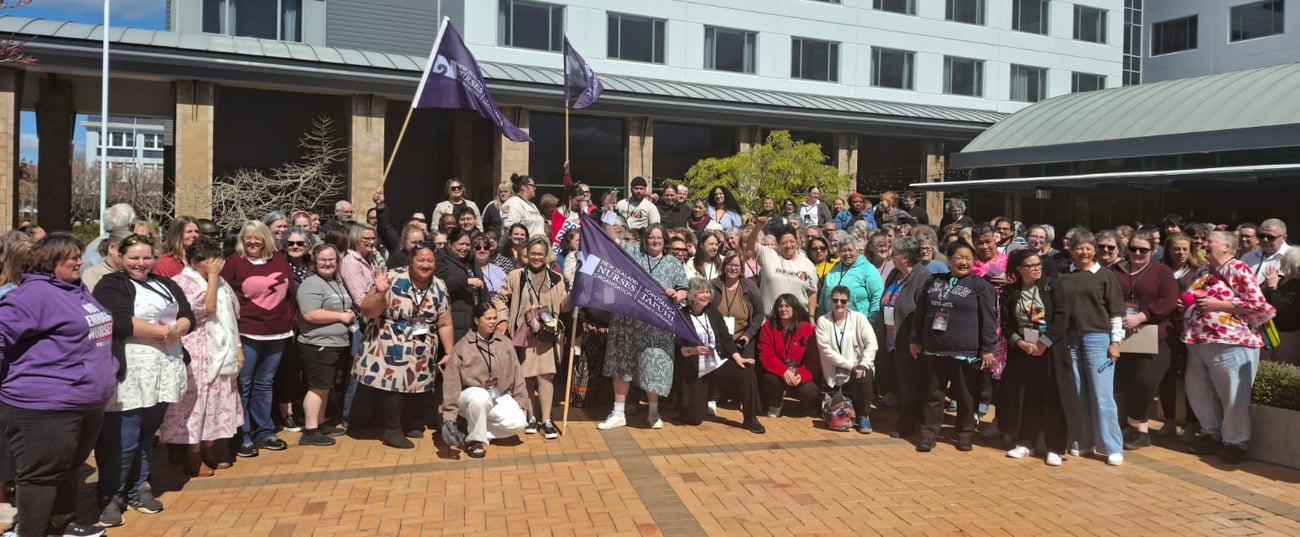
Hundreds of members and delegates got behind the fight for nursing at this week's annual conference held in Rotorua for the first time.
Kia ora member
Ratified! More than 2500 primary health care members covered by the MECA this week accepted an offer from employer representatives of more than 500 practices.
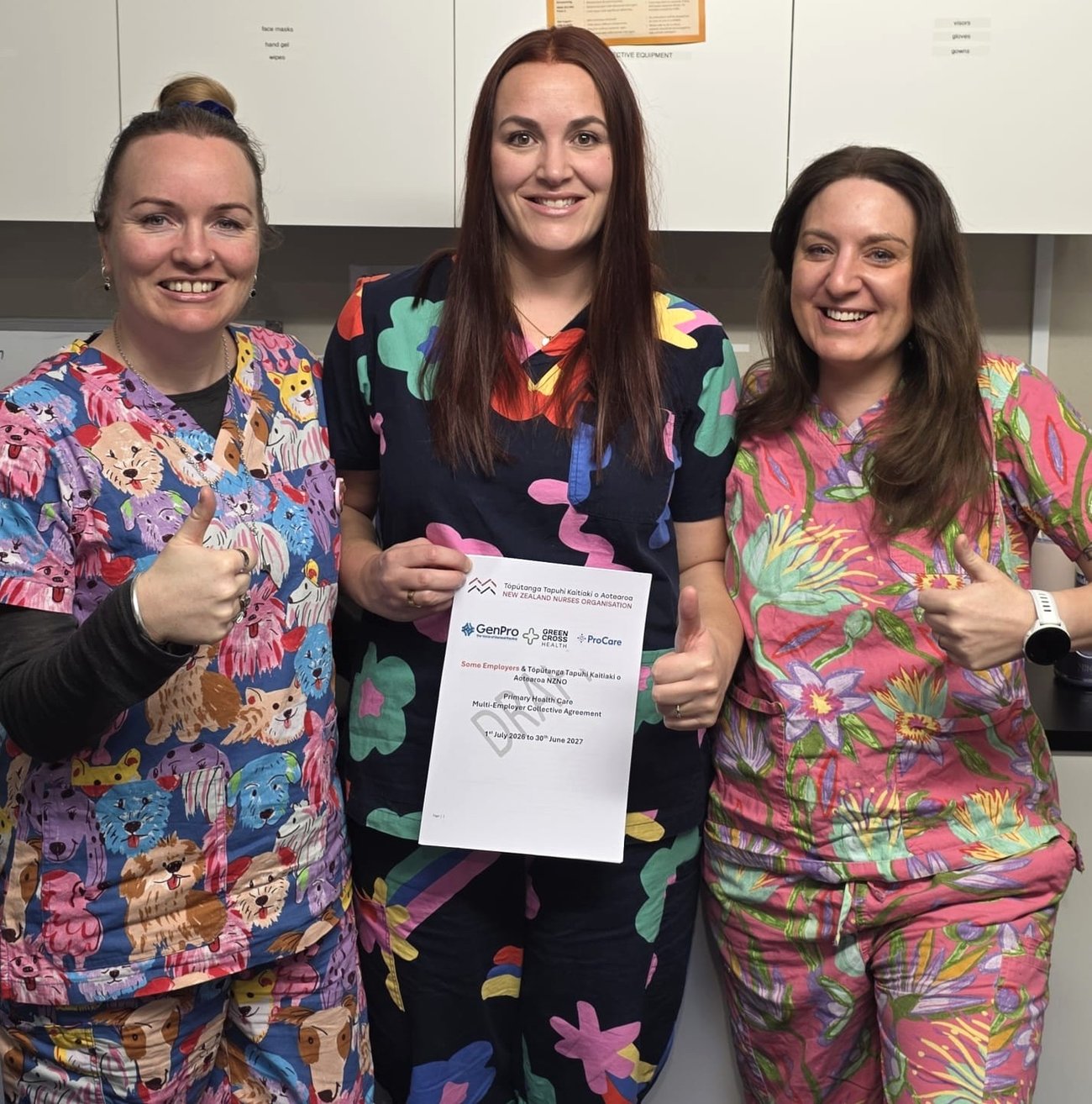
A special mihi to our primary care bargaining team for their mahi on this and a shout out to all the PHC members across Aotearoa who wrote letters, took photos and got noisy on social to get behind them.
The deal includes a 3.5% pay increase, two tiers of nurse prescribing rates and a 7–10% increase for administration staff, addressing a gap of up to 28% against Te Whatu Ora rates. There is also a year-long commitment to work with employers on an improved MECA built from your claims.
Now we wait for the employers to ratify the agreement before it takes effect.
To put this agreement in context, in 2024 primary health nurses, HCAs, administrators and medical receptionists were paid more than 20% less than their hospital counterparts. Despite having your pay equity claim scrapped last year, that difference is now under 10%.
As our bargaining team has said, there’s still a long way to go for pay parity and we’re not stopping here! More on this in the Te Whatu Ora section below.
Crisis in primary care hitting headlines
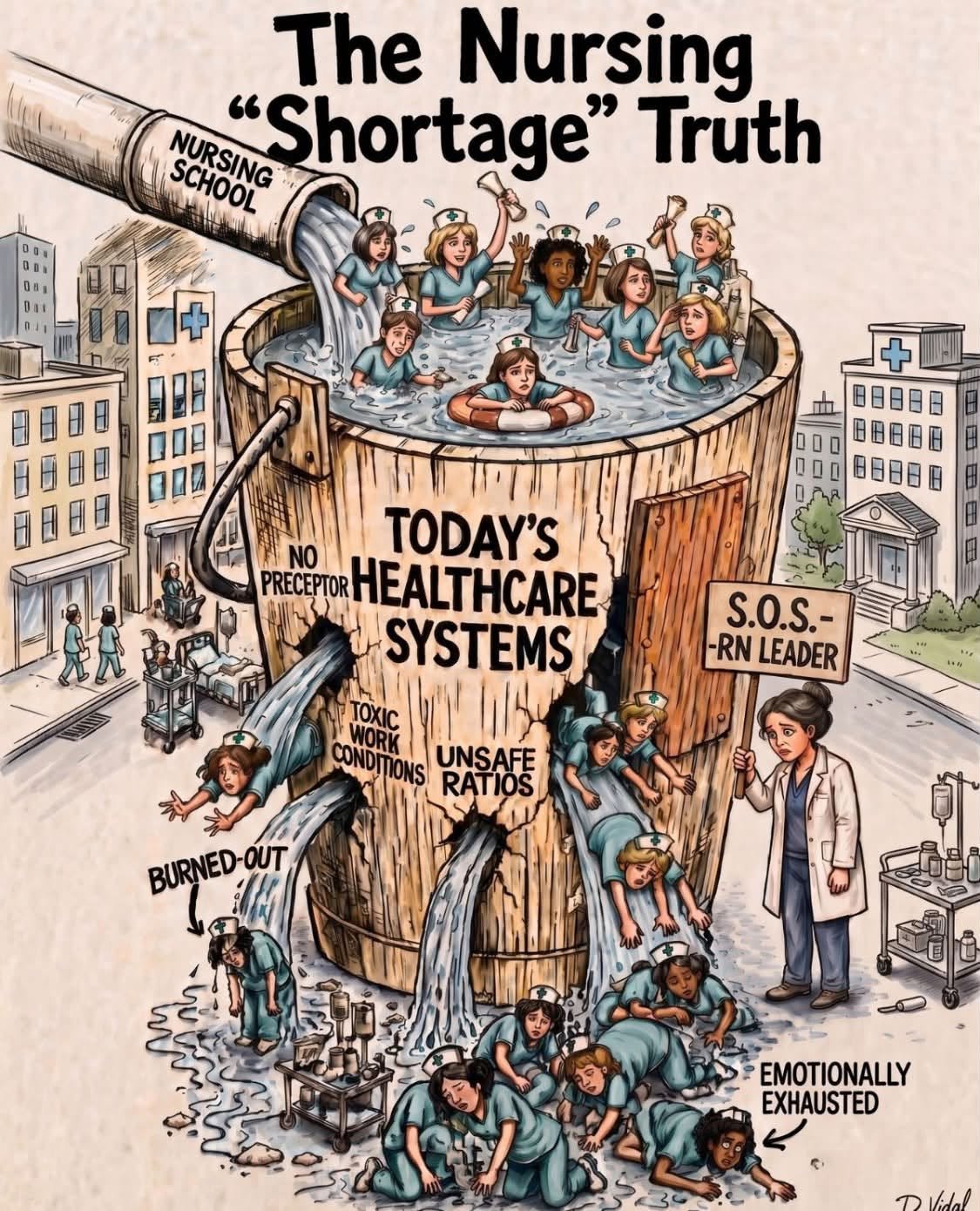
While much of the recent media focus on the crisis in health has been around the pressure on emergency departments, attention is beginning to turn to one of the root causes – shortages in primary care.
In a poignant piece, NZNO College of Primary Health Care Nurses chair Tracey Morgan described a day in her life to NZ Doctor. Media have also been covering the Pahīatua Medical Centre where six nurses resigned en masse in protest to unsafe staffing levels and workloads.
Counting the nurses needed
There was a surprise announcement by the chief nurse today that Te Whatu Ora will hire 380 more nurses, midwives and health care assistants. The surprising thing is the big deal they made about an annual CCDM calculation.
Te Whatu Ora has listened to nurses about needing more staff, they say. It seems that after raising concerns about dangerous understaffing for the past two years, it would have been helpful for them to listen before you had to cope with the worse influenza outbreak in a decade.
The announcement seems to have been so rushed they can’t even say how many of the 380 are nurses and what the total national need identified by CCDM is.
One can only assume the recent and sustained bad coverage of the health crisis prompted the Health Minister to get in touch...
Staffing Methodology Review
One of the questions asked by media covering the announcement was how many additional FTE do this year’s CCDM calculations call for nationwide? We don’t know because Te Whatu Ora doesn’t tell us.
A further part of today’s announcement was about the work we are doing on staffing. We’re reviewing different staffing methodologies including acuity based such as CCDM, staffing ratios based on nursing hours per patient day and some area specific methodologies.
Over the past couple of months an evaluation framework has been developed and this week we held evaluation sessions in Christchurch, Wellington, Auckland and Rotorua with delegates from each district.
In addition to wider communication from NZNO, those delegates will talk with your local delegate group about the evaluation process. The results of the delegate evaluation will be compiled over the next week and will be made available to members.
The next step is to consider the evaluation from different groups (NZNO, PSA and Te Whatu Ora), before a recommendation is made on any future staffing methodology. From the evaluation sessions we’ve run this week, it seems clear that the delegates see a hybrid model of ratios and CCDM working best in almost all clinical settings.
This work will connect to the research into culturally appropriate ratios and looking at the current state of staffing in terms of patient and staff outcomes.
Any change to the staffing methodology must be an improvement for it to be supported. This includes ensuring that any changed methodology is enforceable. Clause 34.5 of our collective agreement states that the CCDM FTE calculation methodology will not be discontinued or changed unless the parties agree.
New research on short-staffed post-operative wards
New research by Auckland University has found a link between nursing shortages and postoperative mortality and complications. It found that addressing staff shortages may save 182 lives a year.
Unfortunately, Te Whatu Ora’s response was to dismiss the CCDM data it is based on – their own data. This is an incredible dereliction of duty from an agency tasked with safe staffing. I listened to the principal researcher today and he was quite clear that this result was consistent with overseas research.
To dismiss it in the way that Te Whatu Ora has done is shameful and consistent with their refusal to recognise and respond to what is now a national scandal -- the obvious evidence understaffing in health. The new Board has a lot of work to do including actually sorting out workforce planning in a way that guarantees both patient safety and unsafe staffing. Neither seem to feature in their thinking right now.
What I do know is that going on about targets moves only the target (sometimes) at the detriment to other health areas as the resourcing shifts in a zero-sum game. Please I say to this Coalition government - have a wider view of how to fix what is now a seriously damaged health system.
Delegates embrace the fight for nursing at conference
Hundreds of delegates, local organising group and Nga Hapu members, and college and section committee members wound up a passionate and inspiring annual conference in Rotorua yesterday (see photo above).
Under the theme of Ake Ake Ake Fighting On, the conference heard from some of Aotearoa’s leading voices on health and equality including economist Max Rashbrooke, Aged Care Association chief executive Tracey Martin, People’s Select Committee on Pay Equity and former Green MP Sue Bradford, public health housing expert Professor Philippa Howden-Chapman and secretary of the Queensland Nurses and Midwives Union Sarah Beaman.
We were reminded of our strength and power as the biggest single occupational union in the country and that our voice matters – and is making a difference.
This is what democracy looks like as we fight for improved health outcomes for Māori and a better health care system for all New Zealanders.
Ake Ake Ake!
Ngā mihi,
Paul Goulter, chief executive
Tōpūtanga Tapuhi Kaitiaki o Aotearoa NZNO
|
|
|
|
|
|
In this member newsletter |
|
|
|
|
|
|
|
|
|
|
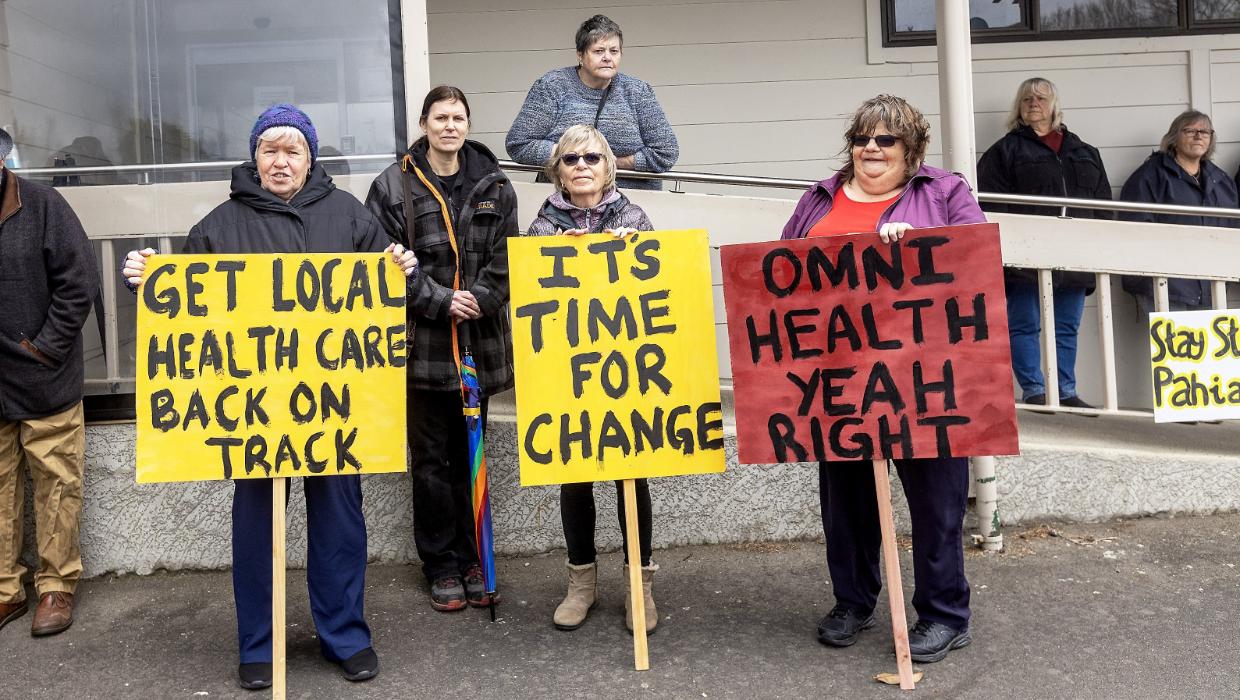
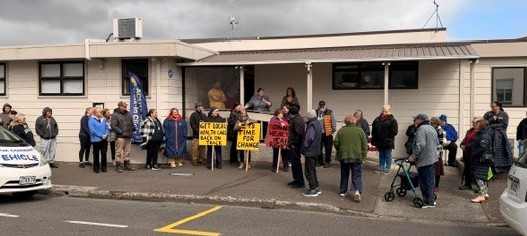
Six Pahīatua nurses let their feet do the talking when they all resigned at once over understaffing this week. See more in Let's get organised! |
|
|
|
|
|
Muriwai nurses rally on Monday. |
|
|
|
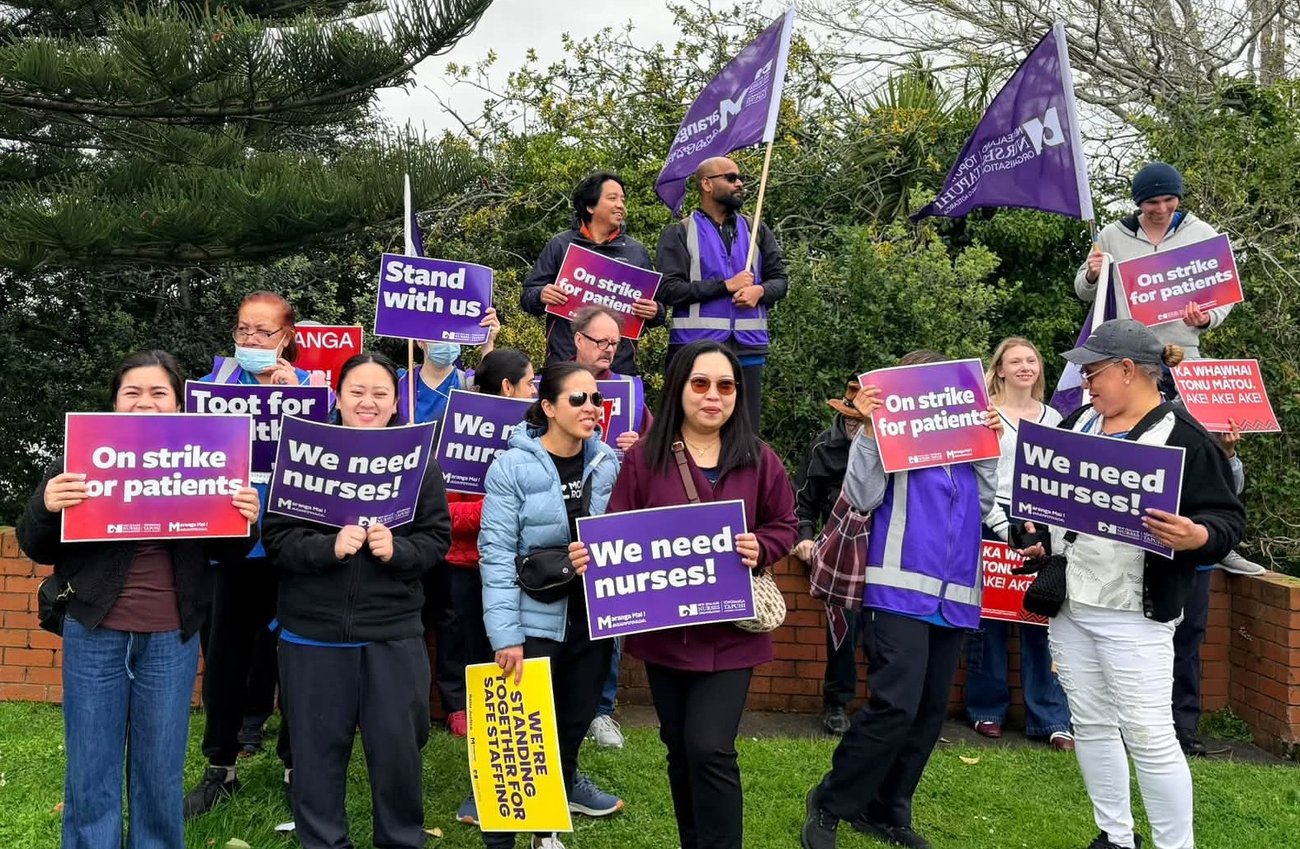
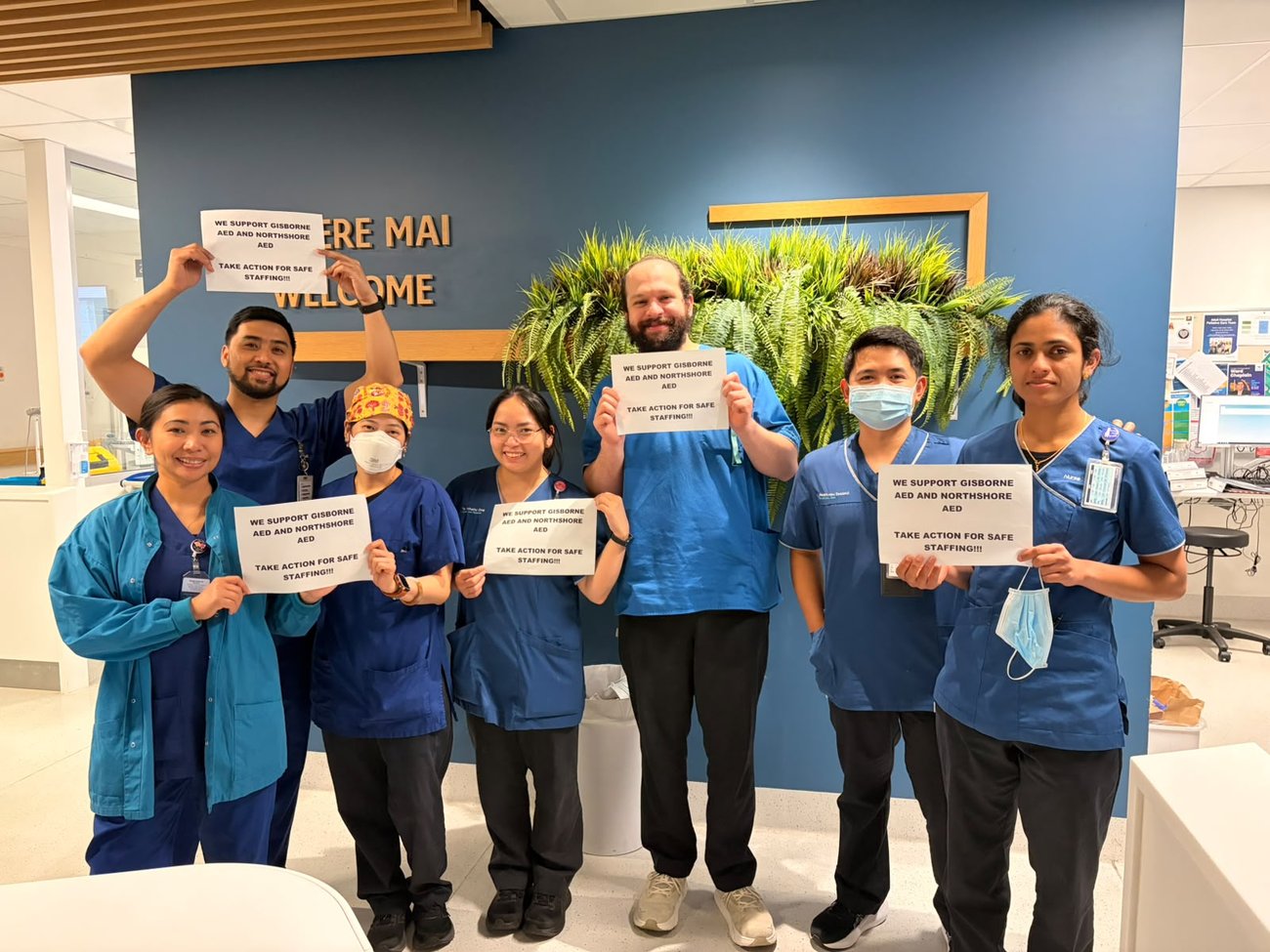
Auckland members in solidarity with their Gisborne and Muriwai colleagues. |
|
|
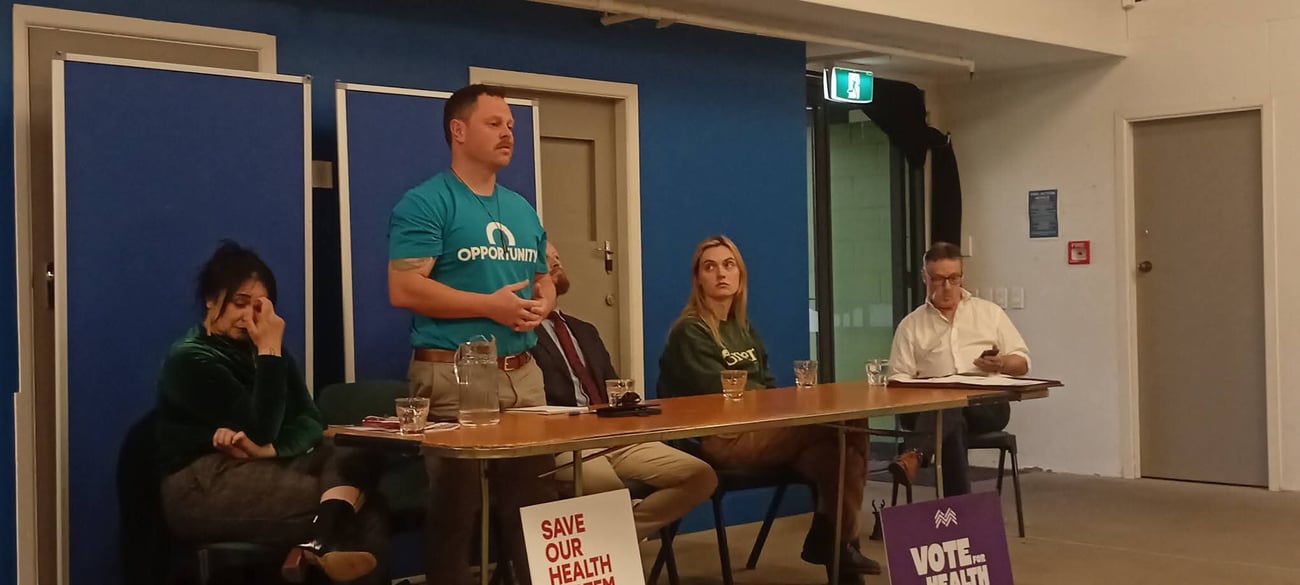
Hutt Valley LOG meeting last Thursday. |
|
|
|
|
|
Pahīatua community support. |
|
|
Wairarapa LOG meeting this week. |
|
|
|
|
|
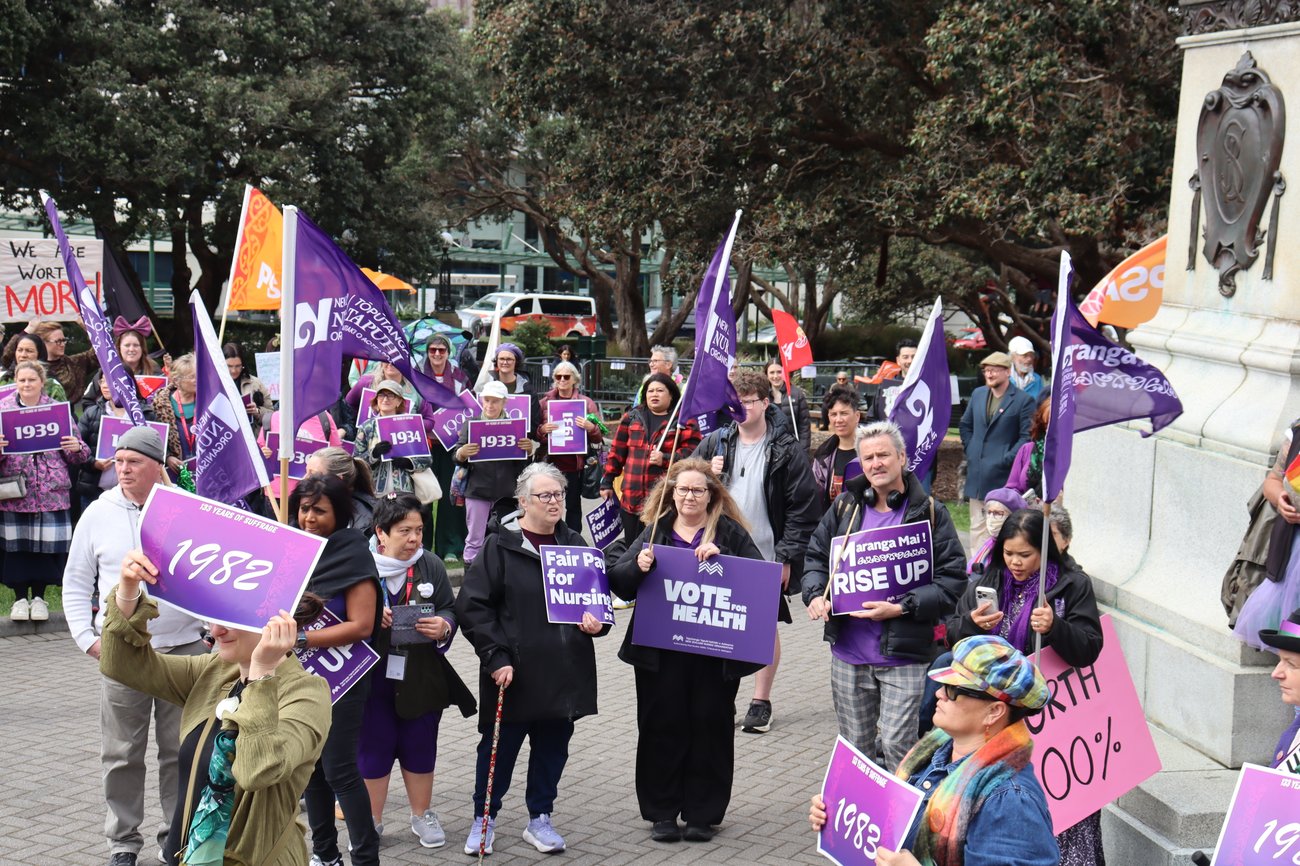
Members at the Suffrage march in Wellington. |
|
|
|
|
|
|
Helenburgh Medical Centre members . |
|
|
|
Gail Binns from the Wairarapa. |
|
|
PHC MECA's Georgia Moore and Kylie Goddard. |
|
|
|
|
|
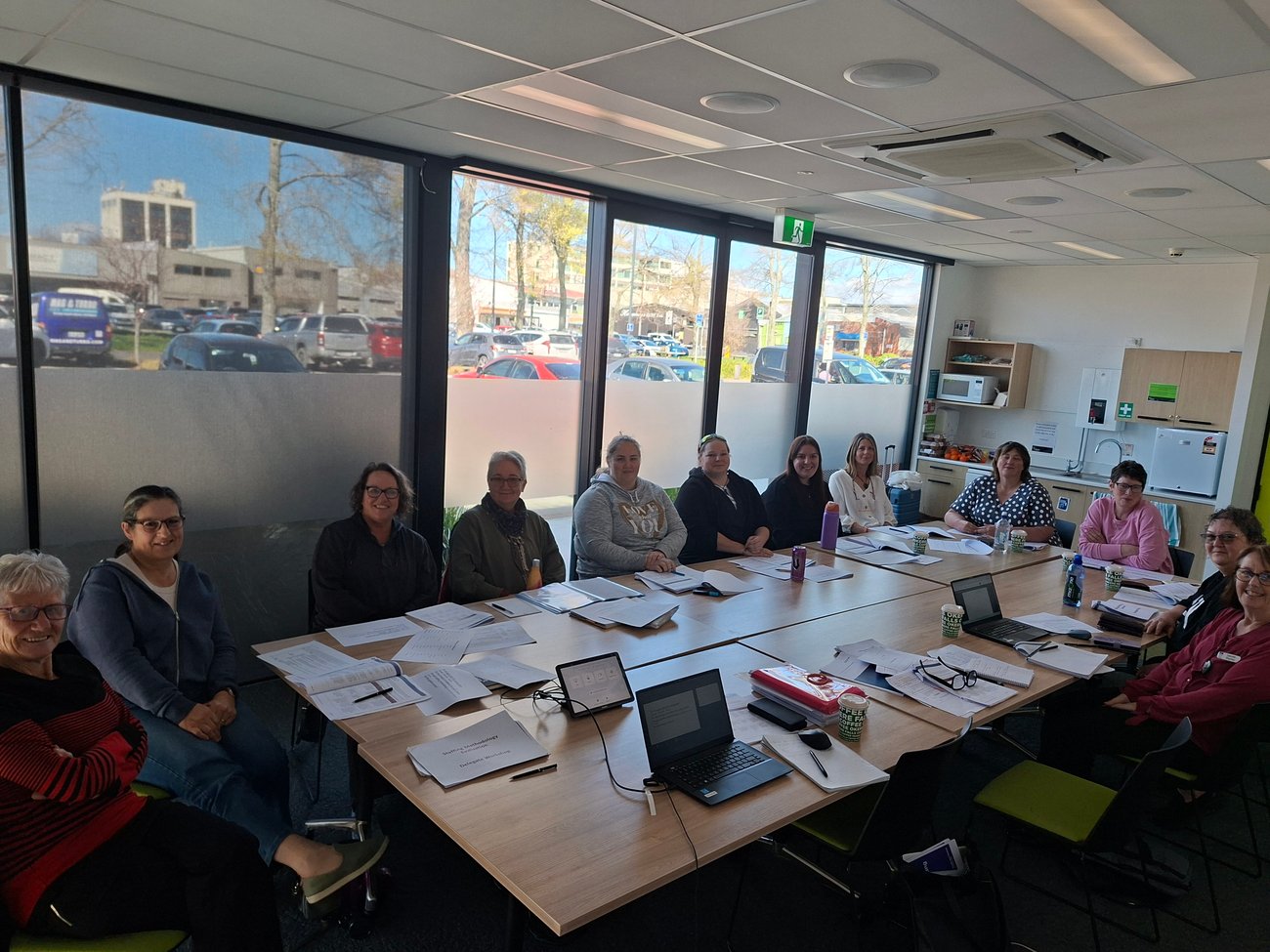
Staffing Methodology workshop in Rotorua during the AGM and conference. |
|
|
Te Omanga Hospice bargaining team from left to right: Sue Wihare (Organiser), Wendy Haywood, Anna Garton, Courtney Giles, Gabrielle Driscoll. |
|
|
|
|
|
Let's get organised! |
|
Another fortnight of members across the motu organising together to make a difference at work, in their community and politically! |
|
|
|
|
|
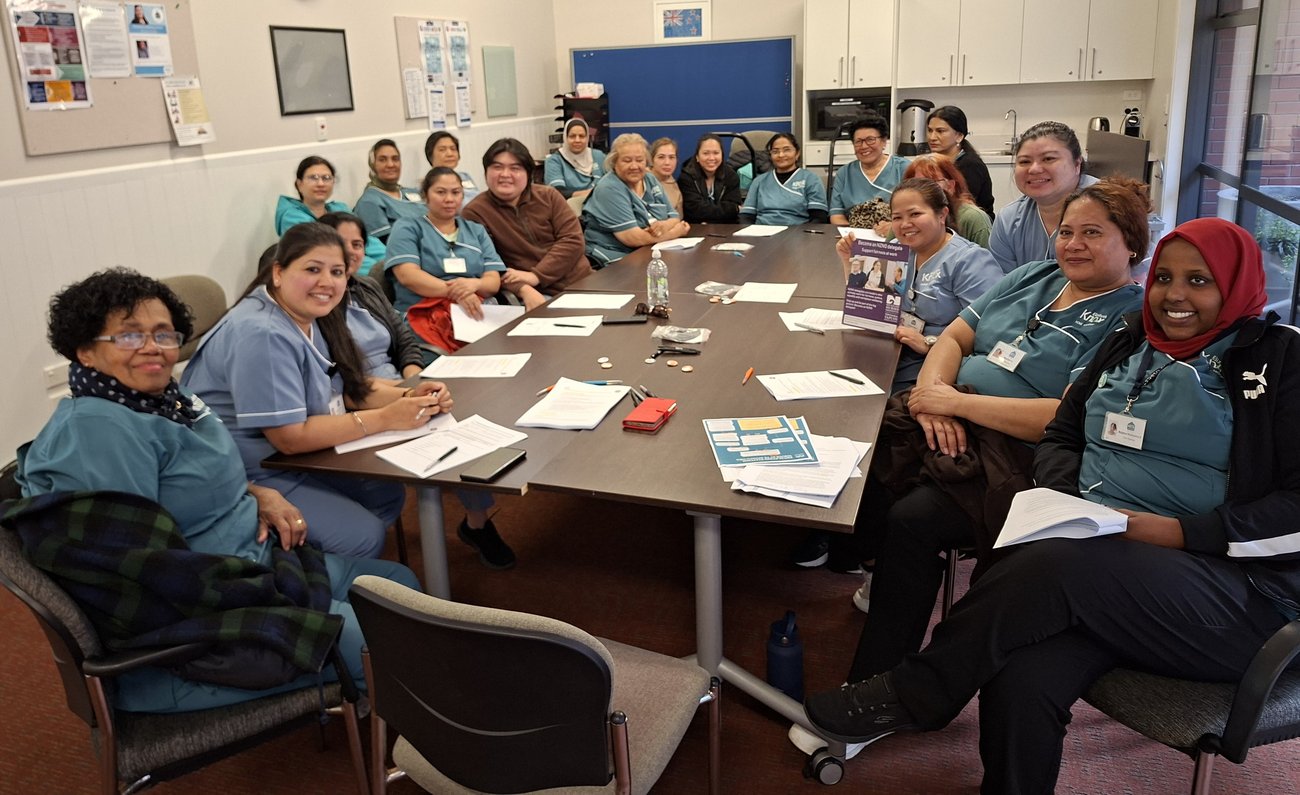
Elizabeth Knox Home and Hospital members gearing up for bargaining.
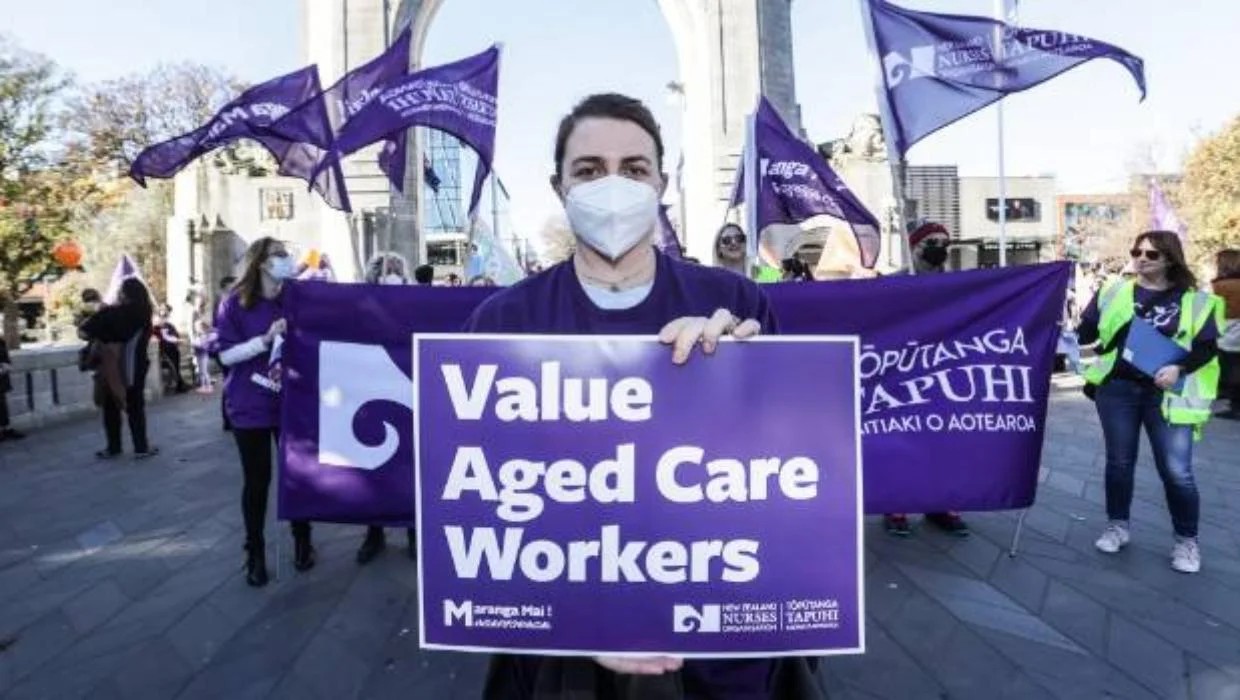
Primary healthcare is in crisis, and NZNO members aren't staying quiet.
In Pahīatua, six staff at the local medical centre resigned this month after raising concerns about workload, staffing pressures and patient safety, adding to more than 72 staff departures across Tararua health services over the past two years. In response, the community turned out in force behind them, with strong attendance at three events across Pahīatua, Woodville and Dannevirke that shone a spotlight on the challenges facing rural healthcare.
Members, healthcare workers and community members came together to share stories about the impact that workforce shortages, increasing workloads and underfunding are having on patients, whānau and frontline staff.
Throughout the meetings, a clear message emerged: rural communities deserve safe, sustainable healthcare services, and the voices of healthcare workers must be listened to. As one of our members Mark Emmerson spoke at the Dannevirke community meeting "We haven't walked away from Tararua. We've taken a stand for it. Our rural communities matter. Our healthcare workers matter. And Tararua matters."
Members also spoke about the overwhelming support they have received from their community, acknowledging the kindness, understanding and aroha shown by residents who recognised the difficult position staff felt they had been placed in. NZNO members are continuing to work alongside their union to seek meaningful solutions and ensure their concerns are heard, with a meeting scheduled with OmniHealth in October to discuss staffing concerns after efforts were made to bring discussions forward but Omi health could not accommodate.
|
|
|
|
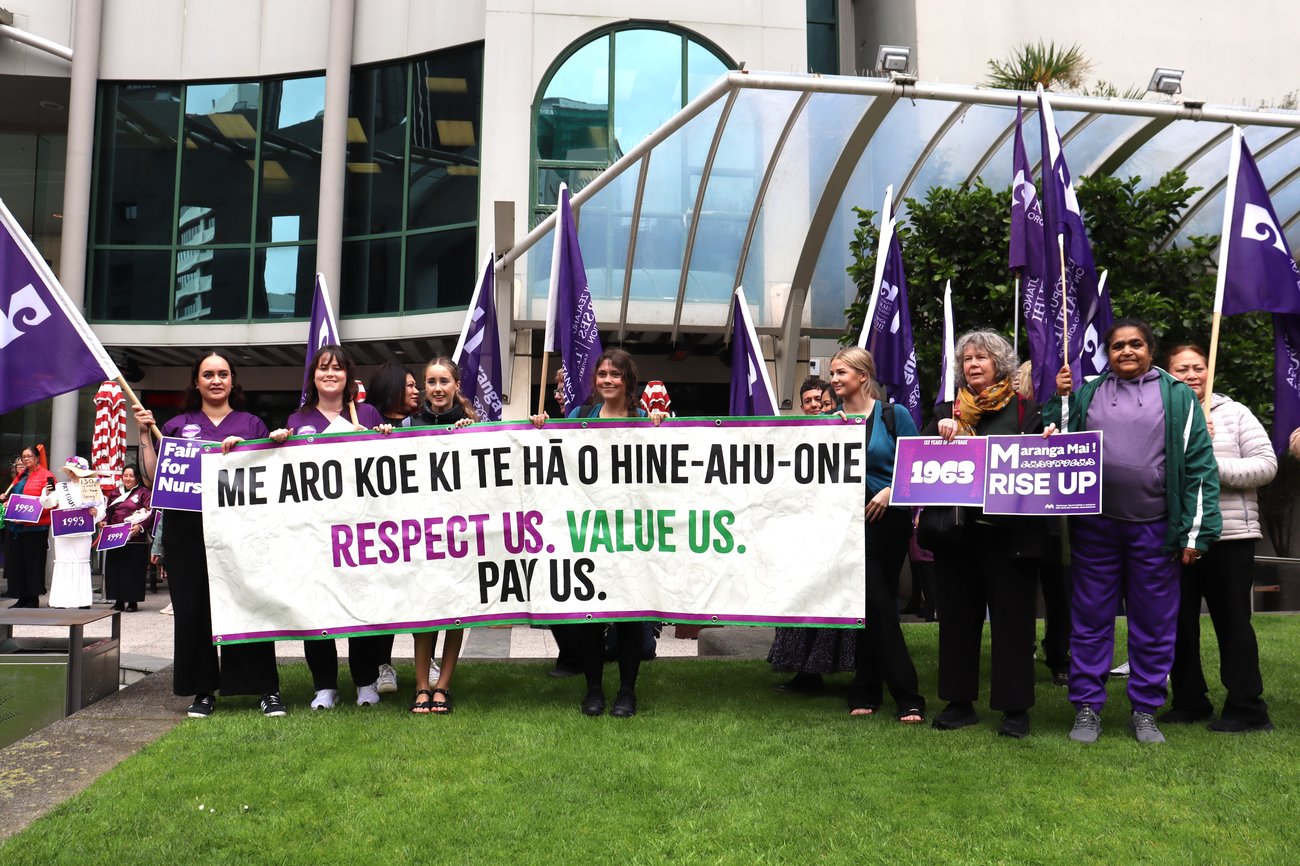
Suffrage Day Action in Te Whanganui a Tara - calling for Pay Equity NOW!
NZNO members marched down Wellington Central marking 133 years of suffrage, with our own member leader Lisa Mariner speaking on the steps of parliament about our Pay Equity claims being cancelled overnight in May last year. It was a powerful atmosphere with impactful stories shared songs sung loudly and proudly.
Their message was clear: Pay Equity NOW! https://kaitiaki.org.nz/video/girls-just-want-to-have-equal-pay/ |
|
|
|
|
|
Te Awaikairangi (Hutt Valley) LOG Health Election Forum – from the Chair
On 17 September 2026, the NZNO Te Awakairangi Hutt Valley Local Organising Group hosted a Health Forum at Koraunui Community Hub in Stokes Valley, bringing together NZNO members and local candidates from the Hutt South and Remutaka electorates.
The forum was held on a significant day, as unions across Aotearoa marked 133 years of women’s suffrage — a reminder of the importance of having a voice, being heard and participating in the decisions that shape our communities.
The evening provided an opportunity for members to speak directly with candidates about the realities facing health services across Te Awakairangi. Discussions included Hutt Hospital infrastructure, workforce pressures, recruitment and retention, a health system struggling to keep pace with the needs of our growing community, and the need for accountability.
Importantly, members were able to share their own experiences, frustrations and struggles from across the health system, bringing the realities faced by health workers, patients and whānau directly into the kōrero.
|
|
|
|
|
|
Elizabeth Knox Home and Hospital members get ready for bargaining
Members and delegates are full of energy as they head into upcoming negotiations with the employer for their Collective Agreement.
Their main goal is simple: to secure the resources and working conditions they need to provide the community with the best possible care. When our workplaces are strong, the entire community thrives. |
|
|
|
|
|
|
|
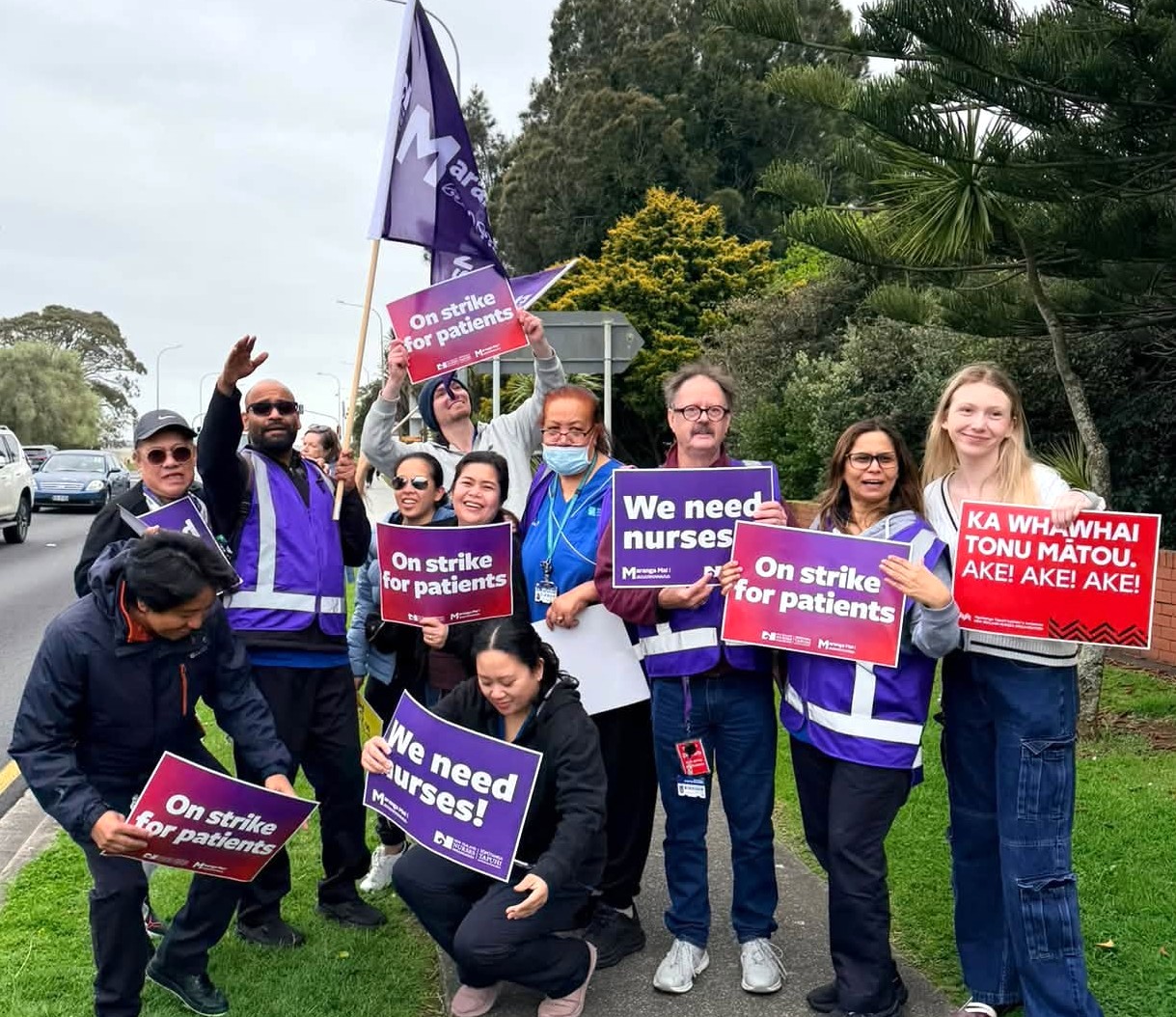
Muriwai Ward nurses from Waitakere Hospital on strike over unsafe staffing. |
|
|
|
Staffing Methodology Working Group
MECA negotiations with Health NZ resulted in the establishment of a number of working groups to progress nominated issues. The Staffing Methodology group meets at least weekly and usually covers the work of the Ratios Research group as well given how closely these work streams are aligned.
In discussions with HNZ over the past three months, a ‘pack’ has been developed, peer reviewed and is ready for groups of delegates to evaluate three staffing methodologies: nurse to patient ratios, nursing hours per patient per day and acuity. This happened around the motu from this week (21 September).
Based on these evaluations a business case will be made to fund the development and implementation of the methodology or hybrid that emerges from the evaluation process as the most likely to deliver safer staffing and patient benefit.
The timeframes for the completion of work are ambitious, largely driven by Health NZ's budgeting cycle and several ‘extensions’ have been necessary to allow for peer review of the planned process and completeness of analysis of literature and international comparisons.
|
|
|
|
Joint NZNO-Te Whatu Ora work programmes from this year’s collective agreement negotiations
In this year’s bargaining NZNO members won provisions that require ongoing joint work by NZNO and Te Whatu Ora that will be progressed through a number of work programmes. NZNO is represented by members in these programmes who are supported by NZNO staff. Full details are in the Terms of Settlement.
Latest updates:
- Mental Health Workforce Support
This initiative aims to address staffing challenges and ensure quality and safety across mental health services. The NZNO, PSA and Te Whatu Ora reps met this week with the Chief Nurse Mental Health and Addictions Rachael Muir to progress this work. While the longer term work programme is still being established, fortnightly meetings have immediately been set up to progress urgent issues for union members.
- National Midwifery Governance Group
There will be a national group established to oversee the midwifery workforce. The Governance Group will include NZNO representation and will be chaired by the National Chief Midwife Laura Aileone. This group will have its first meeting on 1 October.
- Health Care Assistant role and professional development review programme The purpose of this programme is to consider the role of health care assistants within Te Whatu Ora and to align professional development with the role. Our workgroup has received a draft Terms of Reference and draft project plan that will run through until October 2027. Online meetings for HCAs to find out more about the programme will be held on 6 and 7 October – please check your email for more information.
- Enrolled Nurses Workplan
The purpose of this group is to consider key workforce priorities for Enrolled Nurses. This Workplan sits under the umbrella of the Nursing Workforce Safety and Sustainability programme and will get underway once the Terms of Reference for the Nursing Workforce Safety and Sustainability Programme have been finalised.
- Safe staffing - Establishing the new escalation pathway training and implementation of new chronic staffing issues resolution process
The purpose of this workgroup is to help establish the new escalation pathway (page 66 of the collective agreement). This group is in the process of finalising a pilot programme for the new escalation pathway.
To follow the progress of all the workgroups check here: Te Whatu Ora workgroups |
|
|
|
|
|
|
|
The Omni Tararua Health team from Danniverke.
PHC MECA offer was accepted
Across Aotearoa members stood together. You wrote collective letters to your employers. You took photos holding the proposed MECA — real faces, real clinics — and sent them straight into the bargaining room, so the bargaining team could show employers exactly who this campaign was for. That kind of visible, nationwide solidarity is what shifted this campaign and got an offer on the table.
Thank you to your bargaining team Tracey Morgan and Kylie Goddard for your leadership and tireless efforts advocating for Primary Health.
The offer includes:
- Two tiers of nurse prescribing rates
- A 3.5% pay increase
- A 7–10% increase for admin staff, addressing a gap of up to 28% against Te Whatu Ora rates
- A year-long commitment to work with employers on an improved MECA built from your claims
"This is a step in the right direction — but we still have a long way to go." — Tracey Morgan, PHC MECA bargaining team
"We aren't going to stop here!" — Kylie Goddard, PHC MECA bargaining team, already calling for members to join the bargaining team and, later, the working group
We also acknowledge the righteous anger, and we've heard that clearly — particularly around the ongoing pay gap with your hospital colleagues, which is driving real retention and workload pressures. Primary health nurses, HCAs, administrators deserve the same recognition. Pay parity remains our top priority, and this isn't the end of that fight.
Keep an eye out for ways to get involved! Let us know if you’d like to be on the bargaining team next year, would like to be a delegate and share your story – campaigns@nzno.org.nz
Sexual Wellbeing Aotearoa
Ratifications meetings are happening with organisers. Two more online meetings on Wednesday 1 October, 9am and 12:30pm – be sure to have your say!
Voting closes 3pm, Wednesday 1 October |
|
|
|
Aged Residential Care |
|
|
|
|
|
Radius
Following two days of bargaining on 15 and 16 September, we have received an offer from the employer. We encourage all members to attend one of the online ratification meetings below to hear more about the offer, ask questions, and make an informed decision before voting. Thank you to the bargaining team particularly Fenu Ioane from Radius Waipuna for their hard work throughout negotiations in reaching this proposed settlement.
Our timeline for settlement is:
28 September 2026: Voting opens.
13 October 2026, 11am: Online ratification meeting.
13 October 2026, 4pm: Online ratification meeting.
16 October 2026, 4pm: Voting closes
MetLife
Following two days of bargaining on 9 and 10 September, we have received an offer from the employer. Your bargaining team is recommending this offer to members for ratification. We encourage all members to attend one of the online ratification meetings below to hear more about the offer, ask questions, and make an informed decision before voting. Thank you to the bargaining team, Ange Miller (Merivale), Jeremy Alvez (Greenwich Gardens), and Reina Picar (Merivale), for their commitment and hard work throughout negotiations in reaching this proposed settlement
Our timeline for settlement is:
28 September 2026: Voting opens.
14 October 2026, 11am: Online ratification meeting.
14 October 2026, 4pm: Online ratification meeting.
16 October 2026, 4pm: Voting closes
Summerset
We exchanged claims with Summerset on 23 September. Our bargaining team will be meeting with the employer for bargaining in Wellington on 28 and 29 September. We will provide a further update to members following those discussions
Bupa Senior Nurses
Thank you to Senior Nurses for filling out our claims survey. We have confirmed 23 October for our 2026 negotiations.
Bupa Nurses pay equity update
Bupa has not accepted the merit of your pay equity claim, and we want to be clear about what happens next.
We believe Bupa's argument is flawed, and we think Bupa knows it, they were not required to raise this barrier at this stage of the process, and they chose to. That is a decision we will challenge as we work through the legal options now in front of us.
This outcome is disappointing, but it is not the end of the claim. Every point at which the amended law is used against our members in practice becomes part of the case for a workable system, in court, in public, and politically.
Thank you for the work you did to get here. The engagement across sites, the ballot, and your willingness to be part of this process made this claim possible. That contribution stands regardless of this outcome, and it is part of something larger than a single employer's decision.
We will update you again once next steps are confirmed.
Aged Safe
Lobbying Visits Aged care delegates are currently visiting MPs to discuss low staffing levels in aged care facilities and the impact this has on both workers and residents in rest homes across their electorates. |
|
|
|
|
|
Pay equity in the funded sector |
 |
|
|
|
Pay Equity: Time for a system that works
The experience of taking our Pay equity claims through the current framework is telling us where the system is working and where there are problems that need to be addressed.
Some of the challenges are not about the work of establishing whether roles have been undervalued, they are barrier by bureaucracy: access to information, funding, implementation and who is responsible for making sustainable pay equity outcomes possible.
These issues make the process lengthy, complex and resource intensive. That matters because a legal right to pursue pay equity is only useful if there is a workable pathway to achieving it.
The current claims are providing important evidence about what that pathway looks like in practice and are contributing to the wider discussion about how pay equity should work in Aotearoa. Members and claimants are understandably looking for updates on their individual claims. Work is continuing, and more specific information about progress and next steps will be provided in the next fortnight
There is also a bigger question to consider, particularly in an election year: if the current system is not delivering pay equity simply and sustainably, what needs to change?
That is ultimately a political question.
Legislation, funding and employment settings all have a role in making pay equity work in practice. The experience of these claims should be used to build a system that is clearer, fairer and capable of delivering sustainable pay equity outcomes.
Pay equity remains an important issue for members, the work underway now is helping identify what needs to change to make the right to pay equity work in practice and what political commitments are needed to make this happen. |
|
|
|
|
|
Our leaders speak: Kaiwhakahaere Kerri Nuku – What does democracy look like? |
|
|
|
Last week’s Parliamentary urgency debates, coming at the eleventh hour of this Government’s term, remind us just how fragile our democracy can be in Aotearoa.
Three bills relating to Te Tiriti o Waitangi were progressed through Parliament under urgency. The proposed changes include removing some references to Treaty principles from legislation, |
|
|
|
standardising Treaty references, and changing the strength of some obligations so that they require the Treaty or its principles to be “taken into account”.
The Government says these changes are about clarity, consistency and reducing legal uncertainty for agencies and policy makers. But for me, this raises a much bigger question.
What happens when we start removing the foundations that require governments to recognise and respond to Te Tiriti? When legislation follows the normal parliamentary process, there is an opportunity for the public to have a say. Select committees hear submissions from people across the country. Patients, whānau, workers, organisations and communities can tell Parliament how proposed legislation may affect them.
It can be a long process. But democracy is not supposed to be convenient. It is supposed to give people an opportunity to be heard.
Urgency is not new to New Zealand. Governments have used urgency when there has been a genuine need to act quickly. We saw it following the Christchurch terrorist attacks in 2019 and during the COVID-19 pandemic, when decisions had to be made quickly to protect lives and public safety.
The issue is not whether urgency should ever be used. It is what happens when urgency becomes normalised. This Government has made extensive use of urgency during its term, including during the final sitting week of this Parliament which sat for extended hours while significant legislation was progressed.
We should be asking whether this is becoming the new normal because when legislation is rushed, the opportunity for proper scrutiny can be reduced.
Public scrutiny does matter! It matters because legislation is not just words on paper. It affects real people. It affects whether our homeless are safe. It affects the education and opportunities available to our young people, whether people can afford a warm, dry home, whether families can access healthcare and it affects whether people can get to work and put food on the table. And it affects Māori!
For Māori, Te Tiriti o Waitangi is not simply another reference sitting in legislation. It is fundamental to the relationship between Māori and the Crown. So, when Treaty references are removed, changed or reduced in their legal effect, we need to be asking what that means for Māori participation, decision-making and outcomes. We have seen what happens when Māori voices are not properly heard in the development of health policy.
As nurses, we see it every day. We see the consequences of decisions made at the top that do not always reflect what is happening at the bedside, in our communities, in rural areas, in emergency departments, in aged care or in people’s homes. We know what happens when policy does not match reality, that Māori continue to experience inequities across our health system and that access, affordability, workforce shortages, cultural safety and the availability of appropriate services all have consequences for our whānau. That is why Te Tiriti matters.
It is not about adding another layer of bureaucracy. It is about ensuring that Māori have a voice in decisions that affect Māori. The Government says these changes will create greater certainty and consistency. But certainty for government agencies cannot be the only measure.
We also need to ask:
- What does this mean for Māori?
- What does this mean for Te Tiriti?
- What does this mean for future governments?
- And perhaps most importantly: Who gets to have a say?
The Treaty bills are now before the Justice Select Committee, where public submissions are being invited. That opportunity matters because democracy is not simply about voting every few years.
Democracy is also about scrutiny. It is about being able to question those who make decisions on our behalf, about communities being able to say, “This will affect us, and we need you to listen.”
It is about ensuring that those who are most affected by legislation are not the last people considered.
For Māori, that must include the right to have Te Tiriti o Waitangi recognised and respected in the relationship between Māori and the Crown.
- We should not be afraid to ask difficult questions.
- We should not be told that scrutiny is an inconvenience.
- We should not accept that speed is always more important than participation.
Because once public scrutiny and participation become something we only use when it is convenient, we need to ask ourselves what we are actually protecting.
So, when we stand together and ask: “What does democracy look like?” Perhaps the answer is not simply in what Parliament does. Perhaps it is in whether we continue to speak up. Whether we continue to question. Whether we continue to participate and whether we continue to expect those elected to represent us to listen.
Because democracy is not just the right to vote. It is the right to be heard.
Kia kaha! |
|
|
|
|
|
|
|
|
Highlights from the past fortnight:
Rotorua Daily Post/NZ Herald, 25 September 2026
NZ Doctor, 24 September 2026
Chris Lynch Media, 24 September 2026
Understaffed surgical wards linked to 182 preventable hospital deaths each year
The Press, 23 September 2026
'The new norm': Christchurch Hospital’s ED treating more patients in corridors
Newstalk ZB, 23 September 2026
Middlemore Hospital staff declare healthcare 'crisis'
RNZ, 23 September 2026
‘We have lost confidence and trust’: Six health centre staff resign en masse after meeting goes wrong
Manawatu Standard, 22 September 2026
'Exasperated' nurses strike at specialist Waitākere Hospital ward
RNZ, 21 September 2026
Patient numbers soar for Whanganui Hospital's 15-bed emergency department
RNZ, 20 September 2026
Whanganui Hospital ED: Nurses union claims 680% capacity, Health NZ disputes figure
NZ Herald, 20 September 2026
Daughter of man who died after 9 hour wait at Waikato ED speaks out
1News, 18 September 2026
New practice nurse pay offer out to vote: 3.5% increase plus prescribing allowance
NZ Doctor, 18 September 2026
Health NZ internationally-trained nurses rise by more than 4800 since 2021
Newstalk ZB, 17 September 2026
6am patient call: A morning in the life of a stretched primary care nurse
NZ Doctor, 17 September 2026
G’day Welly, where the bloody hell are ya?
The Post, 17 September 2026
Tauranga Hospital Emergency Department nurses declare state of emergency
Bay of Plenty Times/NZ Herald, 15 September 2026
‘It’s a warzone’: Man has aneursym in hospital toilet
Stuff, 15 September 2026
Nurse shortfall: Nearly 2/3 of Waikato ED shifts understaffed in June
Waikato Times, 15 September 2026
My worst day in 18 years working at Waikato Hospital – Tracy Chisholm
NZ Herald, 14 September 2026
Election 2026: East Cape election candidates challenged over health system
Gisborne Herald, 11 September 2026
Read more |
|
|
|
|
|
Grow yourself professionally by joining NZNO's colleges and sections |
|
|
|
Colleges and sections are central to NZNO’s success and influence and brings together groups of members who are focused on a specific nursing specialty.
So far only less than 20% of members have elected to join a college or section, and we'd like to see you grow that number. NZNO colleges and sections can help you advance your practice through policy and professional development opportunities, and membership at most colleges and sections is open and free to NZNO members.
There’s bound to be one for every member as there are 19 colleges and sections across a range of specialty areas and members can choose to belong to as many as three. Individual membership choices are usually related to clinical specialty and/or study and research interests.
Check out our colleges and sections here. Which one(s) will you join? |
|
|
|
|
|
Primary Health Care Symposium |
|
|
|
|
|
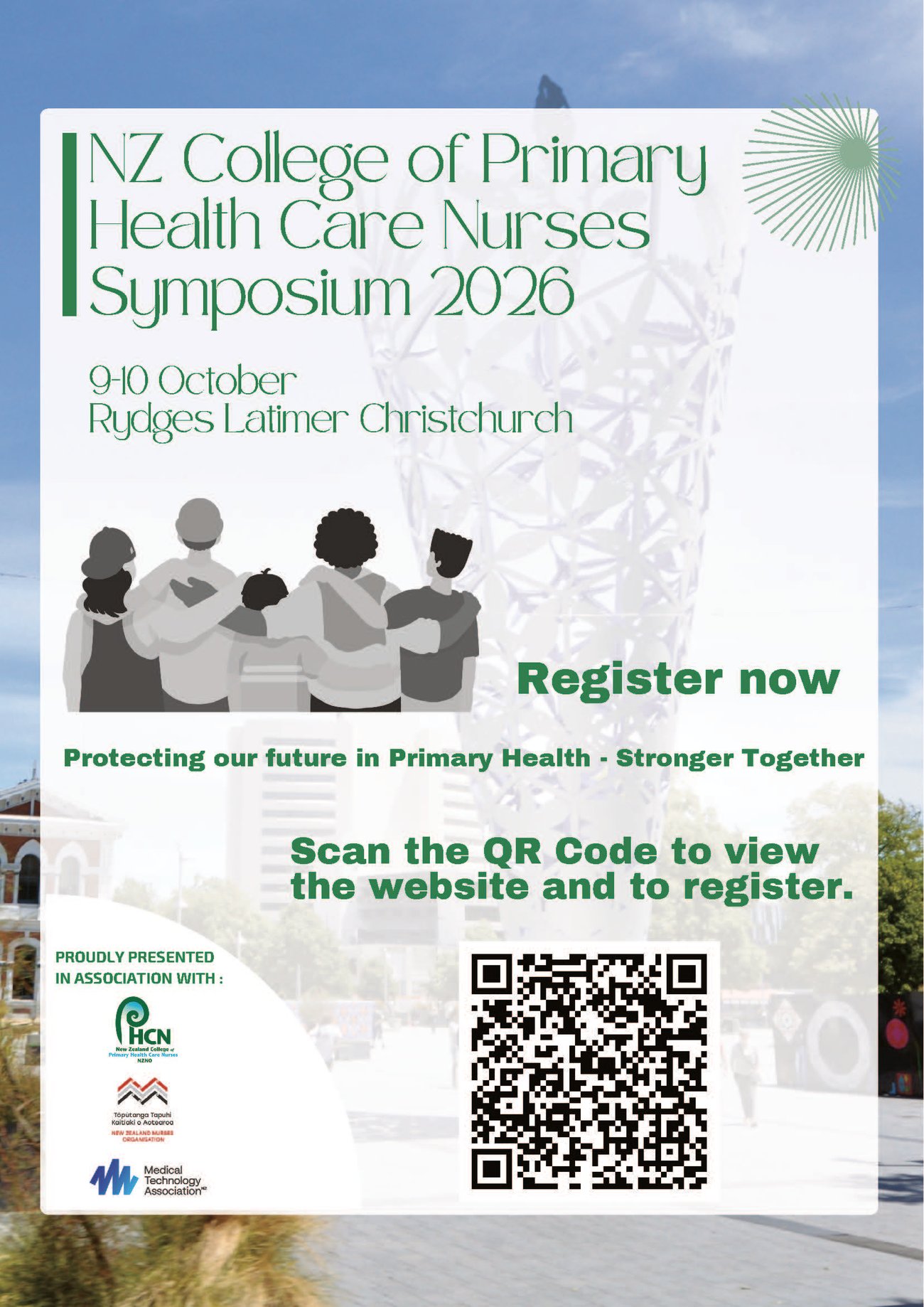
Venue: Rydges Christchurch, 30 Latimer Square, Christchurch
Dates: 9-10 October 2026
Theme: Protecting our future in Primary Health - Stronger Together
Mehemea ka moemoeā ahau, ko ahau anake. Mehemea ka moemoeā tātou, ka taea e tātou.
If I dream, I dream alone. If we dream as a collective, we can achieve our dream.
~ Na, Princess Te Puea Herangi
We have stellar speakers coming from all over Aotearoa to inspire and motivate you and update you on insights and trends for the future in PHC. They will be speaking on current important issues for PHC. This symposium is an excellent opportunity for professional networking and to be updated on Insights and trends for the future.
Visit the Conference website for more information
Register to attend the College of Primary Health Care Nurses Symposium now |
|
|
|
|
|
|
|
|
Southern Enrolled Nurse Study Day
The Southern Region Enrolled Nurse Section invites you to attend our 2026 Study Day.
When: Saturday 17 October 2026
Where: Hutton Theatre, Tūhura Otago Museum, 419 Great King Street North Dunedin
NZNO member & ENS Member: $70.00
NZNO member but non ENS Member: $80.00
Non NZNO Member: $90.00
Contact Robyn Hewlett: robyn.hewlett@xtra.co.nz |
|
|
|
|
|
Aotearoa College of Diabetes Nurses |
|
|
|
|
|
|
|
NZCTU: June GDP figures expose long road ahead |
|
|
|
“The economy grew 0.2 percent in the June quarter, but there is a long way to go before we have dug ourselves out of the hole we have sunk into under this Government”, says NZCTU Te Kauae Kaimahi President Sandra Grey.
|
|
|
|
“GDP per capita basis is still 1.5% below where it was three years ago”, says Grey.
“Growth has been weaker in New Zealand than our peer countries, Australia, the UK, and the US all growing at twice the rate that we did in the June quarter, and the Euro Area growing at thrice the rate”, says Grey.
“There was some growth in construction, which is welcome. But this industry has taken an absolute hammering over the past three years. Compared to the same quarter three years ago, construction output is down almost 10 percent”, says Grey.
“Working families have been struggling with the rising cost of living and job insecurity over recent years and this will remain the case over the next year. This has been restricting consumer spending”, says Grey.
Household spending on durable goods is still lower than it was in the June 2023 quarter and spending on non-durable goods is flat.
Read more |
|
|
|
|
|
ICN: New research raises concerns over ‘substitution by stealth’ as global nursing shortfall grows |
|
|
|
|
|
|
|
Major new research published in the September 2026 edition of The Lancet Public Health has put a number on the global Community Health Worker workforce for the first time, estimating it at 7.6 million. While recognizing the essential contribution of Community Health Workers, the findings raise concerns that they may increasingly be used as a substitute for more highly educated and skilled registered nurses.
The study also provides a new and starkly higher estimate of the global shortage of nurses and midwives. Researchers calculated that the world needs an additional 23.9 million nurses and midwives to achieve a score of 80 out of 100 on the Universal Health Coverage effective coverage index.
This compares with a previous estimate of 5.8 million missing nurses, which was based largely on existing health systems and patterns of care.
ICN CEO Howard Catton said the higher figure should not be interpreted simply as another measure of the workforce shortage. It reflects greater global ambition to expand access to effective healthcare.
Read more |
|
|
|
|
|
Update and Messages from UNI NLC and affiliates from Nepal |
|
|
|
The scale of this disaster is truly devastating and difficult to comprehend. The flash floods that struck in the morning of 26 August have caused widespread loss of lives, displacement, destruction of homes and properties, and severe damage to infrastructure and livelihoods. The full extent of the tragedy is still unfolding. |
|
|
|
In response to this unprecedented situation, as an immediate step, (i) UNI NLC has mobilised its own resources and decided to make a contribution to the Government's Disaster Relief Fund. In addition, (ii) the UNI NLC and Affiliates together are establishing a “Disaster Rehabilitation Support Fund”, specifically aimed at supporting affected union members and communities and contributing to rehabilitation and recovery efforts.
(iii) Nepalese unions have made a strong appeal to UNI, the Global Union Federations, and the wider international trade union movement to intensify our advocacy and lobbying for effective, climate-responsive policies and stronger international action on climate justice. They call for meaningful mechanisms to ensure that communities and workers in countries that have contributed least to global warming are supported and compensated for the loss and damage they suffer as a consequence of the climate crisis. Climate justice must mean that those who bear the least responsibility are not left to carry the greatest burden.
Read more |
|
|
|
International News |
|
|
|
|
-
West Midlands nurse says they've not worked a shift with enough staff in more than six months
UK, Birmingham Live, 22 September 2026
- How Nurses Make Telemedicine Work in Ukraine’s Frontline Communities
Ukraine, Mezha, 24 September 2026
- Ratios become reality: More than 950 nurses set to join hospital wards
Australia, The Lamp, 24 September 2026
- Nurse shortages leading to patients with ‘brain bleeds and broken bones’, says report
UK, The Independent, 22 September 2026
-
Senior managers suspended at Liverpool hospital group amid allegations of bullying
UK, Liverpool Echo, 18 September 2026
|
|
|
|
|
|
|