|
|
|
Member Newsletter/Pānui 28 November 2025 |
|
|
|
|
|
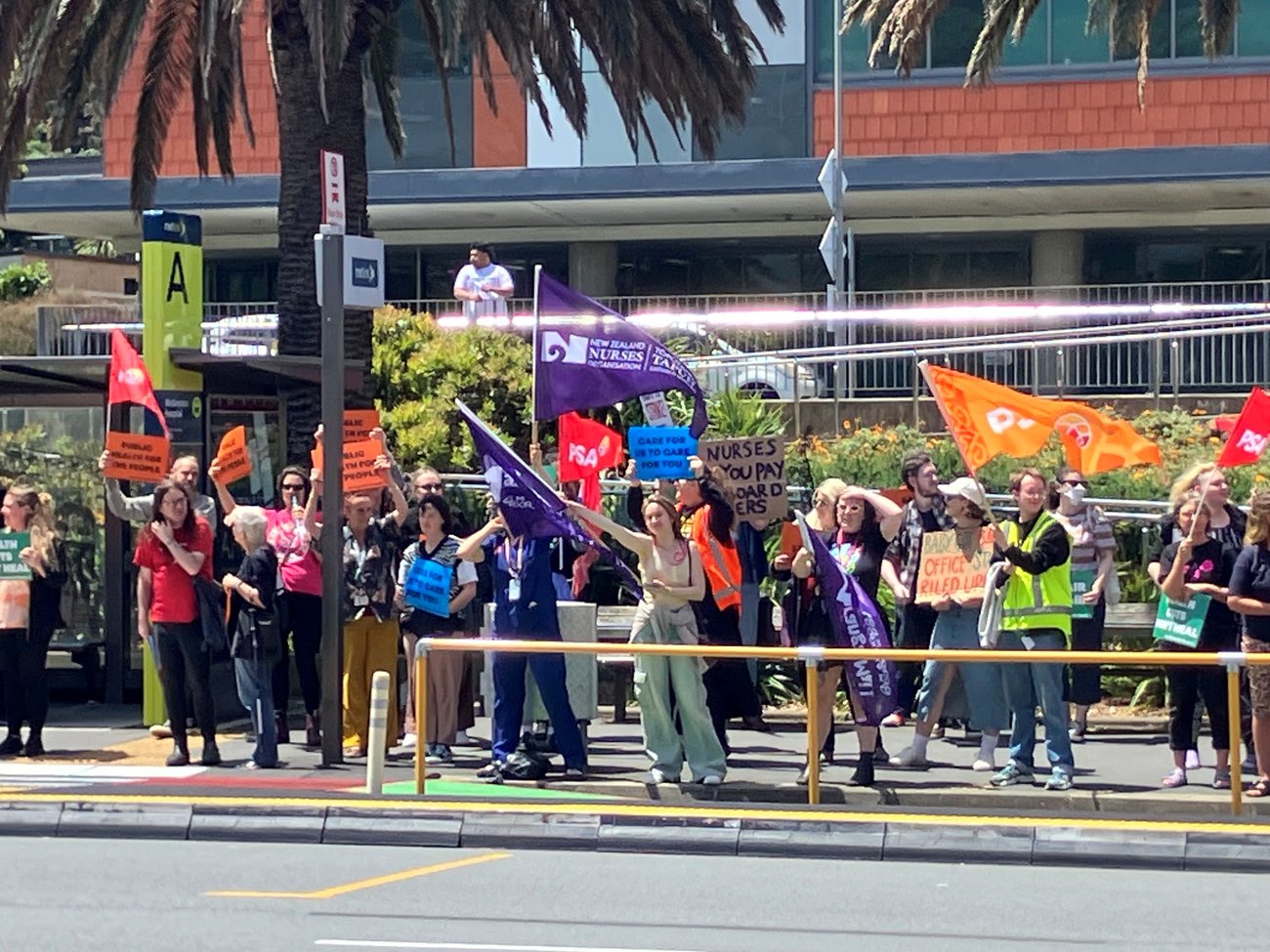
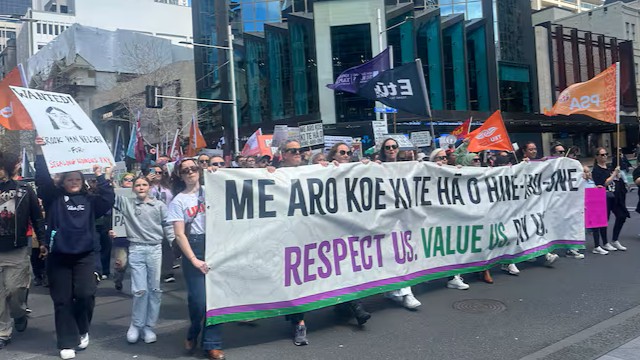
NZNO's members out in support of the PSA at their rally at Wellington Regional Hospital today
Kia ora Member,
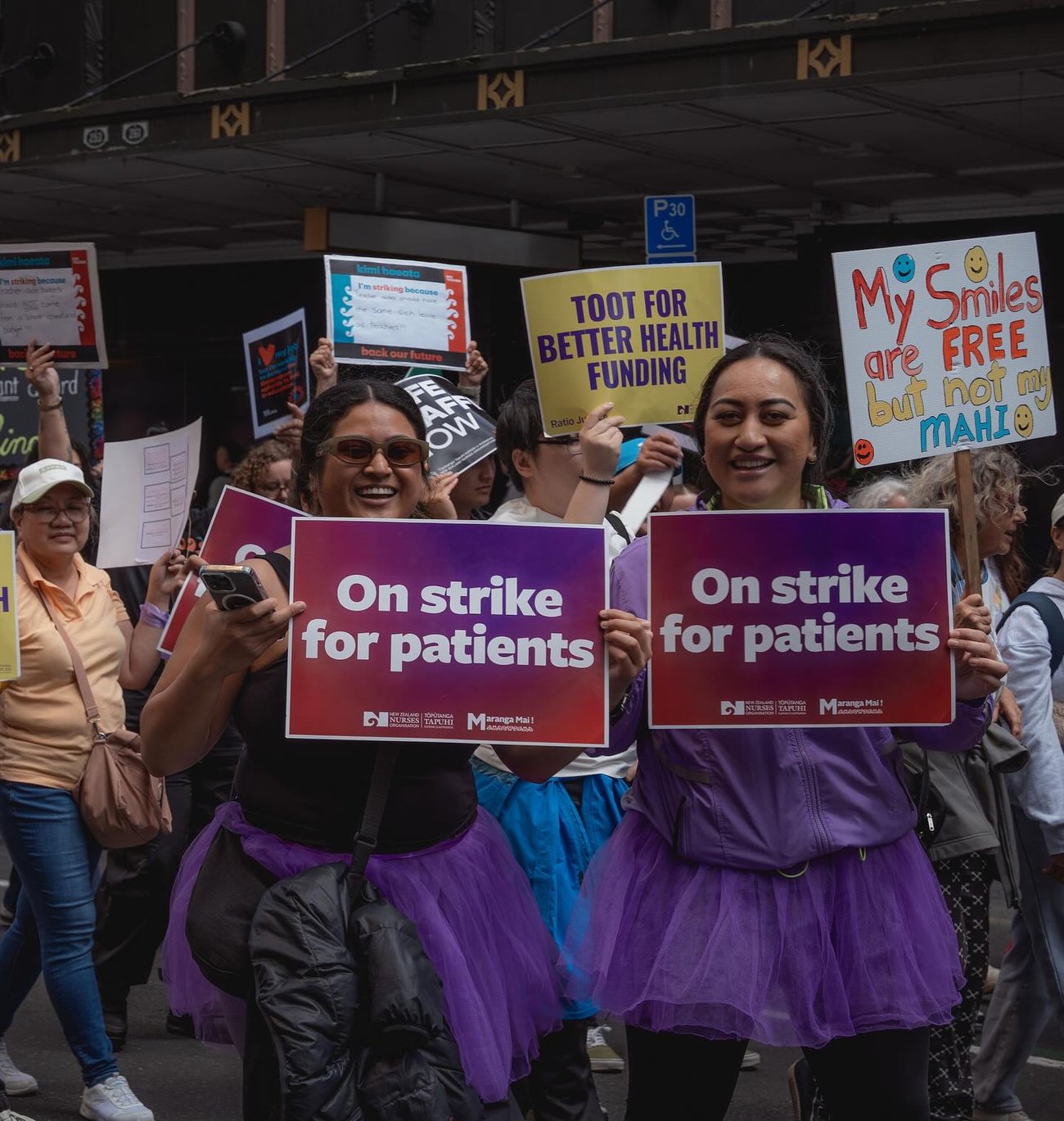
Our 37,500 Te Whatu Ora members will wrap up two weeks of strike action banning redeployment, additional hours and roster changes on Sunday.
These strikes successfully made the point judging from reports around the country, although there were naturally a few hiccups in places due to the novelty of these actions.
Looking ahead, our plan is to use December and January to raise awareness of chronic and unaddressed short-staffing through a series of hard-hitting media stories. We have been gathering data, evidence and anecdotes which tell compelling tales of the issues you are facing. And we are always keen to know more.
Having media stories run over the summer months will keep the issues you are facing alive in the public’s minds – and not let Coalition Government ministers off the hook for the danger they are putting patients in by not properly staffing our public health system.
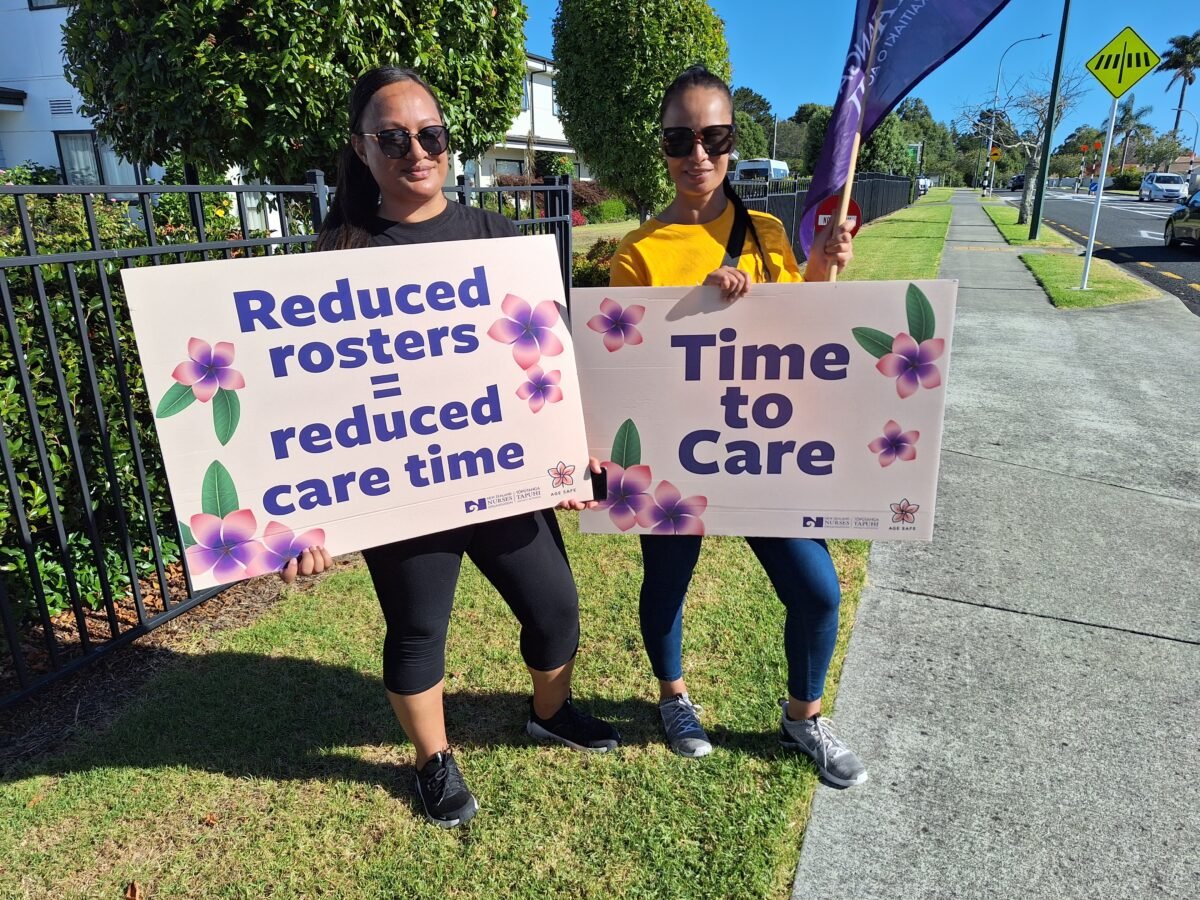
If you are keen to do your own local actions over this period, you could consider what your colleagues in Christchurch and Waitematā have done with their recent uniform and poster visibility strikes. These have been effective and fun for members to take part in.
Fellow unions take to the streets
The Public Service Association and the Professional Firefighters Union both took to the streets around Aotearoa New Zealand today as part of their respective strike actions.
A big mihi to all our members throughout the country that turned out in support (see photo above), especially Ward 1 Orthopedics at Whangārei Hospital who took their own strike and joined PSA members on the picket line.
To follow up on what was dubbed by media as the Mega Strikes on 23 October, NZNO, the Association of Salaried Medical Specialists, the PSA, the PPTA, NZPFU and NZEI Te Riu Roa wrote to Prime Minister Christopher Luxon urging him to step in and solve protracted and stalled collective agreement negations with frontline public servants.
Afterall, it is the bargaining parameters his Government has set which have led to a failure to address widespread under-resourcing and resulted in below inflation wage offers.
Disappointingly, despite his office acknowledging receipt of the letter, we have yet to receive a substantive reply to the letter we sent almost three weeks ago.
Te Whatu Ora apologises to Taranaki ED staff
While we haven’t heard back from the Prime Minister, we have heard back from Te Whatu Ora in response to the concerns we raised over the 2020 death of Taranaki man Len Collett.
It followed a damning report by Coroner Ian Telford who found that five years after a busy and fateful evening in Taranaki Base Hospital ED when Len Collett fell, Taranaki ED is 15 FTE short with Te Whatu Ora failing to fund the vacancies.
We sought an apology from Te Whatu Ora to the staff involved and I’m pleased to report that Cath Cronin has now written to outline the steps taken to address issues raised by the Coroner. He has also extended his “sincere apologies to our Emergency Department kaimahi for any stress or difficulty they may have experienced”.
Regulation Standards Bill repeal letter
It is a week of letters. The third and final one to report on this fortnight is about ACT's controversial Regulatory Standards Act.
NZNO has joined with 21 public health organisations and medical colleges to send a letter to all MPs expressing concern about the negative effects the new law will have on health of generations of New Zealanders.
The letter highlighted that social determinants account for around 80% of health outcomes, and these need regulatory frameworks based on public health evidence, not economic efficiency.
The letter called on the Regulatory Standards Act to be repealed. Less than a week after it was sent, National’s deputy leader Nicola Willis suggested National may join all other parties - other than ACT - campaigning to repeal this terrible law. So why did National and NZ First sign up to it in the first place?
Open access for Kaitiaki and the Nursing Research journal
In a survey of our communications, you told us the registration feature on the Kaitiaki nursing magazine website was an impediment for some of you to access nursing news, profile stories of members and in-depth features.
To fix this and make sure all members can read our great nursing magazine, which is now 116 years old, we have removed the registration function and opened all content.
At the same time, we have put this year’s Nursing Research journal on the Kaitiaki website. This will enable the journal to be sustainable in the digital era and give wide access from here and around the world to local nursing research.
Active Campaign:
Finally this fortnight, you may be reading our member newsletter for the first time in a while because you may have earlier unsubscribed to our communications.
We have now moved to a new communications platform, and this is our first message to all members.
Often members have unsubscribed to one communication and not realised on our previous platform you were unsubscribing to all our communications. This often resulted in members asking to resubscribe to ensure they received essential communications around their collective agreements, and wage and conditions negotiations and voting.
Our new system will still allow you to unsubscribe from marketing communications, by clicking the unsubscribe link in this message. But you will now continue to get essential communications.
Wishing you all a peaceful weekend. The silly season is almost upon us.
Ngā mihi,
Paul Goulter, Chief Executive
Tōpūtanga Tapuhi Kaitiaki o Aotearoa NZNO
P.S
Great to see so many schools stating their commitment to Te Tiriti o Waitangi after the Government removed their boards' Treaty requirement from the Education and Training Act.
|
|
|
|
|
|
In this member newsletter |
|
|
|
|
|
|
|
|
Holidays Act remediation payments update
Te Whatu Ora today issued a Holidays Act remediation payments update.
As of today, more than 83,000 current employees, representing nearly 93% of the current workforce have been paid Holiday Act remediation payments for their current role.
Around 2,500 Bay of Plenty employees today received payments of $10.9 million. That now brings the total remediation payment to current employees to more than $657 million.
Remediation work continues for the remaining payrolls: Lakes, MidCentral, and Whanganui.
Payments to former employees began in October 2025, with $4.7 million paid to to over 1,000 former staff in Taranaki.
More than 10,000 former Auckland Metro employees were paid over $39 million today.
Payments are expected to be made to former employees of Tairāwhiti and Southern next month, subject to final audits and assurance checks.
|
|
|
|
|
|
|
Corrections
We are currently running ratification meetings with Corrections, who went on strike at the end of October. These meetings will run for a week, with voting on the latest offer closing on Saturday 8th December. Although the pay component is still disappointing, Corrections obviously were affected by the strike action held on 23 October and have moved on a whole load of other claims.
This is the first offer we have had that is significantly improved over their opening negotiation stance, though the pay component remains low because of government restrictions, we do see improvements across the whole of our claims otherwise.
Health Centre Manager negotiations in Corrections continue. We have agreed in principle to bring all NZNO members into a new collective agreement and move towards addressing the on-call system to make it safe. The sticking point is how the pay scale is formatted, which might seem a small point, but prevents all managers from being on a single scale and the Corrections position refuses to acknowledge the added responsibilities of those on the current lower paying scale. We have proposed no changes to the values paid on the scale, but have merged the two scales to ensure all HCMs are paid the same and have similar progression criteria.
Access
Access made another offer to settle the negotiations last time we met. This is the employer whose advocate announced that being the lowest paying employer in the sector “is a position we’re very comfortable with”. Their pay offer although improved from the first one was still calculated to leave their staff as the lowest paid nurses in the sector. The bargaining team have rejected this outright and made a counterproposal that remains open until 5 December.
If this is not accepted by the employer, or at least improvements on pay are not met, then we will be discussing with members the options for industrial action. Access has an annualised turn-over rate of close to 30% and the main reason for leaving is high workloads and low pay, meaning that if they don’t address the situation urgently, they may not be able to meet their contractual obligations in some areas. Their negotiating team refuses to accept this assertion and continues to try to undermine the collective agreement and try to slip clawbacks into negotiations by way of late claims.
NZ Blood Service
NZ Blood Service to allow for bereavement leave. We’re looking forward to hearing their response to our suggestions to progress negotiations then.
Plunket
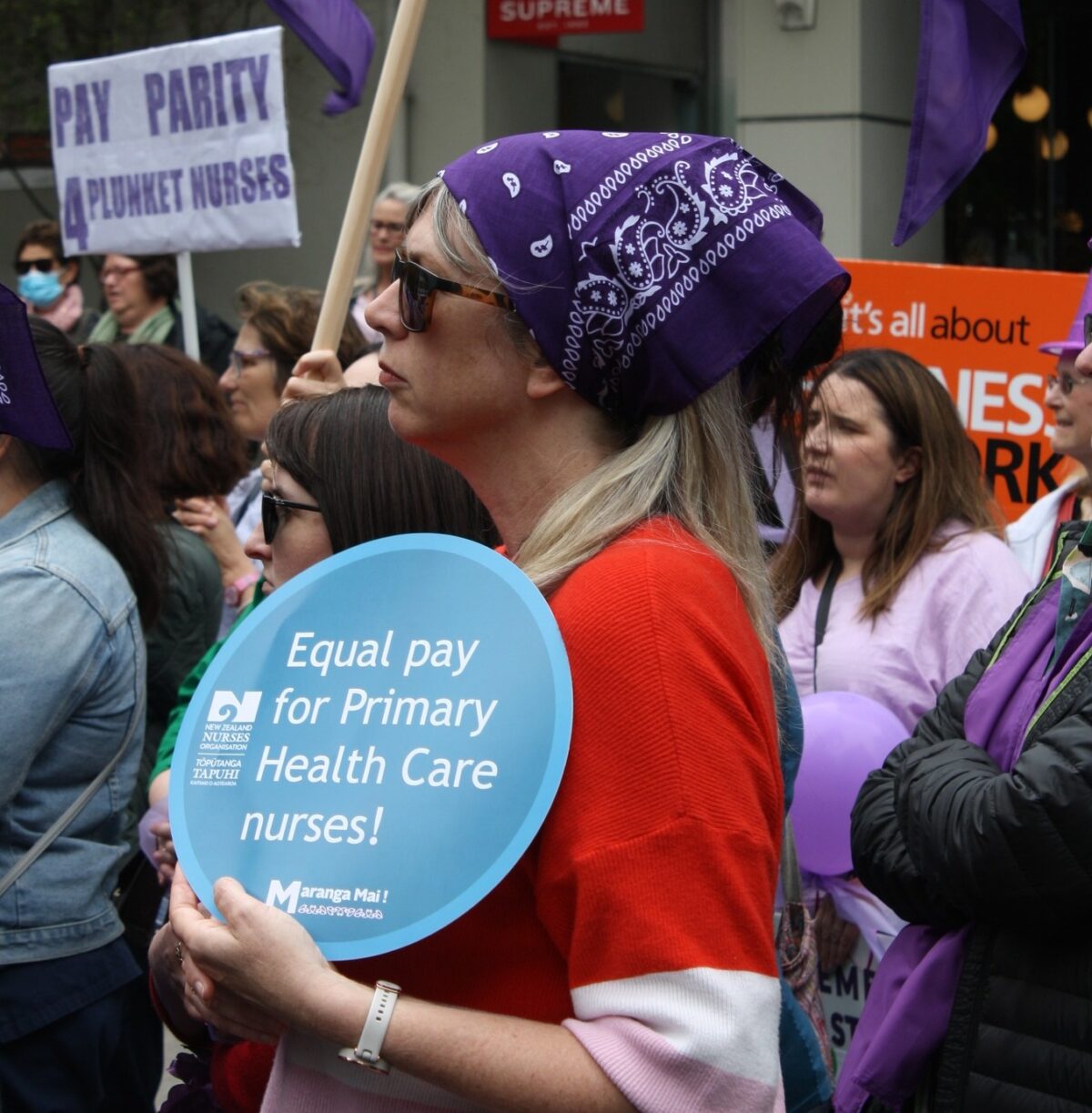
Plunket have now responded to four out of our six Pay Equity claims. Our original September claim was rejected as they claimed it didn’t meet the new merit criteria. We raised six separate claims for each job title and four of these have so far been accepted. However, Plunket are trying to impose ‘strategic pay’ on their nursing staff, which is a system largely discredited as disadvantaging workers and moved away from by the public service and most universities. We will meet with Plunket to give our responses once they have acknowledged all of the claims made.
|
|
|
|
|
MetLife Care
We are pleased to inform you that the collective agreement has been ratified. Thank you to everyone who participated by coming to meetings and responding to our emails.
Thank you to our amazing bargaining team:
Mwape Chalabesa, Karori
Angela Miller, Merivale
Bupa
We are pleased to inform you that the collective agreement has been ratified. Thank you to everyone who got involved, and a special thank you to our bargaining team:
Sushil Devkota - Stokeswood
Jodi Thomson - Longwood
John Hore - Ascot
Lindsay Warren - Te Whānau
Val Fafita - Parklands
Maree Ross - Parkstone
The Senior Nurse agreement is also now ratified. Thank you to everyone for your involvement, and a special thank you to Nisha Sakaria for your thoughtful assistance throughout this process. Also, Kim Black, congratulations on your award, well done.
Radius
We have an offer of settlement from the company. We will be in touch very soon with an outline of the offer and balloting information. Our goal is to ratify ahead of 8 December.
Summerset bargaining update
After meetings on13 and 14 November, bargaining has stalled. We’re now visiting sites to explain the issues and gather your views.
Summerset’s offer is below the industry standard and includes reductions to weekend allowances.
Our bargaining team have been very clear that this is unacceptable to members. We will be gathering your feedback to share with the company in coming weeks. |
|
|
|
|
|
|
Pay Equity in the non-Te Whatu Ora sector |
|
|
|
|
Last week we had a response from Plunket to the re-raised claim for registered nurses. This was the second time we raised the claim under the new legislation, having raised a broader claim with the coverage being a combined claim covering all the Plunket roles. Plunket rejected that claim asserting that not all the roles covered did the same of significantly similar work.
We subsequently separated out the claim into six claims covering the various clinical role holders work. We are really pleased to report that last week we received a response from Plunket that advised they accepted the claim had merit and would like to meet to discuss the next steps in progressing the claim.
We have received similar responses to five of the six claims raised. We will need to discuss the process that Plunket has suggested we use to progress to the next steps. This is important in terms of how we will approach all of our claims. This is good news though as being the first and only union thus far to have raised claims under the new legislation we are trailblazing.
In terms of Hospice, they are taking a different approach. Following on from us raising the “new” claim on September 8, having acknowledged receipt of the claim, Hospices have made an appeal to the Minister to have that claim fast tracked on the basis that they believe the claim meets the merit threshold and due to the information already gathered through the previous process there is evidence of gender based undervaluation already established.
We are told that this position is being “considered” and that Hospices are waiting to hear back on the matter. Otherwise we will most likely proceed through the next steps as set out which will mean meeting to agree how the work will be “re-assessed” and the choice of comparators and so on.
In both cases it would seem that it was not a completely wasted effort having done the interviews and gathered the data and information on these to groups of nurses as we will be able to use that information to inform the new process.
This provides a little light at the end of the tunnel. We will still be advocating for the pay equity legislation to be repealed and improved and ensure that there is funding available to pay the level of pay that should be made across the health sector, notwithstanding the Te Whatu Ora pay equity settlements are overdue a review and we suspect their rates have fallen behind again too.
|
|
|
|
|
|
|
Our leaders speak: Kaiwhakahaere Kerri Nuku – Fight for Pay Equity Is a Fight Against Misogyny |
|
|
|
Across Aotearoa, hundreds of thousands of women are, in effect, working for free. The NZCTU’s 2025 Work for Free campaign calendar exposes what too many families already know: pay inequity is not an accident—it is the outcome of systems that undervalue women’s labour and leadership, particularly that of Māori and Pacific wāhine.
This is not just a wage issue. Pay equity is a justice issue. It is about dismantling the structures—colonial and patriarchal—that have normalised the devaluation of women’s work. When women’s labour is underpaid or unpaid, it signals whose contributions society respects and whose it chooses to overlook. The impact is felt in bank accounts and in wairua—in confidence, dignity, and the ability to plan for the future.
Aotearoa’s Pay Gap: A Mirror of Structural Misogyny
Each year, Work for Free dates mark the point at which women and many ethnic communities effectively stop being paid compared to Pākehā men. The result is weeks of income stripped from households nationwide. Sitting at the sharp end of this inequity are Māori and Pacific women, though the harm extends to all women. This is a pattern, not an anomaly.
In feminised sectors—care work, kaiawhina, nursing, early childhood education—the story is consistent: society benefits from women’s skill and compassion, yet resists valuing that work at parity. This isn’t because the mahi lacks worth. It’s because misogyny—shaped by colonisation—continues to define what counts as “real work,” what counts as “leadership,” and whose expertise is seen as credible.
A Critical Māori Lens: Mana Wahine, Tino Rangatiratanga
From a Māori perspective, pay equity is about mana wahine and tino rangatiratanga—restoring the authority of Māori women to lead, to be heard, and to be valued. The undervaluation of wāhine Māori is inseparable from colonial narratives that displaced our systems of knowledge, our tikanga, and the central role of wāhine in whānau, hapū, and iwi.
A critical Māori lens asks:
- Who benefits when women’s work is discounted?
- Which voices are silenced in decision-making spaces?
- Where are Te Tiriti obligations in our workforce policies and union structures?
Addressing pay inequity is therefore a decolonising act—one that upholds Te Tiriti o Waitangi, centres mātauranga Māori, and ensures wāhine Māori are not just present but powerful in the spaces where decisions are made.
Unionism: A Site of Resistance—And Responsibility
Our unions are vehicles for collective power and protection. Yet union spaces are not immune to misogyny. Tone-policing, gatekeeping, and dismissing wāhine Māori as “too political” or “too outspoken” are all ways patriarchal patterns persist—even in movements meant to deliver justice.
I have seen this firsthand: Māori nurses in union roles—especially those who advocate strongly for equity—are targeted by misogynistic behaviour designed to silence and discredit. Derogatory comments, threats, and orchestrated campaigns attempt to erode not only personal mana but also the wider push for Māori equity in health. That is unacceptable.
A union committed to justice must be committed to mana-enhancing practice: transparent processes, culturally safe pathways to leadership, and protection for wāhine who face backlash for speaking truth. True solidarity means unions confronting misogyny within their own walls, not just outside them.
The Human Cost: Tiaho’s Story
Consider Tiaho Whakamarurangi Tiaho, a caregiver whose dream of building on ancestral Māori land was derailed when Government decisions cut pay equity claims. This is what the pay gap looks like in real life: lost opportunities, deferred aspirations, and intergenerational impacts on whānau. It is never only a pay slip—it is whakapapa, whenua, and the future.
Naming the Pattern, Refusing the Silence
Misogyny today may not wear the same face it did during the suffrage movement, but its presence is clear—in boardrooms, budgets, policies, and everyday interactions. Every offhand remark that diminishes a woman’s expertise, every decision that sidelines her leadership, is another brick in the wall of everyday misogyny.
I will not accept that as “just the way things are.” The gender pay gap is more than a number; it’s evidence that our society still refuses to fully value women’s work, skill, and leadership—especially that of Māori and Pacific women. Not on my watch.
What Justice Looks Like
Fighting for pay equity is about reshaping workplaces and communities so that every woman’s labour is respected and remunerated. Through a critical Māori lens, justice looks like:
- Te Tiriti-led pay equity frameworks that recognise cultural and community labour as real, valuable work.
- Valuing care and kaiawhina roles with pay, conditions, and progression that reflect their skill and impact.
- Culturally safe union structures that protect wāhine Māori leaders and create clear pathways for leadership.
- Accountability for misogynistic behaviour—from policy to practice—so wāhine are not punished for speaking up.
- Investment in Māori-led solutions, embedding mātauranga Māori and whānau-centred models in workforce design.
Reclaiming Power—In Homes, Workplaces, and Movements
We must take back our power by changing what’s normal in our homes and workplaces. That starts with how we raise our sons and how we engage our bosses—ensuring the men in our lives respect us as equals in word and deed.
We must also uplift women at every level—on wards, in clinics, in unions, and in governance—because wāhine can lead and do lead. This is why Te Poari invests in empowering wāhine Māori members. At every opportunity, we stand our women alongside the legacies of Dame Whina Cooper and Dame Tariana Turia—leaders who planted seeds of courage, service, and change for future generations of women, whānau, and communities.
The Commitment
Systemic misogyny is not a relic; it is current, persistent, and repairable—if we choose the hard work of equity. I am committed to that work: calling out misogyny, advancing pay equity, and ensuring wāhine Māori are valued, protected, and able to lead. He mahi tika tēnei. This is the work of justice.
Pay equity is not the end of the fight—it is the beginning of the future our mothers and daughters deserve
|
|
|
|
|
|
|
Grow yourself professionally by joining NZNO's colleges and sections |
|
|
|
Colleges and sections are central to NZNO’s success and influence and brings together groups of members who are focused on a specific nursing specialty.
So far only less than 20% of members have elected to join a college or section, and we'd like to see you grow that number. NZNO colleges and sections can help you advance your practice through policy and professional development opportunities, and membership at most colleges and sections is open and free to NZNO members.
There’s bound to be one for every member as there are 20 colleges and sections across a range of specialty areas and members can choose to belong to as many as three. Individual membership choices are usually related to clinical specialty and/or study and research interests.
Check out our colleges and sections here. Which one(s) will you join? |
|
|
|
|
College of Emergency Nurses
As a college, CENNZ has been working hard on conference planning, including lining up speakers, confirming the programme, and shaping an engaging and meaningful event for our members. CENNZ Conference Website
Alongside this, we’re completing the final edits of our KSF, which will soon be ready for membership review.
We’re also pleased to have officially published our Māori Health Strategy, a significant milestone in our commitment to equity. With this in place, we’ve begun mapping out our key work priorities for 2026 to ensure we continue to deliver strong, future-focused outcomes for emergency nursing in Aotearoa.
Lauren Miller, CENNZ Chair |
|
|
|
|
|
|
Post-Graduate Study Grant for Māori and Pacific Nurses with a Focus or Interest in Diabetes Care
Members don’t need to be members of the college of diabetes to apply. Up to $3500 is available for post graduate study.
The criteria for applying is as follows:
-
Priority 1: Māori and/or Pacific RN applying for a diabetes specific post-graduate paper
-
Priority 2: Māori and/or Pacific RN applying for a post-graduate paper not specific to diabetes, but employed to work with people with diabetes
-
Priority 3: Any RN employed by a Māori and/or Pacific health provider applying for a diabetes specific post-graduate paper
-
Priority 4: Any RN employed by a Māori and/or Pacific health provider applying for a post-graduate paper not specific to diabetes, but employed to work with people with diabetes
|
|
|
|
|
|
|
NZCTU: Unions, educators, and health leaders demand urgent review into asbestos failures |
|
|
|
|
More than 45 unions, educators, occupational health and safety experts, academics, and public health organisations, including Tōpūtanga Tapuhi Kaitiaki o Aotearoa NZNO, have signed an open letter calling on the Prime Minister to establish an urgent review into regulatory system failures resulting in asbestos-containing products in workplaces, ECEs, and schools.
“Within four months two unrelated products, both containing asbestos, have entered workplaces and education centres, risking dangerous exposure for workers and children to asbestos,” said New Zealand Council of Trade Unions President Sandra Grey.
“There have evidently been huge failures in the regulatory systems designed to protect people. This represents a profound breach of trust.
“Workers and children have potentially been exposed to a known carcinogen that is strictly prohibited under New Zealand law. We need to find out how this was allowed to happen and agree a plan to help prevent this in the future.
“New Zealanders are entitled to full transparency, accountability, and corrective action. We are demanding swift and decisive intervention at a ministerial and system-wide level.
“There must be a broad formal investigation into how the fibre boards and asbestos-containing sand entered New Zealand that looks at border testing, import controls, supplier assurance, and whether government oversight systems are fit for purpose.
“It is critical that all relevant stakeholders are included in this review, ensuring the voice of occupational health professionals, workers, business, and other impacted communities.
“Asbestos is the most well-known occupational health hazard, and yet asbestos exposure is still killing up to 220 people in New Zealand every year. It is unacceptable,” said Grey. |
|
|
|
|
|
|
#16Days – UNI mobilises unions to confront online violence and harassment |
|
|
|
|
This year, for the 16 Days of Activism against Gender-Based Violence, UNI Global Union is shining a spotlight on a fast-growing and often overlooked threat: technology-facilitated gender-based violence (TFGBV). From 25 November – the International Day for the Elimination of Violence Against Women – until Human Rights Day on 10 December, we are calling on unions worldwide to take action to protect workers from online harassment and cyberbullying. See the campaign tool kit here.
This week’s landmark report from the World Health Organization, shows that violence against women and girls remains one of the world’s most persistent and neglected human rights crises, with barely any progress in two decades. However, the situation may be even more serious, as the study does not account for the growing danger of digital violence due to limited available research.
What is TFGBV?
Technology-facilitated gender-based violence includes any act of violence or abuse carried out or amplified through digital tools or online platforms, targeting someone because of their gender.
Read more |
|
|
|
|
|
|
|
|
|
|
If you haven’t done so already, please update your details via our Survey Monkey form so you can tell us how your work circumstances have changed since you joined NZNO.
We often need to contact certain groups of nurses within our membership, but we know that over time roles change, people are promoted, or people move into other areas of work or locations around Aotearoa New Zealand.
We need to know if your circumstances have changed. An up-to-date database will ensure we contact you about the right things and that you are included when we are working with membership groups that should include you.
Complete the survey here.
You will not need to log in to complete this survey, but you will need your membership number which is included in the original email we sent you about this. Please make sure to include your membership number in the survey. This will save time when we are updating your details in the NZNO database.
The survey should take you less than five minutes. |
|
|
|
|
- Two-thirds of nurses in UK work while unwell, says union
UK, The Guardian, 17 November 2025
- UC registered nurses ratify contract that guarantees a minimum 18.5% increase in pay
US, LA Times, 23 November 2025
- National Nurses United condemns Trump plan on nurses’ professional degrees
US, NNU, 26 November 2025
- Zimbabwe: Staffing crisis amid shortage of 14,000 nurses
UK, DW, 26 November 2025
- 50 Gifts for Nurses to Show Your Appreciation for the Holiday Season
US, Prevention, 27 November 2025
|
|
|
|
|
|
|