|
|
Member Newsletter/Pānui 8 May 2026 |
|
|
|
|
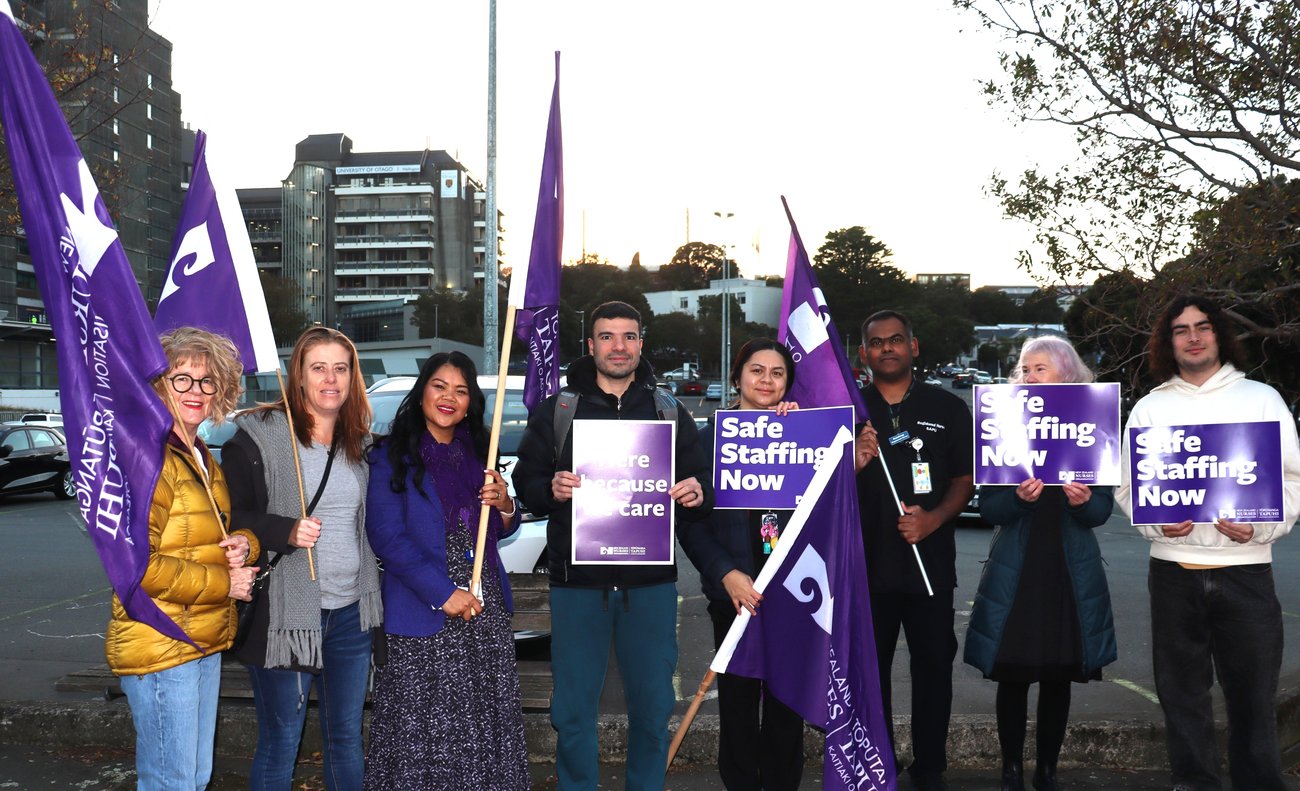
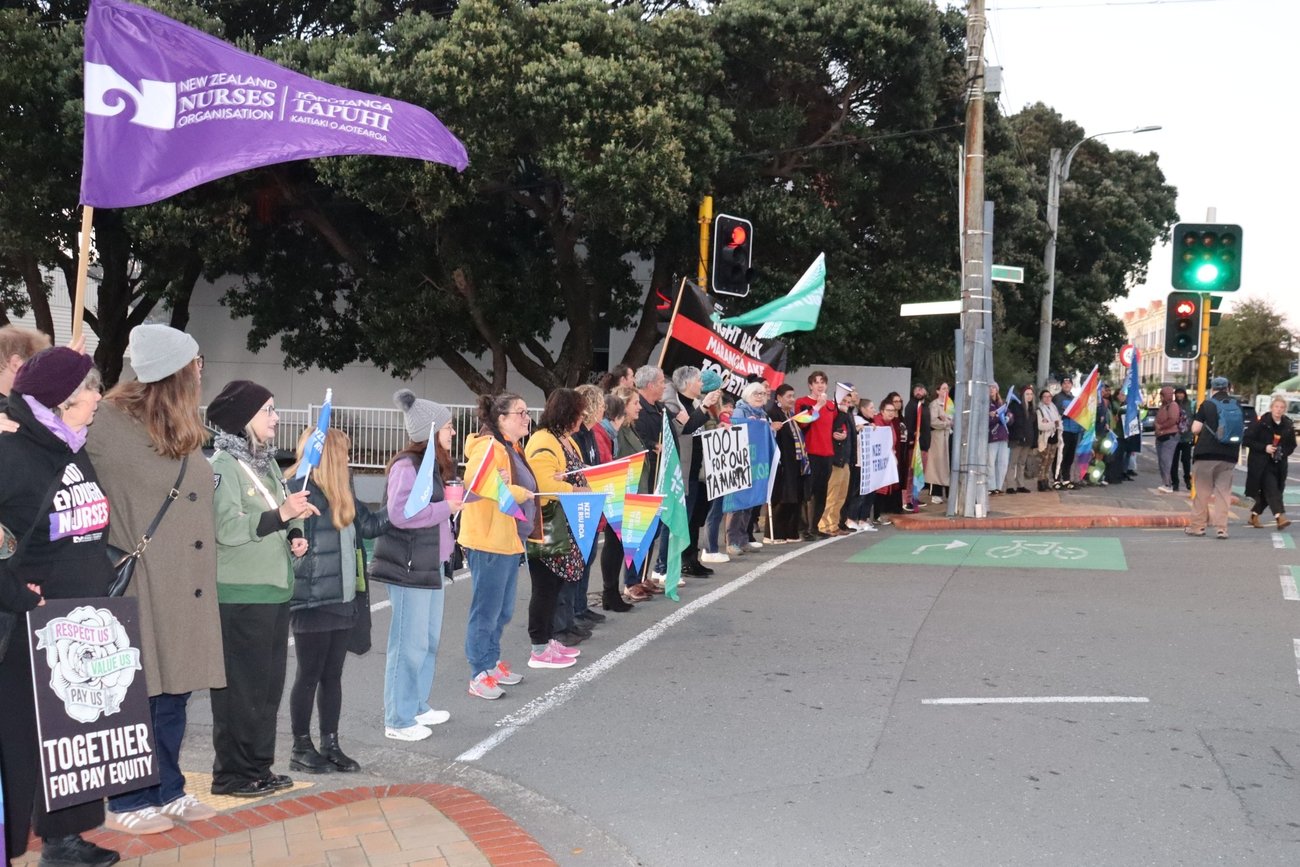
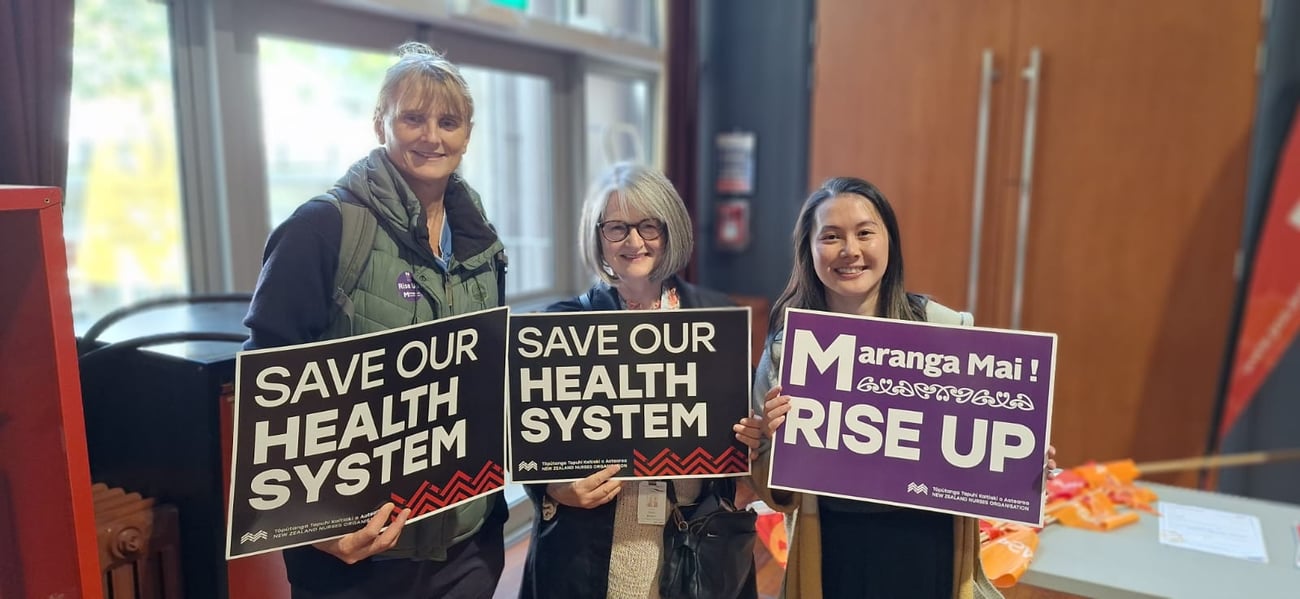
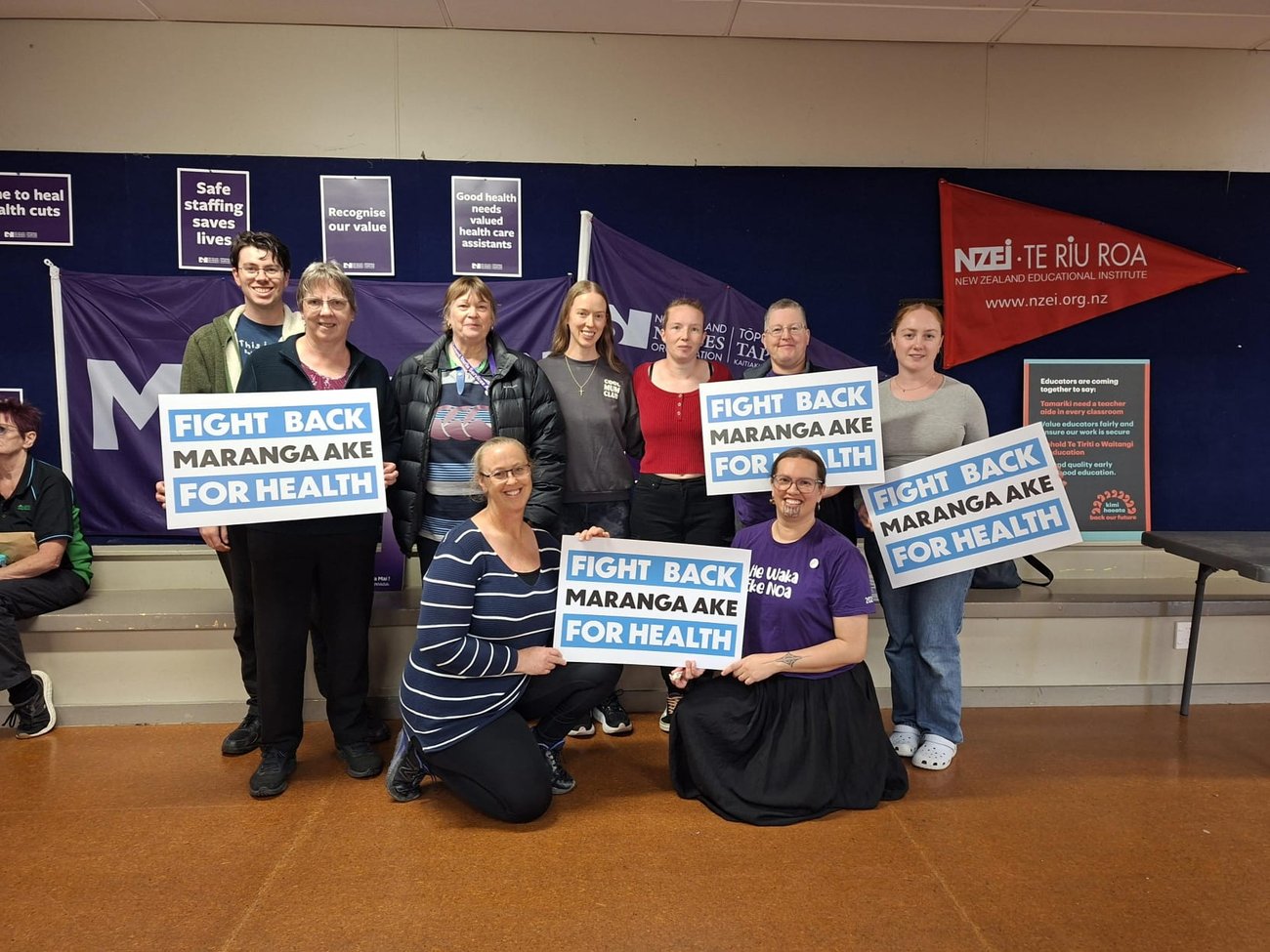
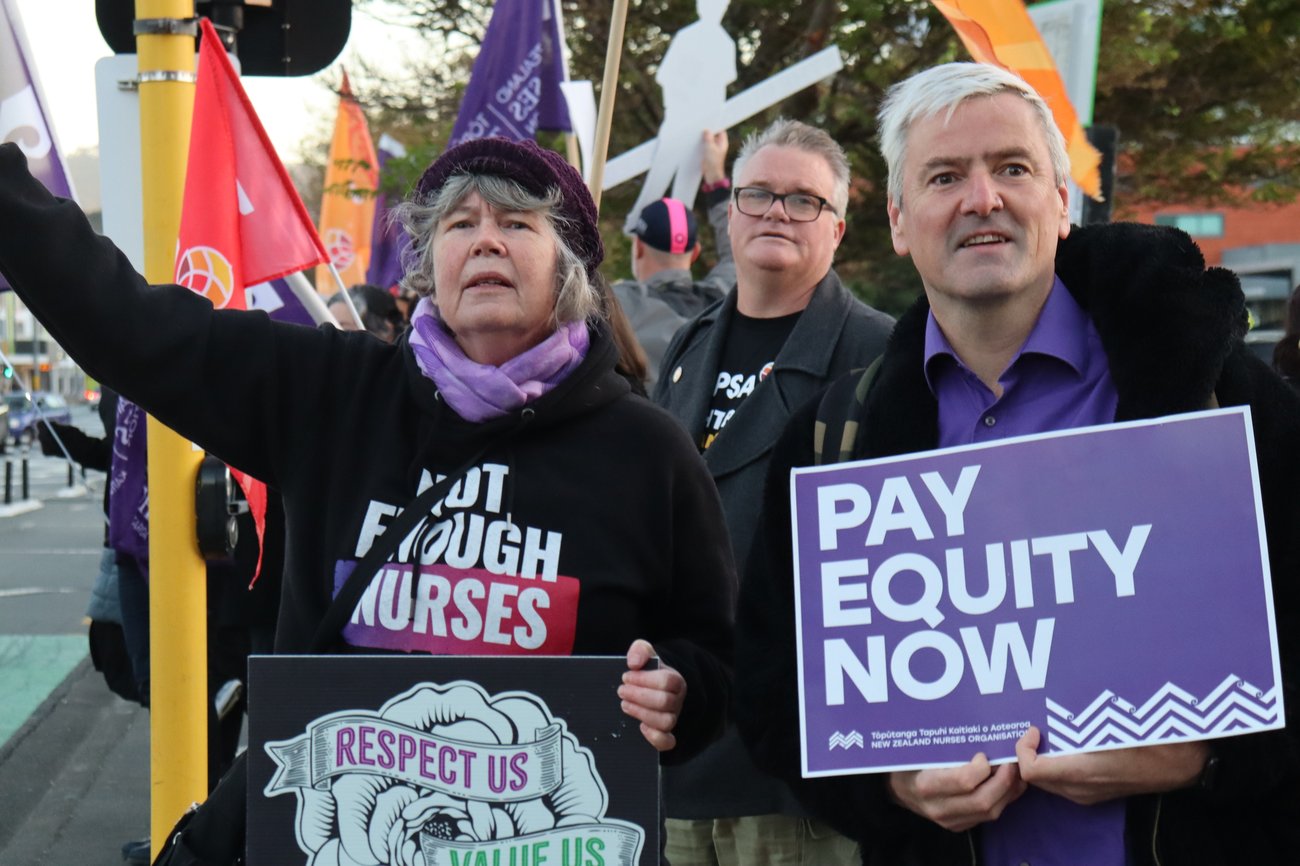
Wellington members were up and picketing before daybreak last Friday to commemorate Workers' Day.
Kia ora member
It’s decision time for our Te Whatu Ora members next week. Thank you to everyone who attended member education meetings this week to hear the details of the offer. If you still have questions, please check the Maranga Mai! website or reach out to your organiser.
A link to the secret ballot will be emailed to Te Whatu Ora members when voting opens on Monday morning. The ballot will close next Friday 15 May at 5pm. Links to the ratification documents will be in the ballot email and can also be found here.
The outcome of the ballot will be decided by the majority (50% +1) of members who vote. If the majority of members vote to accept the proposed settlement and collective agreement, NZNO will start working with Te Whatu Ora on implementation.
If the majority of members vote to reject the proposed settlement and collective agreement, we will continue campaigning to achieve members' claims. Planning is underway for this eventuality. The first step would be to require Te Whatu Ora to return to bargaining and to produce a better offer. Failure to do so will lead to further industrial action that in the bargaining team’s view would need to be escalating, serious and sustained.
It is essential there’s high member participation in the ratification ballot. The outcome will have an impact on all NZNO members covered by this collective agreement. Spread the word and encourage your workmates to vote.
This is your offer and your decision. So please make sure you vote to have your say.
Support police – sign their petition
You may not be aware but police officers in Aotearoa New Zealand are not able to take industrial action. In fact, it is illegal for them to do so under the 2008 Policing Act which
designates them as an essential service.
Like other essential public service frontline workers, they are facing short staffing. Police face difficult, unpredictable and unsafe situations, and often without enough staff. Over a period of six months last year, officers worked 97,000 hours in overtime hours. No one understands the burnout that overtime causes better than nurses.
To address this, the Police Association has launched a campaign called Repay the Risk. It is the first campaign taken by police in 90 years! The campaign draws on your campaign experience and is using stickers to highlight the need for better pay and conditions.
It also cites that while everyone knows nurses and teachers and nurses are undervalued, they might not realise that after nine years in the job a police officer earns up to $9000 less than if they had joined a different public service profession.
The Police Association says most officers have considered leaving in the past year, and many don’t see their pay reflecting the risk of the job they walk into every day. A sentiment well understood by nurses.
So please, show them your support by signing their petition.
Pay Equity
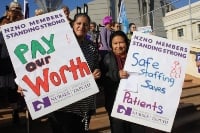
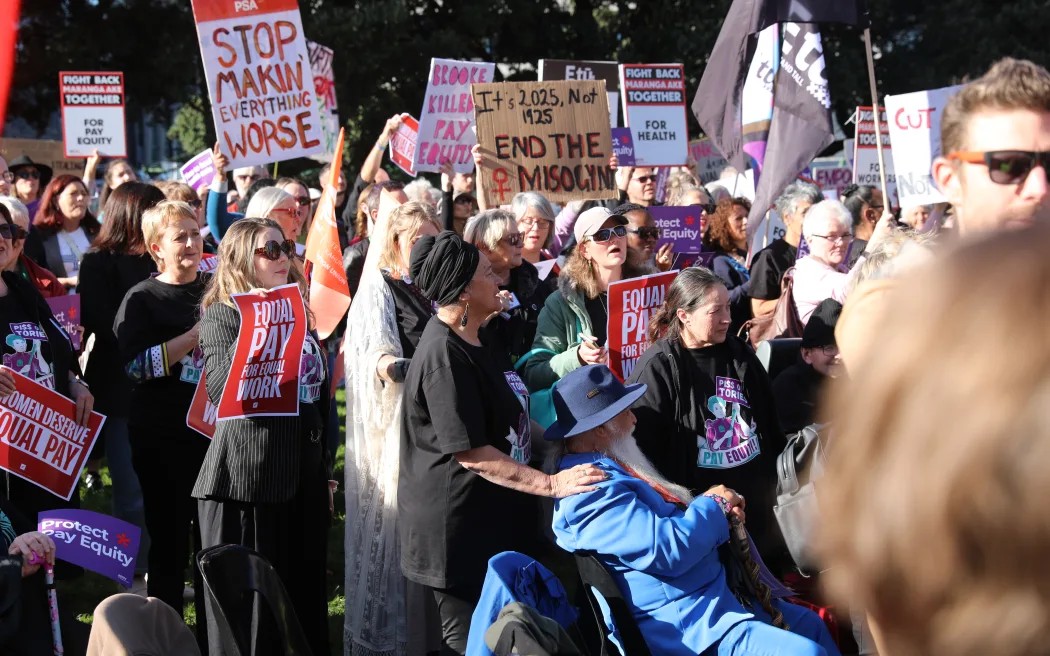
Wednesday marked the first anniversary of the Coalition Government’s gutting of New Zealand’s world leading Pay Equity scheme, a move this week described by former equal opportunities commissioner Dame Judy McGregor as “sneaky” and “devious”.
The day was remembered at an emotional and powerful event at the National Library in Wellington where the Pay Equity Coalition Aotearoa, the Council of Trade Unions Te Kauae Kaimahi and their affiliates including NZNO, and the Human Rights Commission announced they were lodging a formal complaint to the United Nations.
The grounds of the complaint are that the gutting of the Pay Equity scheme amounted to “state-sponsored gender-based pay discrimination” Dame Judy told the audience.
The complaint was lodged by four union members who gave moving accounts of the ongoing effects of having their claims – and their hopes for wage equality – unceremoniously dumped.
Workplace Relations Minister Brooke van Velden, wearing her Minister of Internal Affairs hat, announced the same day that citizenship applicants would now be subjected to a test to prove they have adopted New Zealand’s democratic values including equal rights and protection from discrimination. The sad irony of this isn’t lost.
May Day
Finally, from me this fortnight, a big mihi to the hundreds of members who joined workers at rallies across the country last Friday to mark International Workers’ Day.
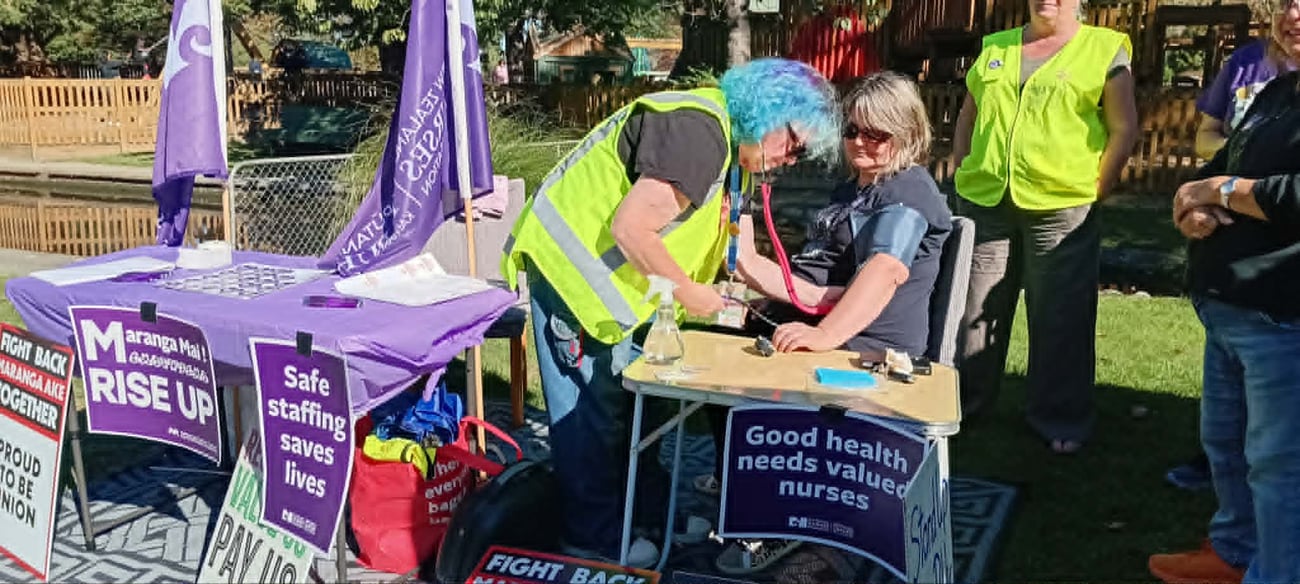
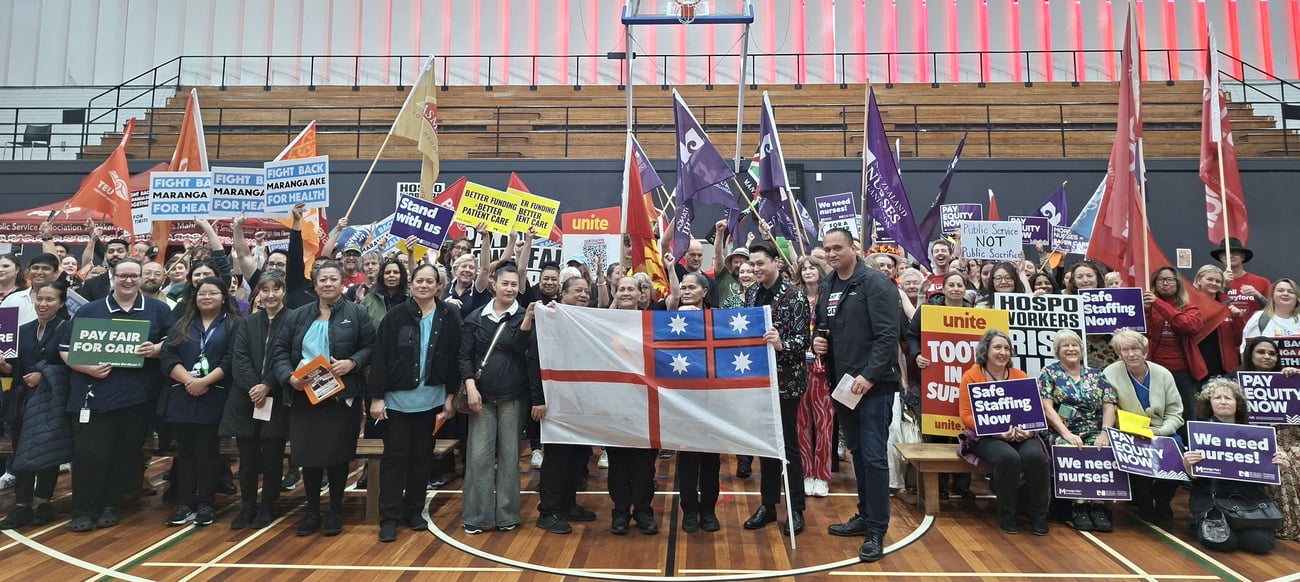
There were huge turnouts in central Auckland, Manukau, Invercargill, central Wellington and an early morning human chain between Wellington Regional Hospital and Newtown Primary School across the road which made TVNZ’s Breakfast show. See the photo gallery below.
The meetings, which were covered by Section 26 provisions, called for policies that support working people and a strong core public service such as full employment, high wages, and decent lives for all founded on Te Tiriti o Waitangi.
These are important events, particularly in an election year, and standing together with our sister unions gives us the best chance to put more money in workers’ pockets, properly fund our essential public services and restore pay equity and Fair Pay Agreements.
I hope you all have a lovely weekend and stay safe in the forecasted wild weather.
Ngā mihi,
Paul Goulter, Chief Executive
Tōpūtanga Tapuhi Kaitiaki o Aotearoa NZNO
|
|
|
|
|
|
In this member newsletter
|
|
|
|
|
|
|
|
|
|
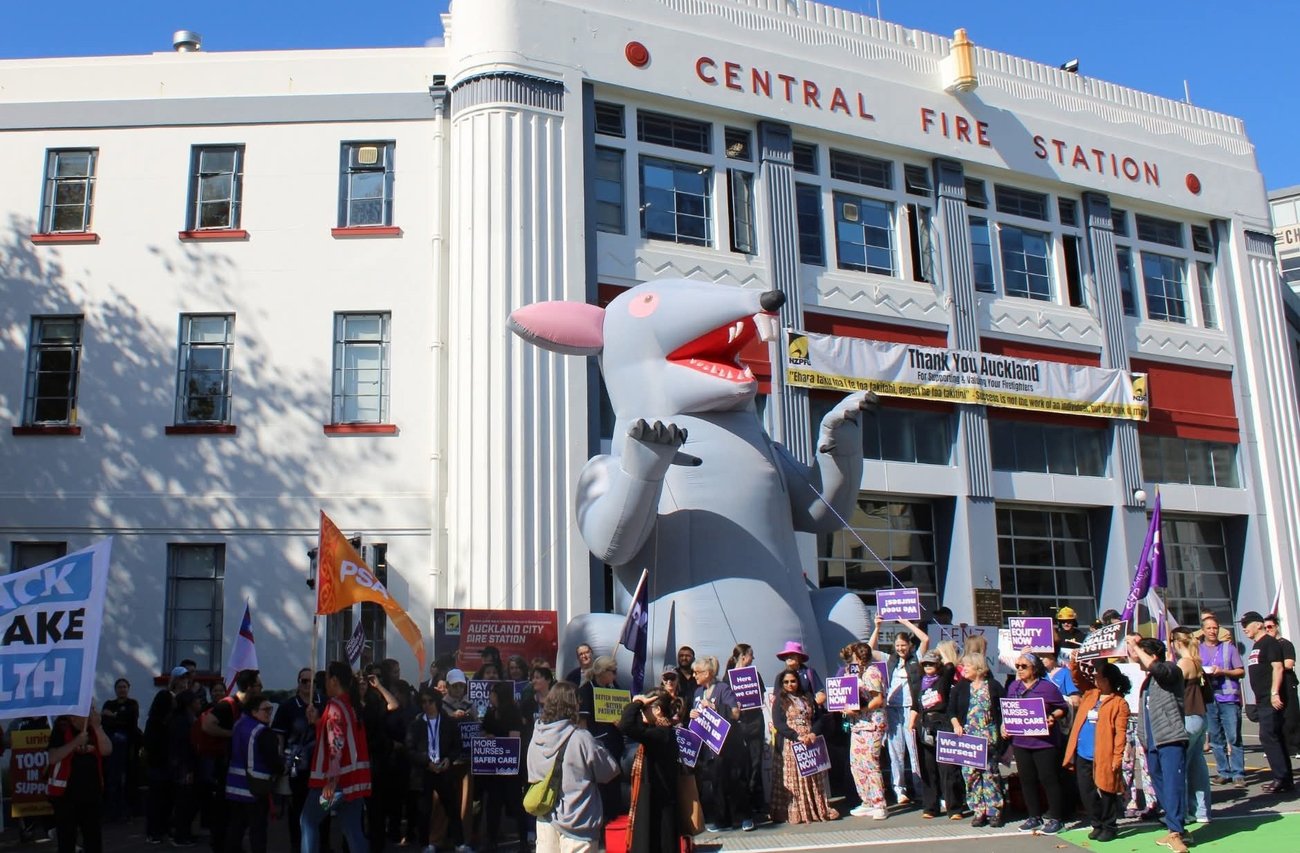
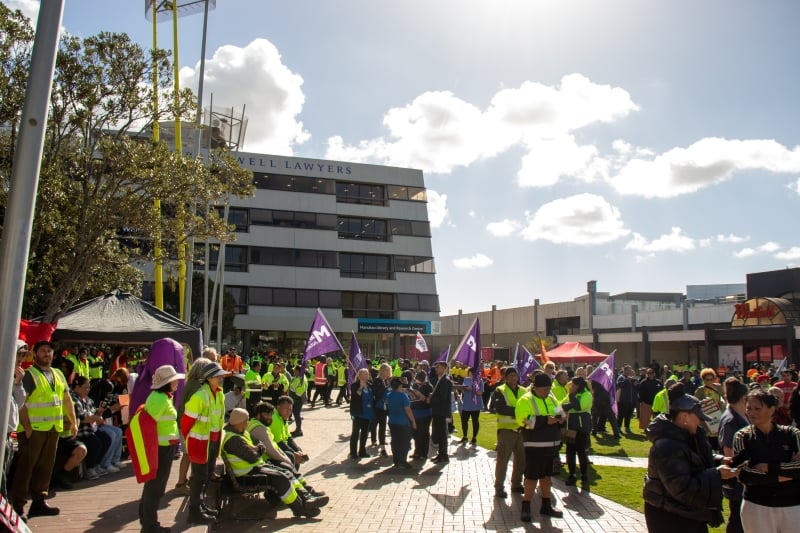
In a show of unity, support and true Maranga Ake spirit, Central Auckland members joined local firefighters in their strike last Friday to fight back together. Scabby the rat was also present to
support the workers.
Good May Day turnouts across Aotearoa
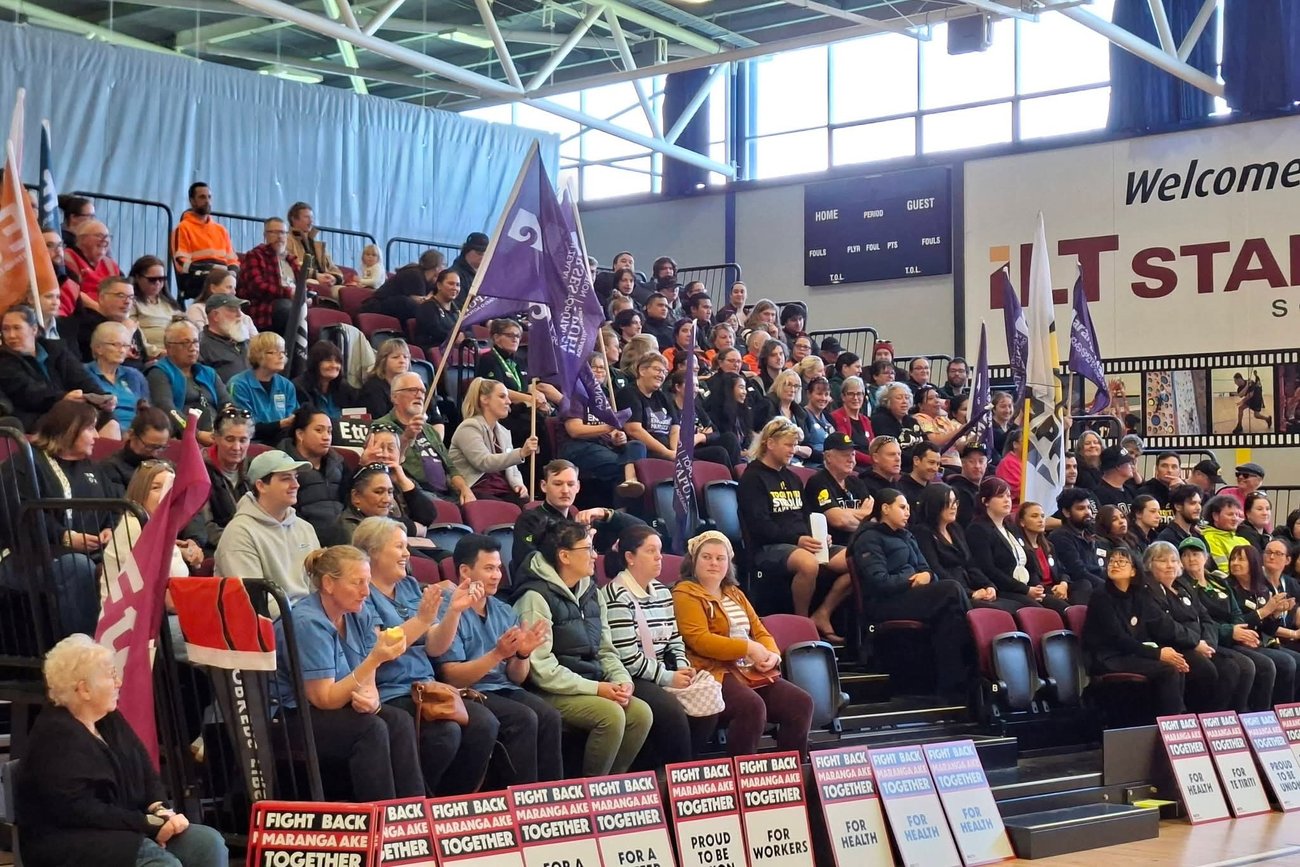
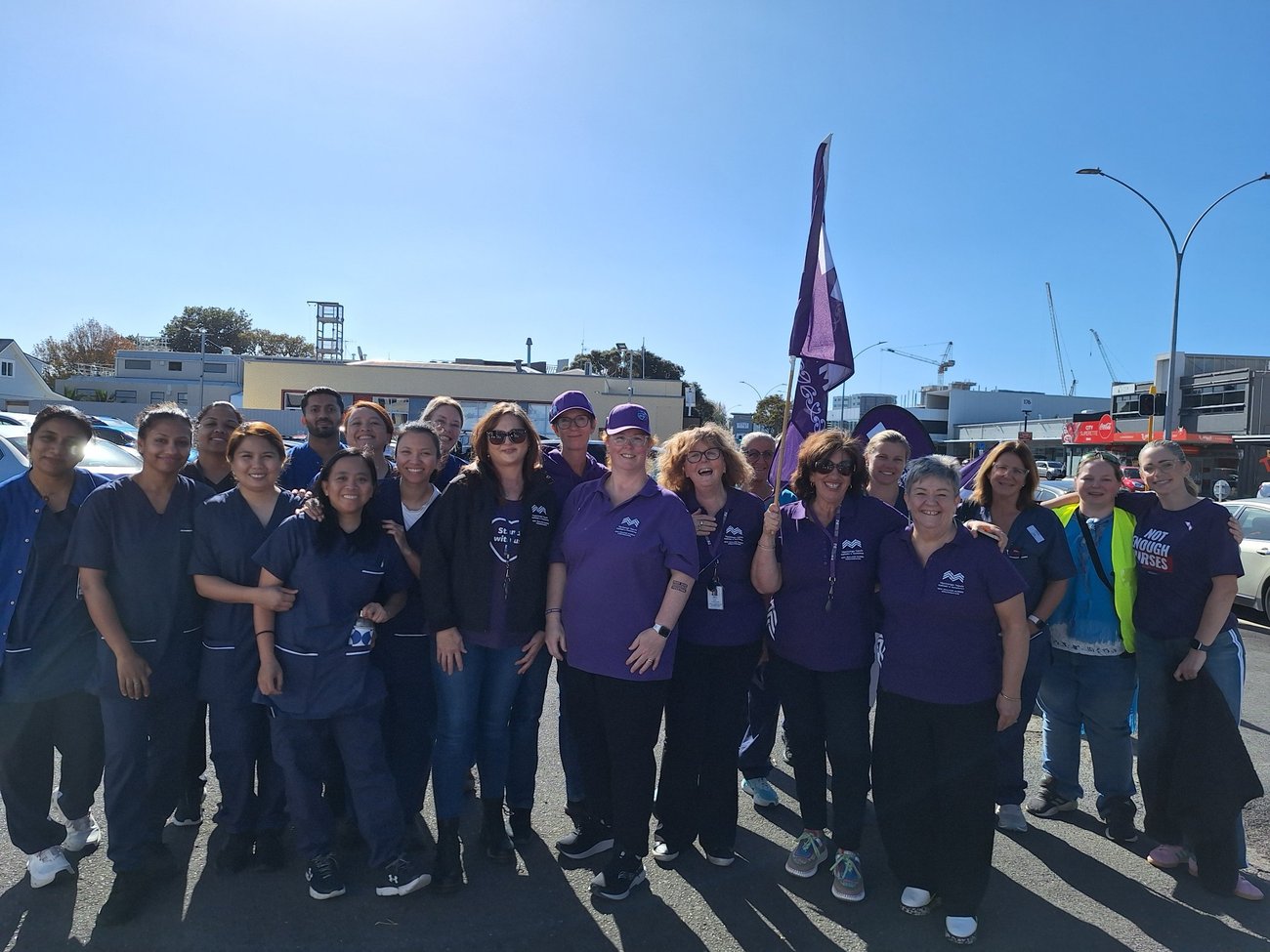
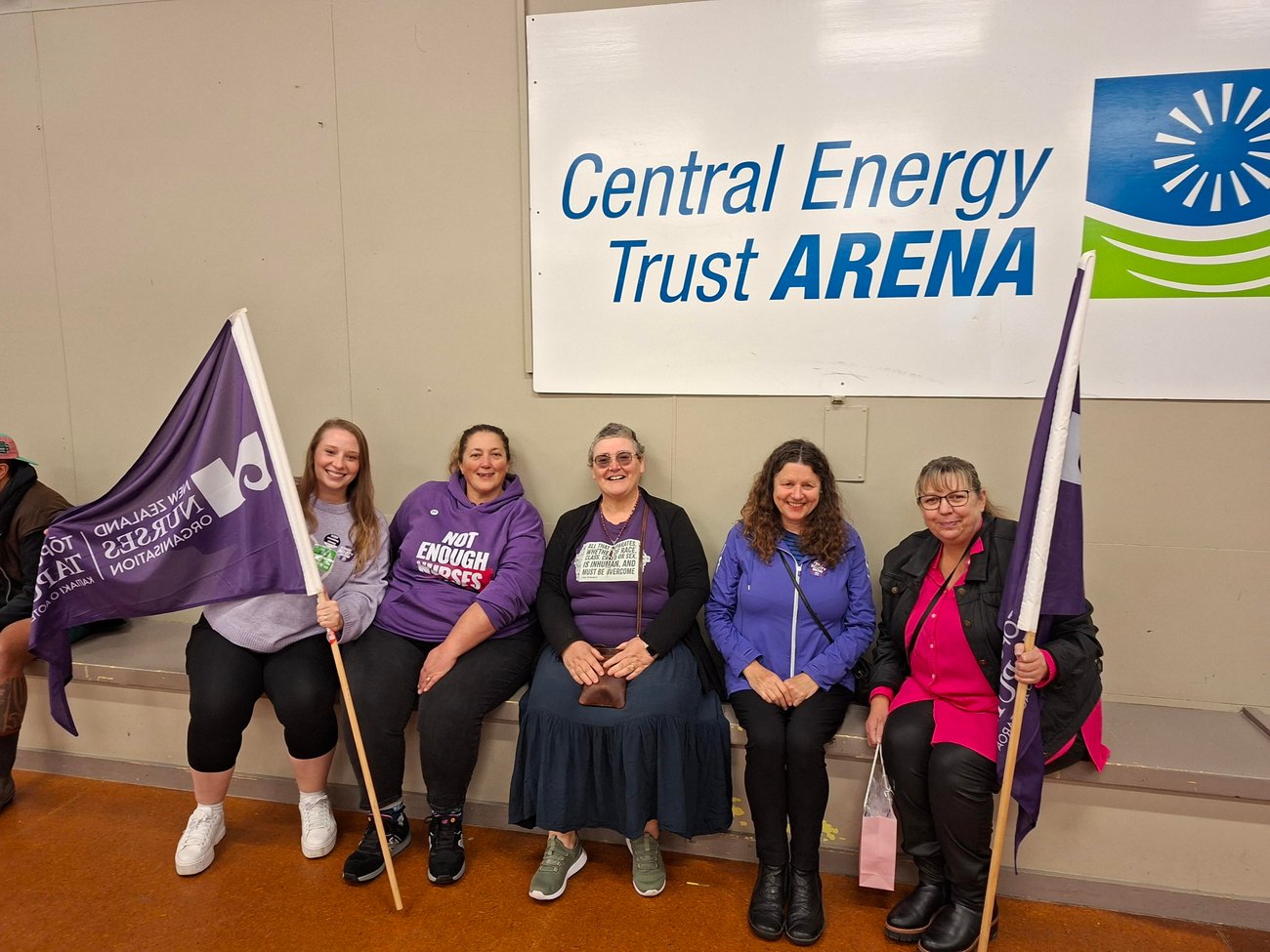
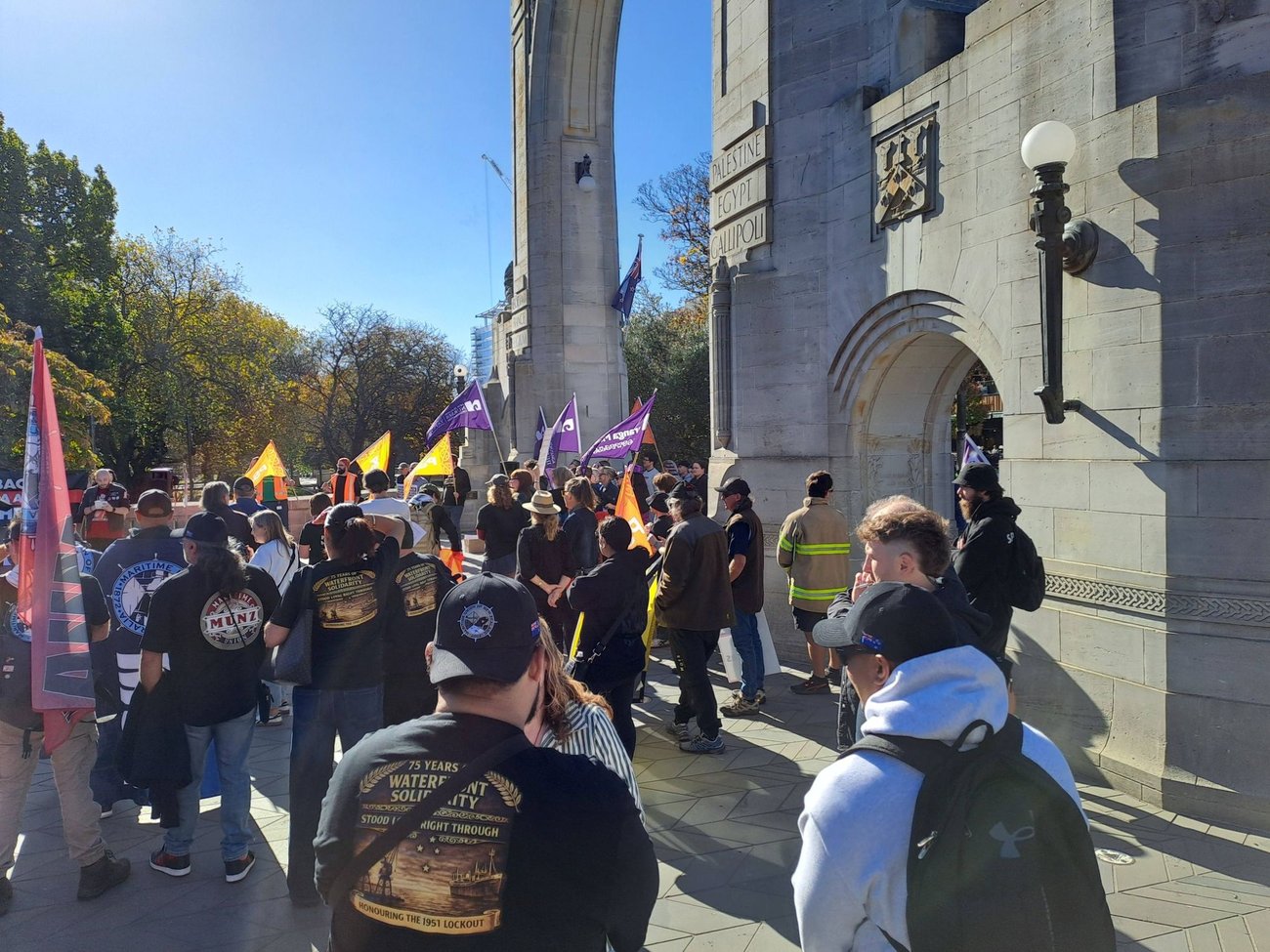
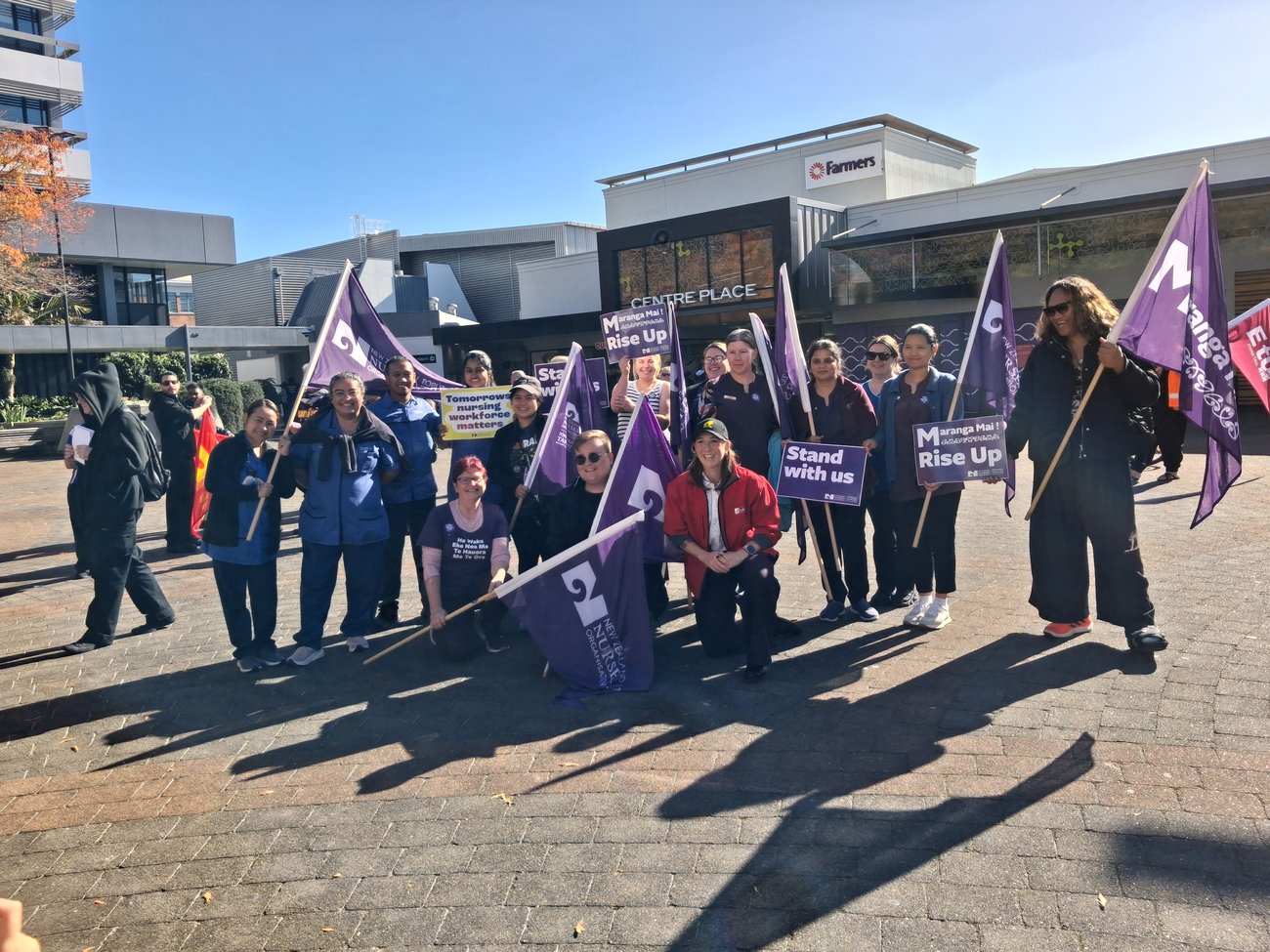
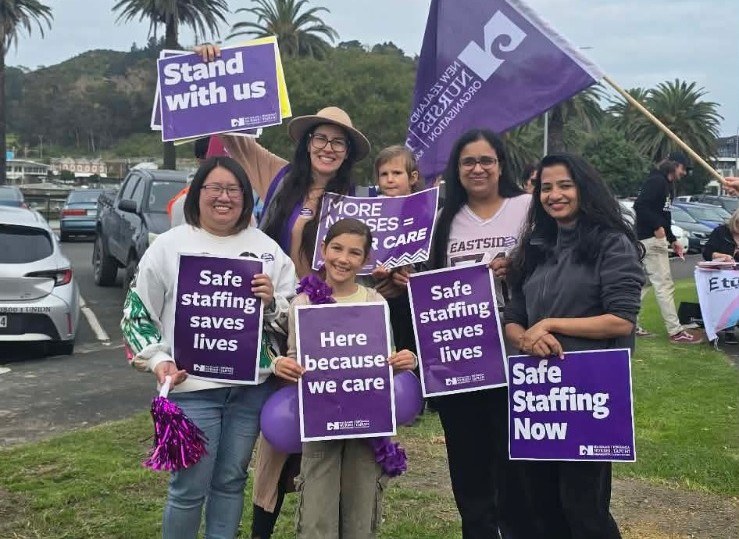
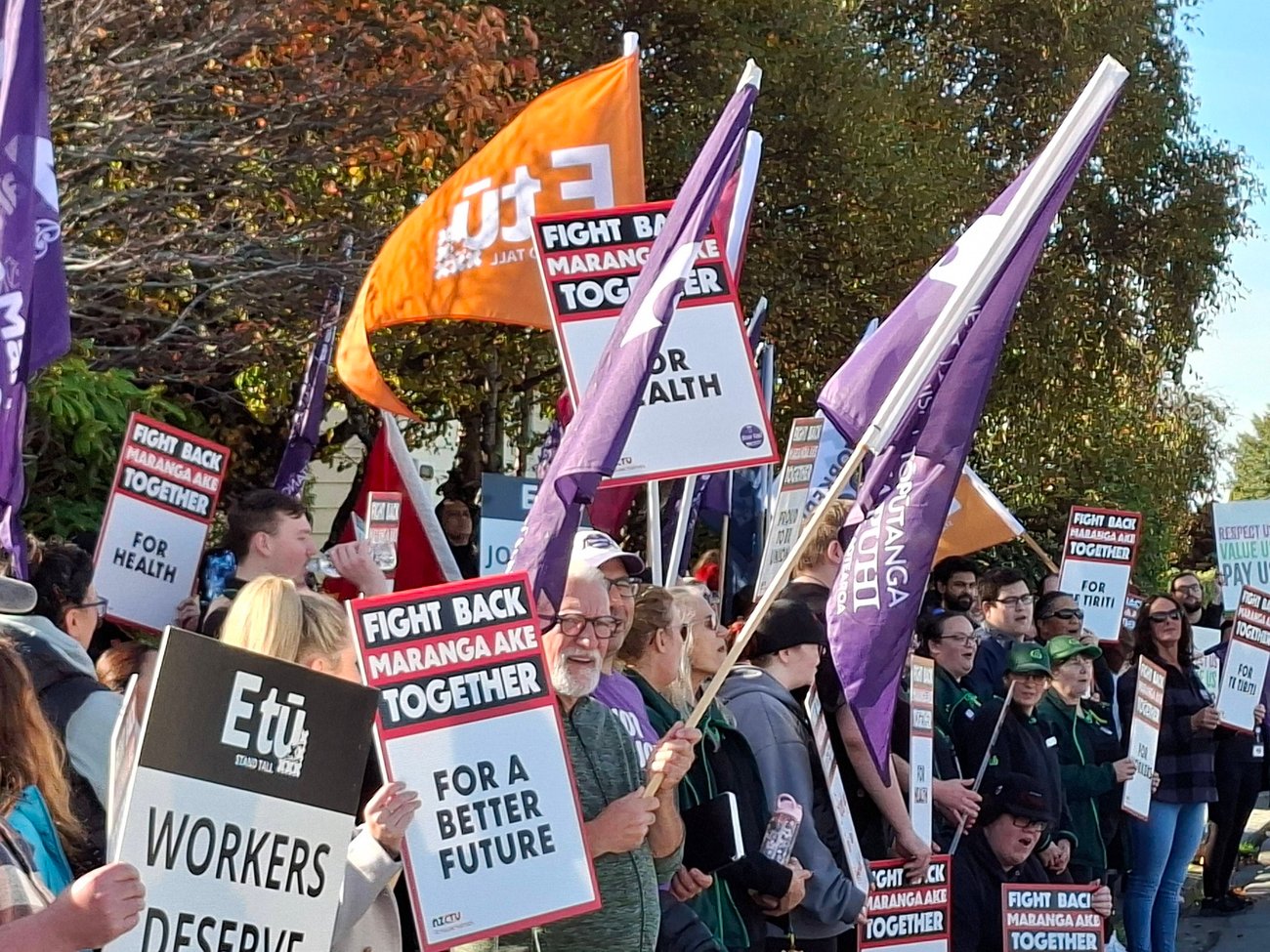
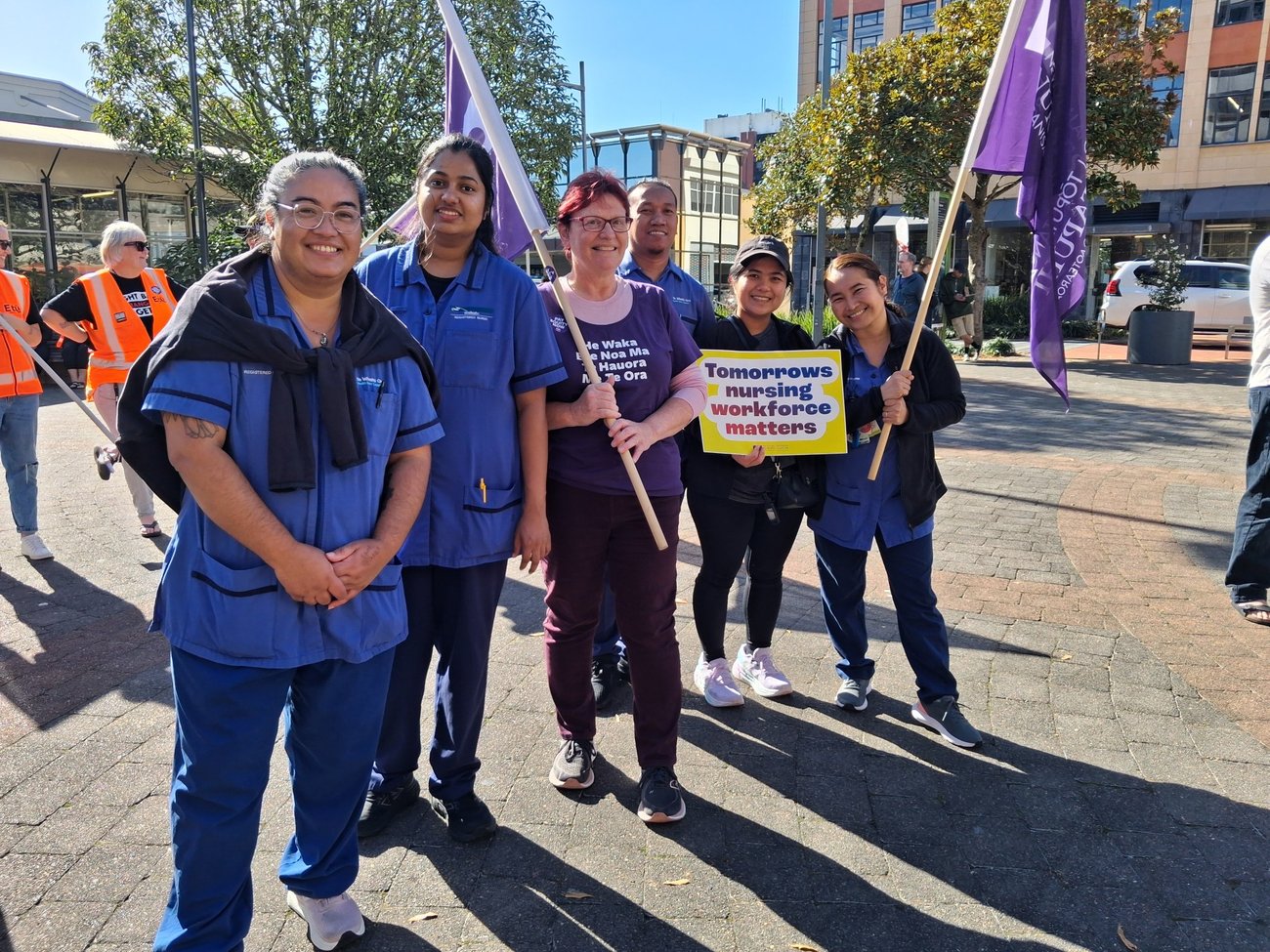
Hundreds of NZNO members joined workers at rallies across the country last Friday to mark International Workers’ Day.
Workers united to call for policies that support working people and a strong core public service such as full employment, high wages, and decent lives for all founded on Te Tiriti o Waitangi.
See photos below from around the motu.
|
|
|
|
Wellington human street chain
|
|
|
|
Arohanui Hospice, Palmerston North
|
|
|
|
Crest Hospital, Palmerston North
|
|
|
|
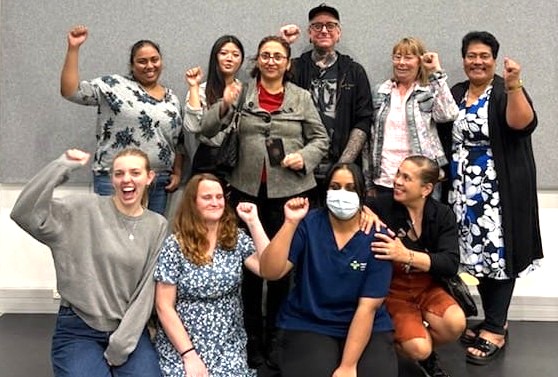
Local Organising Group NZNO leaders in West Auckland from Aged Care, Primary Health, Te Whatu Ora, NSU and Colleges and Sections met this week to establish the local organising committee that will lead the new Waitākere Te Uru o Tāmaki Local Organising Group.
Present were from left to right (back): Myksha Moodley, Athena Nguyen, Vijay Rani, Michael Brenndorfer, Dawn Barrett, Mele Maka
Front row left to right: Erica Francis, Gemma Bethell, Nivi Sharma and Rose Peradilla.
|
|
|
|
This week has seen our organising team largely working on supporting the Te Whatu Ora member meetings. It’s been great to see our bargaining team and other delegates stepping up and taking lead roles in providing information on which members will base their decision on the Te Whatu Ora offer to settle. We’ve met in a variety of places, formats and times regardless of the outcome, we’re keen to do some analysis on for the future, how this works best for members. In person meeting are always good, but sometimes online works as the information seems closer or more direct. In any case it’s important that everyone
now takes the opportunity to vote on this decision.
In our other sectors bargaining continues with members and employers negotiating over terms and conditions that are often challenging in the current environment of the underfunding of health.
We continue to work on a huge volume of personal cases and do get some wins that are not usually advertised given they relate to individuals. Recently there was a good settlement achieved for a member who faced a flawed redundancy process and with another settlement relating to underpayment of wages over an extended period that was finally paid.
Our LOGs in some places are cranking up, with a couple of great meetings this last week in Auckland Central and West. This is really exciting and looks like members are using the LOG format to network and start planning events to progress the work of the union.
A successful Capital Coast/Hutt Valley Delegates Day took place on Friday. It was great to see delegates coming together to be updated on a range of issues that NZNO is working on including changes to employment legislation, pay equity, the election and what’s going on in the workplace. Our delegates are critical to our unions success on the many issues that we face in challenging times.
The impact of the “Geopolitical Fuel Crisis” is being monitored to ensure that the adverse effects on transport options will not cause patients to miss appointments, we also need to make sure that as it was during the Covid Pandemic that health, education and other essential workers are given support to get to work. It’s becoming a situation that while the supply of fuel may, if carefully distributed, not be the problem, rather it could be the cost of the fuel that impacts directly on disruption of services.
This Sunday is Mother’s Day, to all of our members who are mothers and who will be working on “their day” a big shout out of thanks for the work you do with your families and for the patients in your care. It’s not easy juggling these roles, you are appreciated!
|
|
|
|
This has been an extremely busy week for the primary sector.
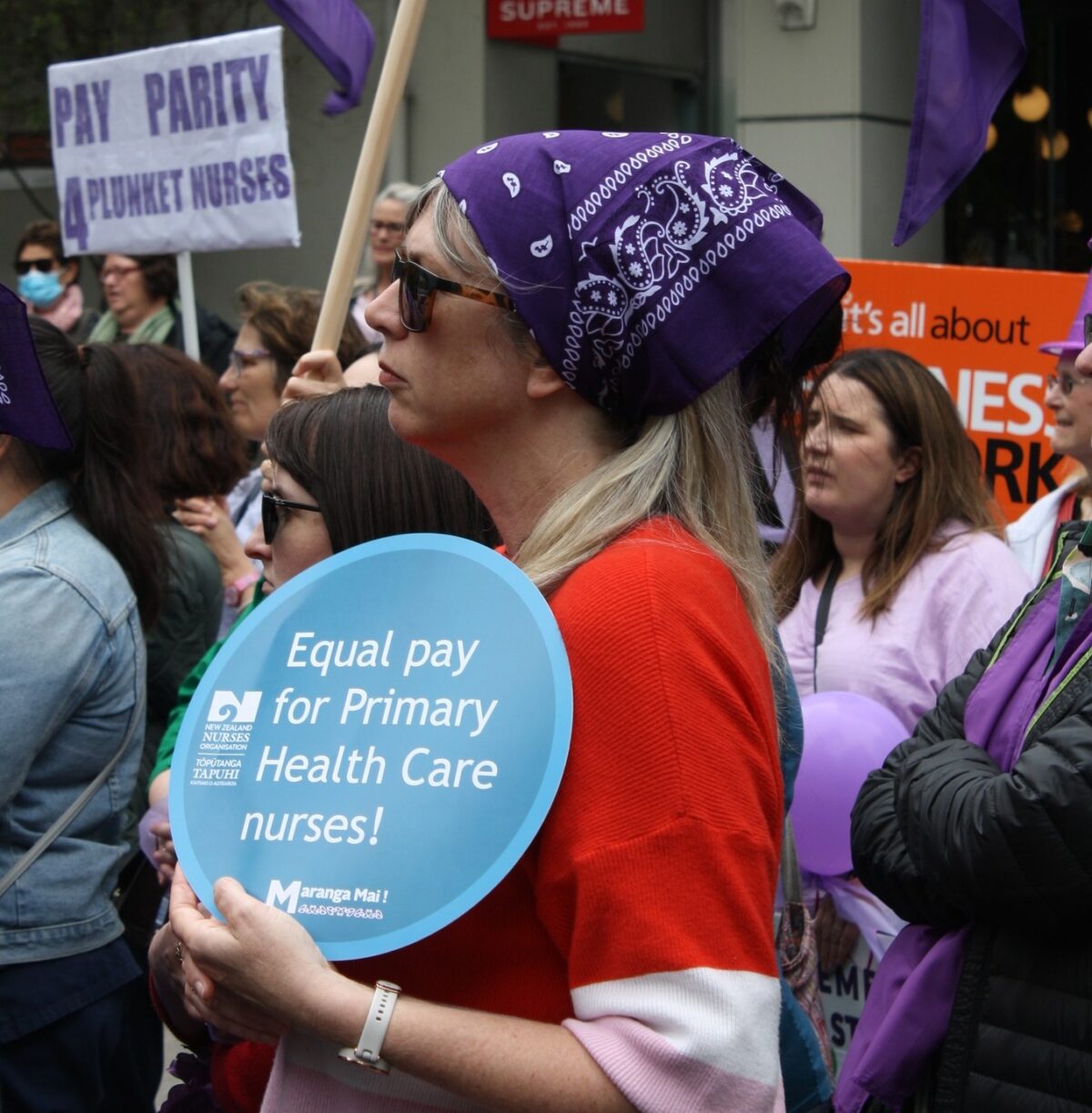
We have initiated bargaining with Plunket, and members are being surveyed to endorse our bargaining team and draft claims. This collective covers around 800 members nationally and the overwhelming feedback was to concentrate our efforts on pay this year. We’ve fielded a lot of questions through email and telephone since endorsement went out, and it is great to see members positively engaged with the process.
Yesterday, we initiated bargaining with 580 employer parties for a new PHC MECA representing a 30% increase in coverage from the last round. Administratively, this has been an enormous task, but we have hopefully designed a bargaining process that removes delays and issues with the last round of negotiations.
Claims are a little more difficult to describe as NZNO has worked for months rewriting the MECA document. Following this we had to incorporate member claims into the document. We intend to table this document effectively as a single claim, but it represents 25 substantive changes from the old MECA and uses far more concise and modern language. We have retained every term and condition with the re-write, removed old, historic clauses that were no longer relevant or didn’t necessarily comply fully with current legislation and removed some of the anti-worker clauses such as inclusion of 90-day trials in the MECA. Member endorsement of this approach starts on Friday.
We’ve been meeting with Corrections as they change their current manual pay system to the Kronos system. The changes required do throw up some issues in the way Kronos has been designed for Corrections. A trial is due to be implemented at the Spring Hill Prison in July, NZNO have insisted members and delegates are consulted and agree to the time-bound trial of the new system. It is an interesting progression for such a large employer to automate their pay system. Currently members only get paid penals, overtime and other allowances in the pay period following the pay period the claim occurred (i.e. over two-week delay, up to four weeks). Under Kronos, they will get paid correctly in the pay period the additional pay occurs, but there are also issues
such as smoothing the rosters, so hours are essentially averaged over a year.
We look forward to the trial getting underway and hearing member feedback.
|
|
|
|
|
|
Pay equity in the non-Te Whatu Ora sector
|
|
|
|
Pay Equity Update: A Year On, and Now Before the United Nations
Wednesday marked one year since the Equal Pay Act was amended under urgency, stripping back claims that covered more than 180,000 women workers overnight. For NZNO members that anniversary marks a year of continuing to deliver care in conditions that does not properly value their work.
On 6 May, the Pay Equity Coalition Aotearoa, representing 20 organisations including unions, lodged a formal complaint with the United Nations. The complaint asks the UN to investigate whether the Government's law changes amount to systemic discrimination against women. It was brought on behalf of four women directly affected by the changes, their representative unions, and the wider coalition. This complaint takes the argument beyond our borders because the evidence here at home has been consistent and uncontested: the law changes reversed decades of progress without consultation and made it significantly harder for claims to proceed.
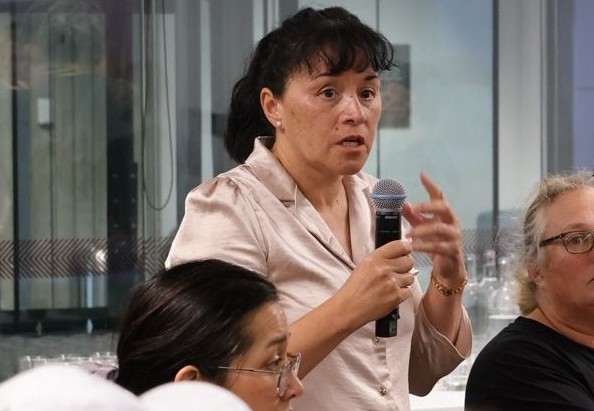
NZNO member Lisa Marriner spoke at the event, about the impact of the law change on our Care and Support members in Aged Care. She highlighted the burden upon many of her colleagues who are not citizens yet, who are coping with the cost of living here and supporting their families back home, by working insane hours.
|
|
|
|
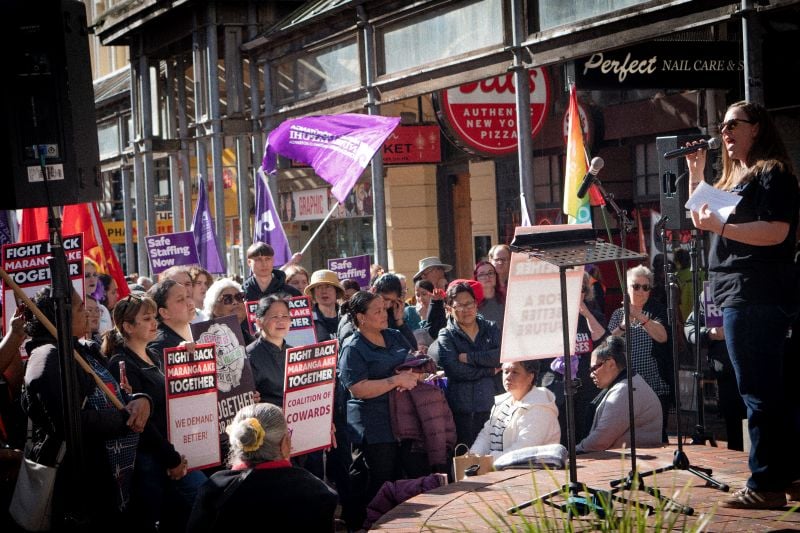
NZNO member Lisa Marriner has her say at the event in Wellington on Wednesday to announce the lodging of a formal Pay Equity complaint with the United Nations.
|
|
|
|
The Human Rights Commission's Equal Employment Opportunities Commissioner stated that the amendments undermined a fundamental right protected under international conventions New Zealand has signed. That an independent Crown entity is supporting a UN complaint against the Government's own legislation is significant reflecting how serious and well-documented the harm has been.
In an election year, this matters, as we see the wide-ranging impacts of devaluing women's work, across the health care system. Every party will need to take a position on whether New Zealand's pay equity law meets its obligations to women workers. Members have a central role in forcing that question into the open.
Read the full RNZ report here
|
|
|
|
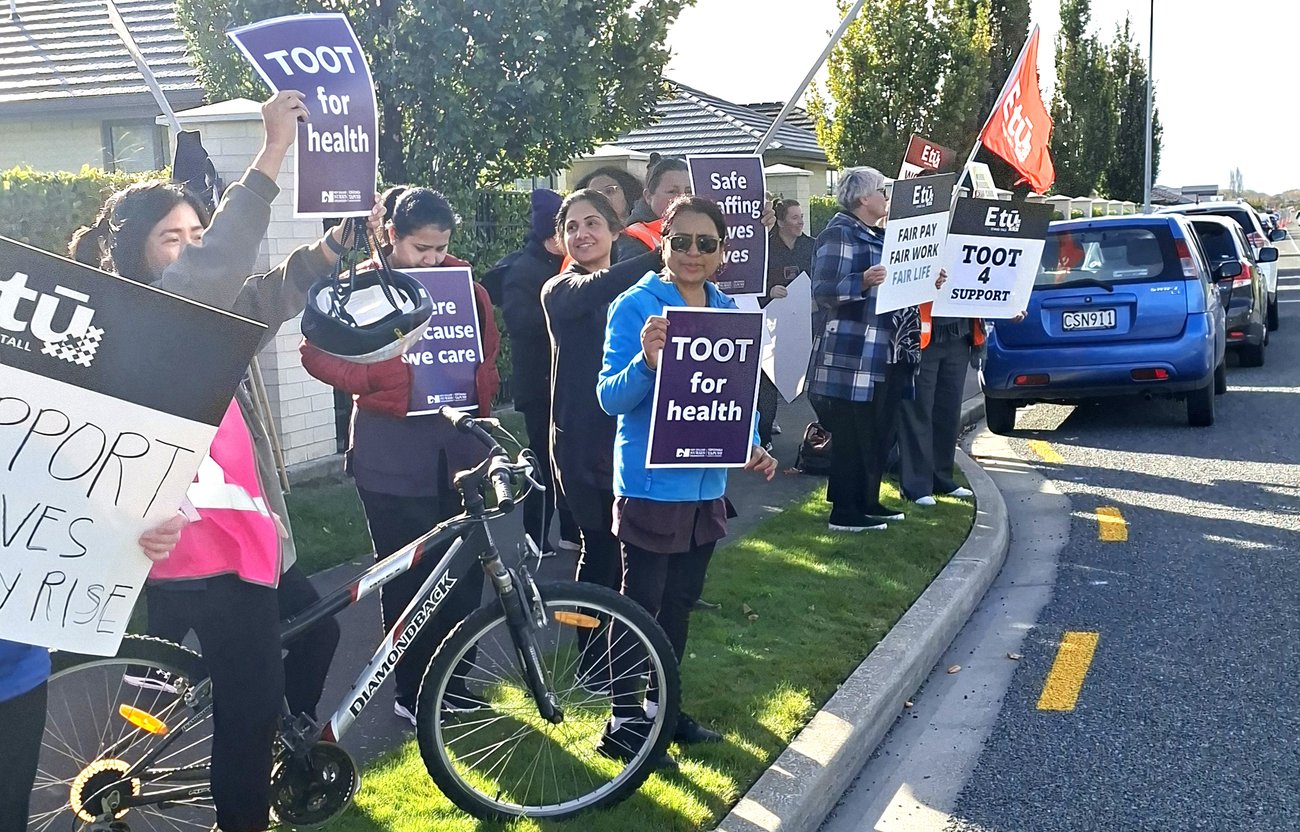
Summerset Cavendish members in Christchurch held lively pickets outside their premises on 21 April.
|
|
|
|
Summerset
Our combined union bargaining team met with Summerset again on 7 May. We made very slow progress, although weekend rates remain a key issue. Our bargaining team will meet again next Tuesday, 12 May, to discuss progress. A further negotiation meeting is planned for 19 May.
NDC
NZNO members working in aged care are invited to nominate candidates for the vacancy in the Midlands region on the National Delegate Committee (NDC), Aged Care. This committee is established under Clause 55 of the NZNO constitution as part of the National Delegates Committee framework.
Nominations close at 5pm on 18 May 2026. As a member of the committee, you will represent the interests of aged care members at a national level.
Bupa
We are getting ready to negotiate our Bupa Multi-Employer Collective Agreement, which expires at the end of June. We are currently in the planning stages, and our next steps will include setting up claims meetings after 15 May. We will be in touch about this in the coming weeks.
Aged Safe lobbying visits
We are planning for aged care delegates who attended training earlier this year to visit their electorate politicians to discuss funding for culturally safe staffing in the aged care sector.
Heritage
We are due to negotiate a new worker participation system for Heritage Lifecare. We are now awaiting dates from the company to begin these discussions.
Oceania
Oceania has undergone change proposals at a number of sites this year, including Elderslea, Elmswood, Lady Allum, Bellevue, and Duart. The company is now looking to focus on Eden, Addington, and Woodlands, with announcements expected next week.
|
|
|
|
|
|
Private Hospitals & Hospice Sector
|
|
|
|
Sector-wide
Our new National Delegate Committee met for the first time this week. We are now planning an in-day meeting to discuss sector strategy.
Hospice
Hospice MECA (Rotorua, Taupō, Eastern Bay of Plenty, Marlborough)
We are waiting for a response from the employer on some amendments from one of the hospices.
Four Hospice MECA (Waikato, Waipuna, Mary Potter, Harbour Hospice)
We planned to run meetings next week but may need to push this back a week. We haven’t received the full information we requested for our meetings. We believe this was unintentional, but it is critical information for our meetings. We will still be able to vote on the offer before the employers 1 June deadline for backpay.
Whanganui Hospice
We were back in negotiations on Friday 8 May.
Mercy Hospice
We had planned to have negotiations last week, but the employer asked for more time to develop their offer, which we agreed to.
PRIVATE & NGO HOSPITALS
ABI/Evolve Rehab
We are expecting a formal written offer from the employer early next week. We will then look at taking an offer out to members.
Allevia
CSSD members are voting on a proposed interim amendment to their pay scale. We are looking at booking in negotiation dates for our collective.
Allevia Kensington
We are booking in meetings to vote on an offer from the employer.
Braemar
The employer has developed a new offer which we will discuss with delegates on 15 May.
Evolution
The employer is considering a proposal to take to delegates about senior nurses. We are looking at booking in negotiation dates.
Grace
We have agreed to negotiation dates and will advertise them soon.
St George’s
We have claims meetings next week and will attend negotiations in the following week.
PRIVATE HEALTH
New Zealand Clinical Research (NZCR)
The employer is saying negotiations have concluded. We don’t agree and have requested mediation.
|
|
|
|
|
|
Our leaders speak: Kaiwhakahaere Kerri Nuku – Women’s rights, pay equity, and nursing’s political power
|
|
|
A year after pay equity was stripped from
women, we are seeing – again – how this country relies on women’s unpaid and underpaid labour: caring, birthing, leading communities, and holding people together. When women demand fair pay for work society cannot function without, we are still met with the same excuse: equality is “too expensive”. The truth is simple – inequality is what costs lives.
For Māori women, this injustice is intensified by colonisation, which systematically attacked Indigenous women’s authority, leadership, and economic power. Today, Māori women are over‑represented in caring roles where cultural labour, advocacy, and whānau support are expected as standard – yet rarely recognised, resourced, or paid. That is not “extra”; it is essential work, and it must be valued and not invisibilised.
I see the same pattern inside NZNO: a predominantly female workforce whose voice is being sidelined in a system that is broken, inequitable, and unfair. Nursing is being worn down in real time – by austerity, by restructuring, and by decisions made without us. Nursing hasn’t lost its worth; it has been pushed further from the tables where power sits. And if we are not in the room, women’s work is treated as optional.
Over time, national nursing leadership in Aotearoa New Zealand has suffered a steady, significant loss of authority, standing, and day‑to‑day influence across the health system. Nursing is the largest health workforce and the backbone of care delivery, yet our role in national governance has been reduced to “advice” while others hold the levers of funding, policy, and accountability. When nurses are kept advisory, women are kept powerless.
Members, we are at a turning point. This government has made it unmistakably clear: if we want pay, equity, safe staffing, and dignity for our patients and whānau, we must organise and act as a political force. We are not “just carers” - we are women workers with rights, and we will not be quiet while those rights are rolled back.
In earlier years, Members worked within tight rules about staffing and about how far we could go to protect patients and whānau. Even then, the system was – and remains – structurally designed to produce inequitable outcomes for Māori and for women. But a social contract held: Government would properly fund a public health system, and voters would defend it at the ballot box. That promise has been broken. And when it breaks, women - nurses, caregivers, mothers, aunties - absorb the damage first.
As power has been pulled away from the front line, Members have been pushed further from decision‑making. We are told to “justify” our value to management while competing for shrinking roles and resources. Successive governments - and too many voters - have treated our professions with growing disregard and have normalised the slow erosion of public health. This is what the rollback of women’s rights looks like in practice: women’s labour is squeezed, our voices are dismissed, and our communities pay the price.
We will not stay passive while governments make choices that harm our patients, our communities, and our profession - and while women’s rights and pay equity are treated as negotiable. We will speak, organise, and demand change.
|
|
|
|
|
|
National executive kōrero – President Anne Daniels
|
|
A one-day meeting meant a very tight agenda and inevitably a deep dive into membership needed to be sacrificed to ensure we kept to time while also supporting important discussion.
Much of our meeting focused on the Primary Health Care sector and the need to challenge the medical model status quo to realise the aspirations of the Pae Ora Act where individual and community health, prevention and early intervention should be the drivers of our health care system. However, our members' voices are being deliberately silenced as we see nurses in senior leadership positions (chief nurses) shifted further away from direct participation in decision making in the Government and Te Whatu Ora.
Particularly concerning is the lack of a nurse appointment to the national Primary Health Sector committee by Simeon Brown. This is difficult to understand when nurses are well placed to do much of this work autonomously and within multidisciplinary teams that are cognisant of cultural safety and tikanga especially if nurses work with Iwi Māori Partnership Boards (IMPBs) that were established under the Pae Ora Act.
They:
- represent local needs and aspirations of whānau Māori living in their takiwā
- support the delivery of services and public health interventions within their respective rohe
- represent connected communities who are best placed to understand their needs to a future of Pae Ora (healthy futures).
The challenges to achieving the identified priorities of the IMPBs partly depend on equitable and appropriate levels of funding by Government, distributed by Te Whatu Ora. Equity is a concept that does not seem to be well understood or respected by the Coalition Government.
Human Rights Commission's equal employment opportunities commissioner Dr Gail Pacheco joined our National Executive to share with us her research on progress in pay equity. Gail has a passion for evidence-based analysis, particularly in the labour and health fields. Much of her research focuses on utilising linked administrative data (with particularly strong use of the Integrated Data Infrastructure from Statistics NZ) to inform policy debate.
Gail's research looked at over five decades of data and found that progress toward gender equality at work has been real – but uneven. Women have moved into many new roles. Men have not followed in the same way. That imbalance continues to shape pay outcomes across the economy and pay equity settlement processes were designed in response to that structural reality. Pay equity is not about special treatment. It is about ensuring that work is valued fairly in a labour market where the division of jobs by gender has narrowed but
not disappeared.
This research challenges the idea that gender discrimination is now ‘sorted’. Today, as I write, a complaint to the United Nations regarding the Coalition governments decimation of world leading pay equity legislation, was announced by women who led the Peoples Pay Equity select committee. Women’s mana and right to equity and equality have been trampled on by the Coalition government but as one woman said a year ago today, this will not go away. Together every woman will remember this betrayal on election day.
For NZNO members who work in Primary Health Care, lack of funding that has led to inequitable pay and lack of parity with public hospital nurses, drives nurses to leave Primary Health to work where they will be better paid. The Coalition governments decision to scrap Primary Health Nurses Pay Equity claim means nurses who remain in the sector will continue to earn lower wages for much longer. We know that these decisions are short sighted as research indicates investing $1 in primary health care can save up to $13 in downstream health care costs. Therein lies opportunity for nurses to step out of the medical model status quo systems and do things differently within communities to meet the current health needs and reduce health care ‘cure’ demand.
|
|
|
|
|
|
NZNO Medico-legal forums registration opens
|
Registrations are now open for the NZNO Medico-Legal Forums in July under the theme Navigating risk and complexity in contemporary nursing practice.
The forums will be held in Christchurch and Auckland with a third option to attend online for those who are unable to attend in person.
Venues & dates:
Christchurch: Tuesday 21 July 2026
Links Function and Events Centre, Christchurch Golf Club, 45 Horseshoe Lake Road, Shirley, Christchurch
Auckland: Wednesday 29 July 2026
Sorrento in the Park, 679 Manukau Road, Royal Oak (Located in Cornwall Park).
Streaming option: Wednesday 29 July 2026
Registrations will initially be for NZNO members only, costing $160 for in-person attendance and $120 for online option.
This is a great opportunity to hear from expert speakers, including NZNO Medico-legal lawyers, the Health and Disability Commissioner, Nursing Council of New Zealand and others.
See the programme here
Link to registrations
|
|
|
NZNO in the news
|
|
|
|
Formal complaint lodged with United Nations over changes to New Zealand's pay equity laws
RNZ, 6 May 2026
A year after Pay Equity gutted, hardworking nurses even worse off
NZ Doctor, 6 May 2026
New figures show home support workers have lost $27,728 one year on from pay equity betrayal
NZ Doctor, 6 May 2026
1 News Breakfast 7am
1News, 1 May 2026
Staffing shortages being linked to baby deaths in NZ hospitals a ‘national tragedy’
Stuff, 30 April 2026
Police delay final phase of withdrawal from mental health call-outs
RNZ, 29 April 2026
Health NZ urged to fully fund Hauora Hokianga, as workers warn of burnout
Northern Advocate/NZ Herald, 28 April 2026
Hospital patients to be discharged quicker this winter, unions concerned
NZ Herald, 24 April 2026
Read more here
|
|
|
|
|
|
|
Grow yourself professionally by joining NZNO's colleges and sections
|
|
|
Colleges and sections are central to
NZNO’s success and influence and brings together groups of members who are focused on a specific nursing specialty.
So far only less than 20% of members have elected to join a college or section, and we'd like to see you grow that number. NZNO colleges and sections can help you advance your practice through policy and professional development opportunities, and membership at most colleges and sections is open and free to NZNO members.
There’s bound to be one for every member as there are 19 colleges and sections across a range of specialty areas and members can choose to belong to as many as three. Individual membership choices are usually related to clinical specialty and/or study and research interests.
Check out our colleges and sections here. Which one(s) will you join?
|
|
|
|
|
|
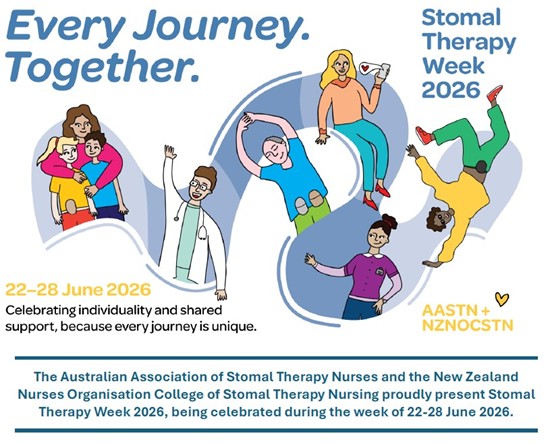
College of Stomal Therapy Nursing
|
|
|
|
|
|
Unemployment data continues to show pain
|
|
|
|
Data released today by Stats NZ on unemployment shows that all is not well in the labour market says Sandra Grey, President of the Council of Trade Unions Te Kauae Kaimahi.
“163,000 people are unemployed, 29,000 more than two years ago. 406,000 people are underutilised – meaning that they want more work but can’t get it. That’s up 51,000 in two years.
“New Zealand now has a higher unemployment rate than the UK, the USA, or Australia.”
Grey says: “Getting a pay rise that meets the cost of living is proving a real problem for working people. According to the Labour Cost Index, 44% of Kiwi workers got no pay rise at all, and 73% of workers got a pay rise less than inflation. That means the majority of workers are falling further behind.”
Young people are being hit hardest in this labour market. “17.3% of 15–24-year-olds are unemployed. The seasonally adjusted NEET (Not in Education, Employment, or Training) rate was at its highest level since December 2009.”
The Māori unemployment rate (11.5%) is more than twice the national rate, and its higher again for Pacific Peoples (11.9%).
"And it's likely to get worse from here. These figures pre-date the impact of the Iran/US conflict, and most forecasters expect higher unemployment, slower wage growth, and a weakening economy in the months ahead,” says Grey.
"This month’s Budget is the Government's opportunity to change direction – to invest in New Zealand and the people who keep it running, not impose further cuts. Today's figures are a warning. Without a change of course, things will get worse and Kiwis will rightly take to the ballot box to vote for a country that works for working people."
|
|
|
|
|
|
|
ICN: Nurses at the Heart of Safe Care – President at Vatican event
|
|
|
|
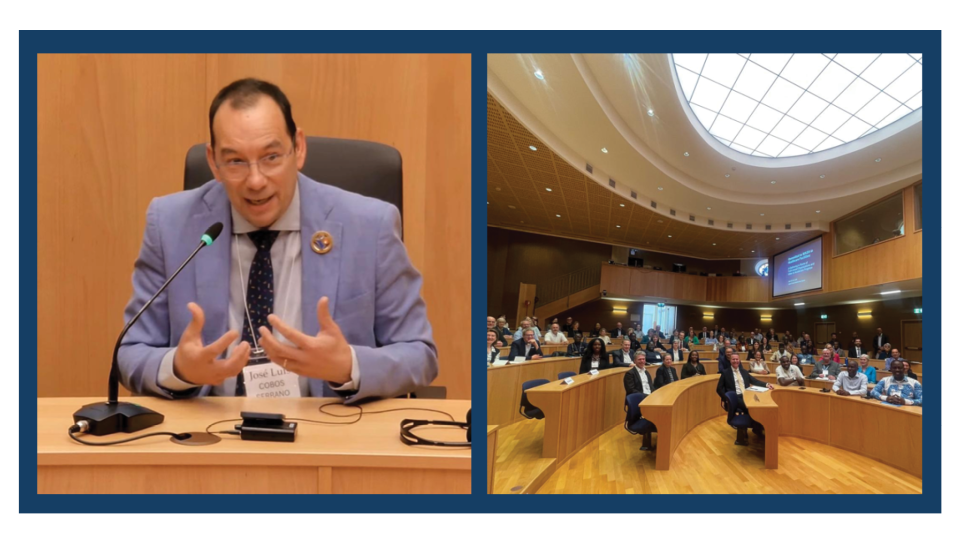
On 23 April, ICN President Dr José Luis Cobos Serrano brought the voice of the world’s nurses to the Vatican, addressing a high-level NGO event focused on water, sanitation and hygiene (WASH) in health care facilities.
The event convened a diverse group of non-governmental organisations—including global health, humanitarian and civil society leaders—to strengthen collaboration and accelerate action on WASH as a foundation of safe, dignified health care. Taking place alongside broader discussions engaging faith-based and international partners, the meeting highlighted the urgent need to ensure that all health facilities are equipped with the basic conditions required to deliver care safely.
Representing more than 30 million nurses worldwide through ICN’s network of over 140 national nursing associations, Dr Cobos delivered a clear and compelling message: without safe water and sanitation, health care systems cannot function.
“Health care cannot exist without safe water. It is that simple.”
Read more here
|
|
|
|
Petition for a public enquiry into FENZ
The NZPFU is calling for an independent inquiry into FENZ to examine why FENZ has failed to manage funding to ensure that it has the capacity and capability for reliable emergency response to the New Zealand public.
Please sign this petition to support the call for a public inquiry into whether FENZ has been properly using its funding to ensure that it has the staffing and resources necessary to keep the New Zealand public safe.
Sign the petition here
|
|
|
|
2 X Professional Nursing Adviser – 1.0 FTE
NZNO is seeking applications for two Professional Nursing Advisers (1.0 FTE – 40 hours per week). These positions are situated in Christchurch and Waikato/BOP. These roles are responsible for providing professional advocacy and support to NZNO members.
Applications close at 5.00pm on Sunday 17 May 2026 and must include both a cover letter and a current curriculum vitae.
Please find the advert and job description.
Director of Nursing and Professional Services – 1.0 FTE
NZNO is seeking applications for a Director of Nursing and Professional Services. This positionis based in Wellington. This is a senior role responsible for leading nursing and professional services within the organisation.
This a full-time position is based in the Wellington National Office of NZNO.
If you want to be our Director of Nursing and Professional Services, and believe you have the requisite organising leadership skills and knowledge then please email your application and curriculum vitae to Heather Sander (EA to the Director of Nursing and Professional Services) at heather.sander@nzno.org.nz by 5pm on Thursday 28 May 2026.
Please find the advert and job description.
|
|
|
|
|
|
International News
|
 |
|
|
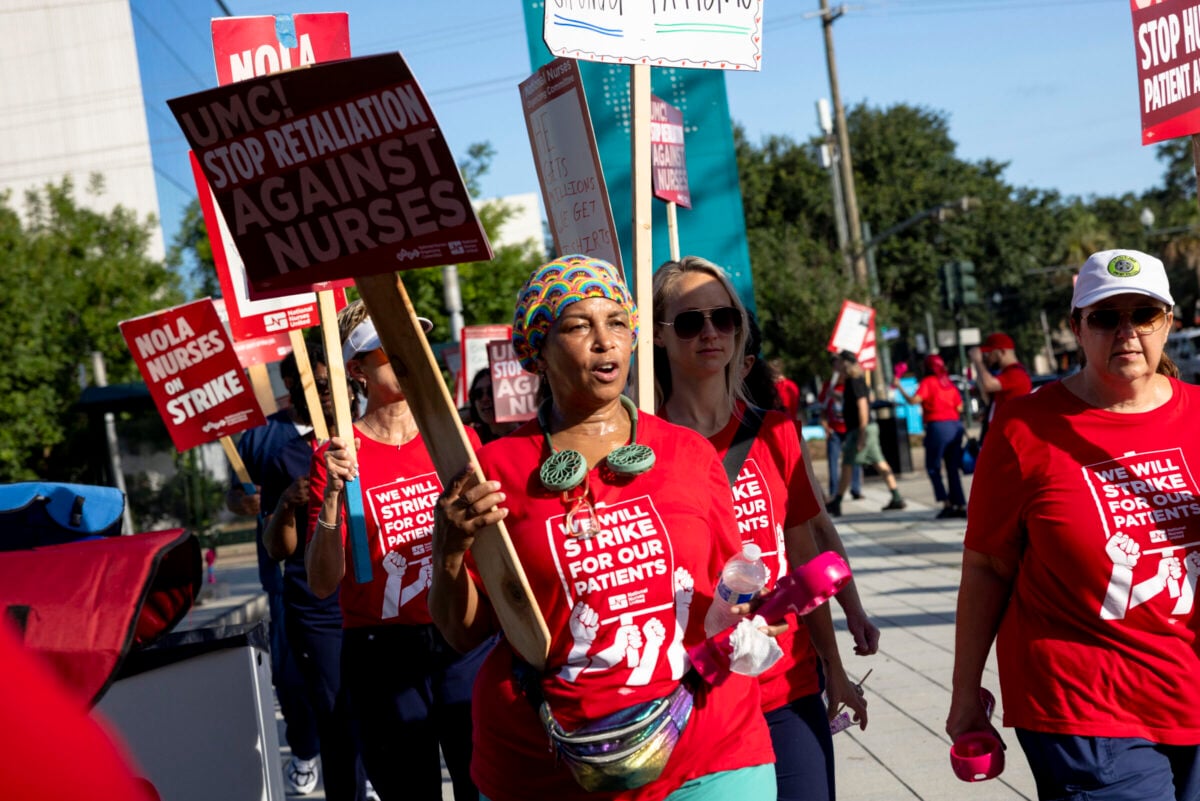
NNU, nation’s largest nurses union, supports May Day actions
USA, NNU, 28 April 2026
- Industrial court orders further real wage cut for NSW nurses
Australia, wsws.org, 21 April 2026 - The Hidden Risks of Nursing: Psychosocial Harm - International Workers’ Memorial Day 2026
UK, RCN, 28 April 2026
- From real-world care to virtual reality, UK nursing grad brings advanced training to the PICU
US, UKNow, 4 May 2026
|
|
|
|
|
|
|